
Petarium Daily · 9 October 2026 · 11 min read
How to Toilet Train a Puppy in 7 Days: A Realistic Fast-Track Plan
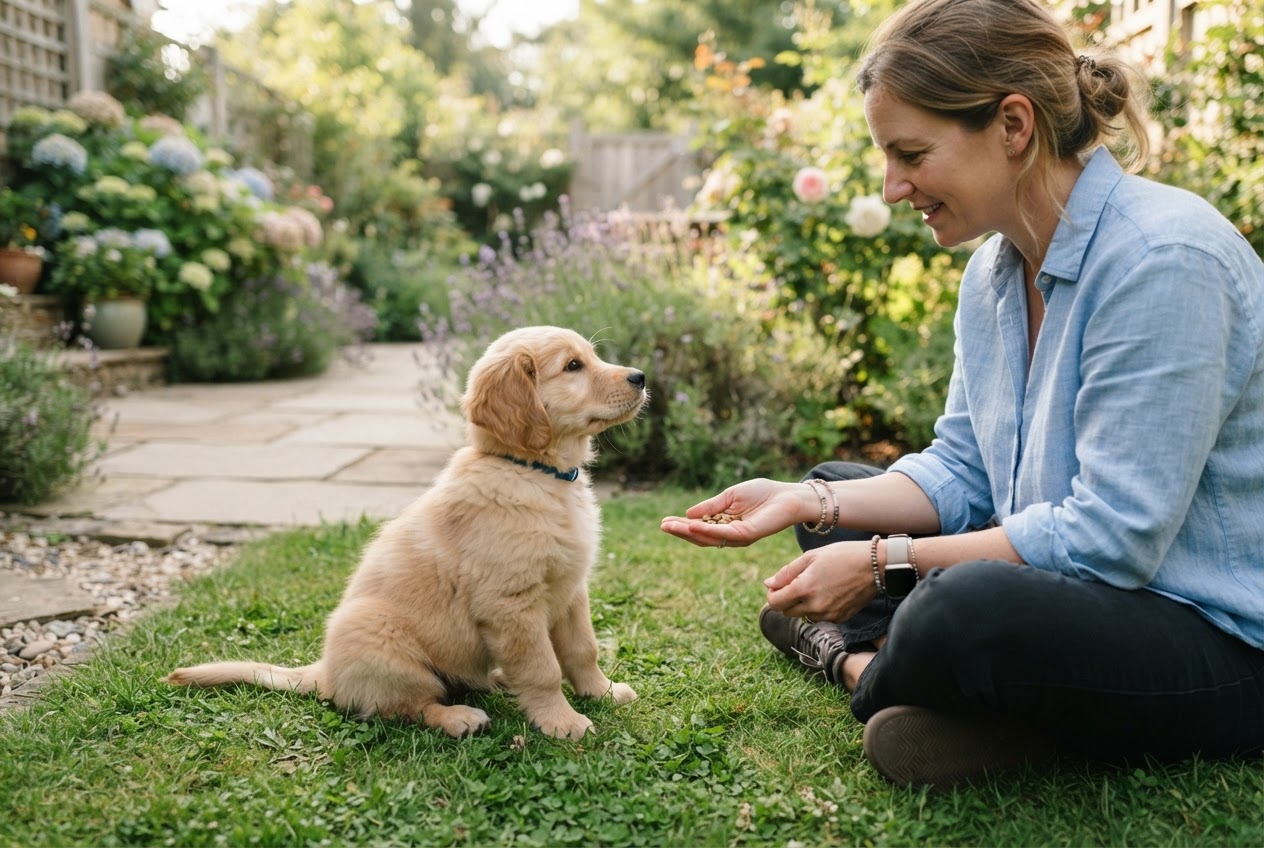
You can establish clean toileting habits in seven days by running an intensive management schedule, taking your puppy outside every 30 to 45 minutes, and rewarding outdoor eliminations immediately. While full physiological bladder control takes several months, a structured seven-day reset dramatically reduces accidents and sets up lifelong house-training success.
Key takeaways
- A seven-day intensive schedule establishes clear habits, but physical bladder maturity takes several months.
- Young puppies can reliably hold their bladder for only about one hour per month of age during awake, active periods.
- Constant proactive supervision and crate management prevent indoor scent marking and accidents before they happen.
- Reward your puppy with high-value treats within two seconds of finishing outside, never after walking back indoors.
- Never punish indoor accidents; clean them with an enzymatic cleaner to remove lingering pheromones completely.
Can You Truly Toilet Train a Puppy in Just 7 Days?
The short answer is both yes and no. You cannot alter canine anatomy or fast-forward biological maturity in a single week. An eight-week-old puppy simply lacks the muscular sphincter control and neural wiring required to hold urine for extended periods. However, you can easily achieve seven consecutive days without a single indoor accident by implementing a strict, proactive management plan. By understanding how long does it take to toilet train a puppy, you can align your expectations with biological reality.
During an intensive seven-day regime, your goal is simple: prevent your puppy from ever relieving themselves indoors while creating a dense history of outdoor rewards. This intensive routine builds an unmistakable preference for grass, concrete, or gravel underfoot. If you dedicate one week of round-the-clock consistency, your puppy will understand the concept of outdoor toileting, drastically cutting your total training journey down from months to weeks.
What Must You Prepare Before Day One?
Succeeding with a rapid seven-day house-training schedule requires complete preparation before the clock starts ticking. If you find yourself searching for treats or struggling with cleaning products while your puppy wanders across a carpet, accidents will happen. Reviewing our new puppy guide will help you set up an optimal household environment.
First, select a dedicated toileting spot in your garden. Puppies rely heavily on scent and context. Taking them to the exact same square metre of grass on a lead helps them understand immediately why they have been brought outside, minimising distractions like blowing leaves or garden birds.
- A properly sized dog crate or dedicated puppy playpen to prevent unmonitored wandering.
- High-value, pea-sized training treats such as cooked plain chicken breast or tiny cheese cubes.
- A dedicated enzymatic cleaner formulated specifically to break down pet urine proteins and urea.
- A standard flat collar and a lightweight two-metre lead kept beside the garden door at all times.
- A written toileting log or smartphone notes app to track exact meal, drink, and elimination times.
Using a Crate Ethically to Accelerate Training
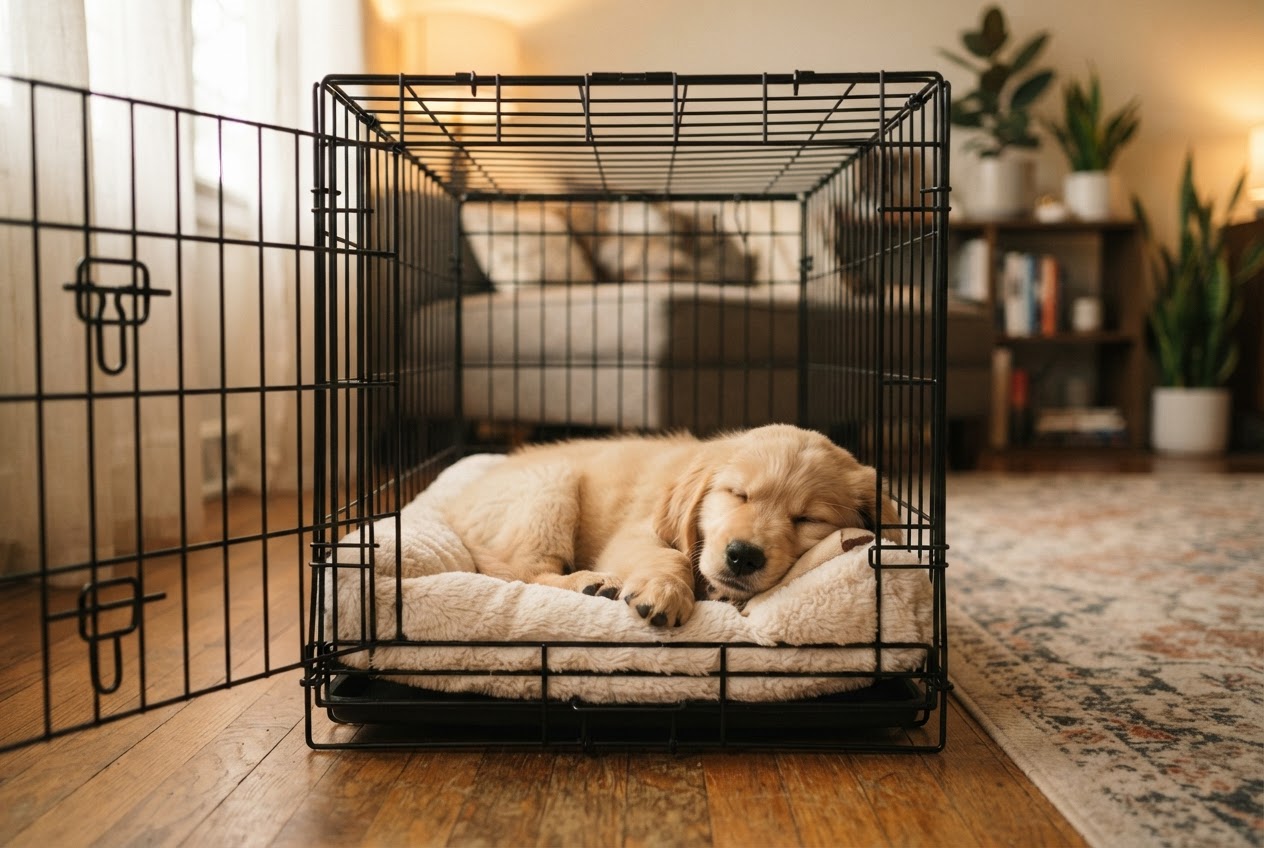
Canine dens in the wild are natural sleeping areas that puppies instinctively avoid soiling. When you choose an appropriate enclosure by choosing a dog crate that fits correctly, your puppy will naturally try to hold their bladder until released. The crate must only be large enough for the puppy to stand up, turn around comfortably, and lie flat on their side.
If the crate is too large, the puppy will toilet in one corner and sleep soundly in the other, defeating the object entirely. Take time to read our guide on how to crate train a puppy so the space feels safe, warm, and comforting rather than restrictive or punitive.
What Does the 7-Day Intensive Toileting Schedule Look Like?
To achieve rapid results, you must take your puppy outside proactively before they feel an urgent physical need to empty their bladder. Do not wait for your puppy to tell you they need to go; young puppies rarely display distinct signals until the absolute last fraction of a second. This approach forms the foundation of positive reinforcement training.
| Time Window | Action | Management Strategy | Expected Outcome |
|---|---|---|---|
| 06:30 | Immediate morning garden trip | Carry puppy straight from crate to grass | High volume urination and defecation |
| 07:00 | Breakfast & fresh water | Supervised mealtime in designated feeding area | Digestive gastrocolic reflex activated |
| 07:15 - 07:30 | Post-meal garden trip | On lead at designated toileting spot | Secondary morning bowel movement |
| 08:00 - 09:30 | Supervised play & crate nap | Eyes on puppy or resting in secure crate | Rest allows bladder sphincters to rest |
| 09:30 | Mid-morning garden trip | Directly outside upon waking | Urination within 2 minutes of waking |
| 12:00 | Lunch & outdoor session | Follow strict meal schedule; take outside | Midday bowel movement and urination |
| 14:30 - 17:00 | Interval outdoor trips | Take puppy outside every 45 mins if active | Zero indoor opportunity for accidents |
| 17:30 | Dinner & fresh water | Final substantial meal of the day | Evening digestion cycle initiates |
| 19:00 - 22:00 | Evening calm & hourly trips | Low arousal; gentle handling on lead | Bladder emptied thoroughly before bedtime |
| 23:00 | Final bedtime garden trip | Quiet, dark, boring trip on lead | Full overnight settling in crate |
How Do You Execute the 7-Day Plan Step-by-Step?
Consistency and precise timing are critical during this week. You must connect the physical sensation of passing urine or faeces outdoors with an immediate, disproportionate burst of praise and culinary reward. Follow these practical steps throughout your week:
- 1
Carry your puppy outside immediately after key triggers
Always carry your puppy outside the instant they wake up, within 15 minutes of eating or drinking, and immediately after a burst of active play. Carrying them prevents an accident en route to the door.
- 2
Stand still in the chosen toileting zone on a lead
Keep your puppy on a short lead and act boring. If you walk around or toss toys, your puppy will focus on playing rather than reading internal bladder cues. Stand like a statue in one spot.
- 3
Introduce your chosen verbal cue
As your puppy begins the physical act of squatting, calmly speak your chosen cue word, such as 'hurry up' or 'be busy'. Avoid repeating it loudly or excitedly, which can startle them mid-flow.
- 4
Reward immediately within two seconds of finishing
Deliver a high-value treat right at nose level the second their tail lifts after finishing. Never wait until you walk back inside the house, or the puppy will believe they are being rewarded for crossing the threshold.
- 5
Allow two minutes of free sniffing or play
Do not rush your puppy back inside instantly after they finish. If outdoors time ends abruptly the second they toilet, intelligent puppies will learn to hold their bladder simply to stay outside longer.
Understanding the Puppy Elimination Timeline
Tracking the timeline of when a puppy needs to go allows you to pre-empt accidents with mathematical accuracy. Digestion in a young canine is extraordinarily fast. When you maintain structured feeding times as explained in feeding a growing puppy, their bowel movements become predictable to within 10 minutes.
Typical Puppy Toileting Frequency by Age (Awake & Active Hours)
How Should You Handle Inevitable Indoor Mistakes?
Even with an airtight plan, human error occurs. You might look at your phone, fail to spot a subtle sign, or misjudge the clock by ten minutes. How you respond to an indoor accident can either preserve your seven-day progress or set training back by weeks. For a comprehensive overview of humane methodologies, see our kind practical guide to puppy toilet training.
Never rub your puppy's nose in urine, shout, clap aggressively, or scold them. Puppies do not possess human concepts of guilt or spite; the submissive crouch often mistaken for guilt is actually an appeasement gesture triggered by an owner's intimidating body posture. Punishment simply teaches your puppy that toileting in your presence is dangerous, leading them to hide behind sofas or under beds to relieve themselves secretly.
If you catch your puppy in the middle of squatting indoors, remain calm. Gently scoop them up without anger and carry them straight out to their designated garden spot. If they finish outside, reward them generously. If you find a puddle after the fact, simply clean it up in silence while keeping the puppy out of the room.
The Science of Enzymatic Odour Elimination
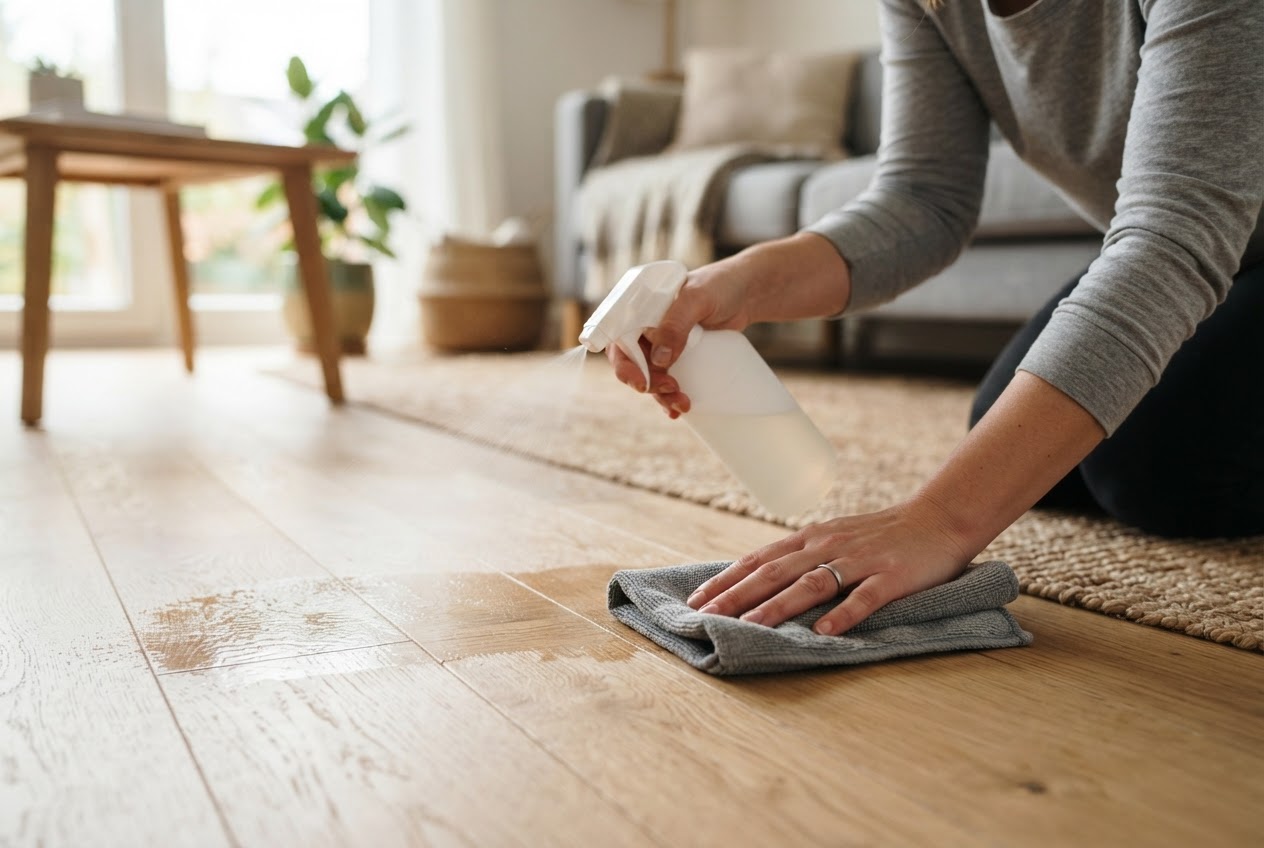
A canine's sense of smell is tens of thousands of times more sensitive than a human's. Even when an indoor area smells fresh and floral to you, dried uric acid crystals remain bonded to carpet fibres or floorboards. Enzymatic cleaners contain biological enzymes that physically digest these microscopic organic compounds, eliminating the scent trigger entirely.
What Are the Most Common Subtle Toileting Signs?
Many owners wait for their puppy to sit politely by the back door or whine before letting them out. In reality, young puppies do not naturally know that doors lead to the toilet. During your seven-day focus, you must learn to read minute changes in your puppy's body language that signal an urgent need to eliminate.
- Sudden loss of interest in a favourite toy or chew bone.
- Abrupt sniffing of the floor in an intense, erratic circular pattern.
- Drifting away from social interaction toward quiet corners or room boundaries.
- Restlessness, frantic pacing, or sudden unprompted whimpering.
- A stiffened posture or walking with slightly bow-legged hindquarters.
Whenever you spot any of these behaviours, do not debate whether it has been long enough since their last outing. Act immediately, clip on the lead, and head straight outside to the designated spot. Applying principles from our guide on the first fourteen days with a new puppy will build the routine into daily life smoothly.
How Do You Manage Night-Time House-Training?
A full night's sleep is the biggest hurdle in any fast-track toilet training programme. While metabolic rates drop during sleep, young puppies cannot easily endure an eight-hour stretch without a break. To keep your seven-day record clean, you must actively manage night-time physiology rather than hoping for the best.
Pick up food bowls two to three hours before bedtime to ensure digestion is complete before lights out. While you should never dehydrate a puppy, removing large water bowls an hour before bed—offering only small sips if requested—helps prevent nocturnal bladder urgency. Place the crate right beside your bed for the first few nights so you can hear initial stirring before an accident occurs, as recommended in the first 24 hours with a new pet.
- 1
Set an alarm for an early-hours toilet break
For puppies aged 8 to 10 weeks, set an alarm at 02:30 or 03:00. Taking them out proactively while they are drowsy avoids desperate whining and guarantees a clean crate.
- 2
Keep the night-time trip strictly transactional
Do not turn on bright lights, speak in happy voices, or cuddle your puppy. Carry them out in the dark, place them on the grass, whisper your cue, and wait silently.
- 3
Reward calmly and return immediately to bed
Give a quiet, low-key treat when they finish, place them straight back in their crate with a soft word, and close the door. They will quickly learn that night-time is for sleeping, not playing.
What Should You Do from Day Eight Onwards?
Completing a successful seven-day training sprint does not mean your puppy is completely bombproof. Rather, you have successfully wired their neurological preference toward eliminating outside and eliminated the habit of indoor soiling. Now, you can gradually expand their freedom while maintaining clear structural boundaries.
Begin giving your puppy access to one additional room at a time, only after a successful outdoor toilet trip. If you leave them unmonitored in an unfamiliar room, their instinctive desire to keep their main den clean may not yet extend to that new space. Maintain your enthusiastic praise and tasty outdoor treats for at least another four to six weeks to cement the behaviour for life.
Frequently asked questions
Can an 8-week-old puppy really be fully house-trained in 7 days?
Not fully in terms of adult physiology. While you can achieve a completely accident-free seven days through constant supervision and timed outings, their bladder sphincter muscles will not fully mature until roughly 16 to 20 weeks of age.
Should I use puppy training pads during the 7-day plan?
Avoid puppy pads if you have direct garden access. Pads teach your puppy that soft, textile surfaces inside the home are acceptable toilet areas. This frequently confuses puppies and prolongs the transition to grass or outdoor paving.
What should I do if my puppy refuses to toilet outside in the rain?
Put on a waterproof coat, keep your puppy on a short lead, and stand under a large umbrella over their toileting spot. Stay calm and patient; do not let them play. Reward with an exceptionally high-value treat the moment they finish.
Why does my puppy pee indoors immediately after being outside for 30 minutes?
Outside environments can be overwhelming for a young puppy. If they were distracted by smells, wind, or sounds, their sphincter muscles stayed tight. The moment they stepped back inside into warm, familiar security, their body relaxed and released the urine.
How often should I take my puppy out during the day?
During the initial seven-day plan, take your puppy outside every 30 to 45 minutes while they are awake. In addition, take them out immediately after waking from naps, within 15 minutes of eating, and right after play sessions.
Is rubbing a puppy's nose in an accident ever helpful?
No, it is actively harmful. Rubbing a puppy's nose in urine induces fear and stress without teaching them where they should go. It often causes puppies to hide their accidents behind furniture to avoid your anger.
How long should I wait outside before giving up?
Wait quietly for five to eight minutes. If your puppy does not eliminate, bring them back inside and place them safely in their crate or hold them on your lap. Try again outside ten to fifteen minutes later.
Sources and further reading
- dogstrust.org.uk — guidance library — dogstrust.org.uk
- pdsa.org.uk — guidance library — pdsa.org.uk
- rspca.org.uk — guidance library — rspca.org.uk
- thekennelclub.org.uk — guidance library — thekennelclub.org.uk
- vcahospitals.com — guidance library — vcahospitals.com
More from Petarium Daily
- How Do Cats Communicate? Vocal, Visual, and Scent Signals
Cats communicate using a subtle, multi-layered system combining vocal sounds, body posture, facial expressions, and chemical scent marking. By understanding how feline signals work together in context, you can accurately interpret your cat's emotional state and strengthen your bond.
- How Long Does It Take to Toilet Train a Puppy? A Realistic Guide
On average, it takes between four and six months for a puppy to become reliably toilet trained, though full consistency can take up to a year. Progress depends heavily on the puppy's age, physical bladder maturity, breed size, and the consistency of their daily routine.
- What Is a Pet Health Plan? Coverage, Costs, and Value
A pet health plan is a monthly subscription run by a veterinary practice that spreads the cost of routine, preventative healthcare such as vaccinations and parasite treatments. It is not insurance and does not cover unexpected illness, injuries, or emergency treatments.