Life stages
Feeding a Growing Puppy: Portions, Meals and Common Mistakes
What puppies need to grow at a healthy pace, how many meals to give, and why large breeds need special care.
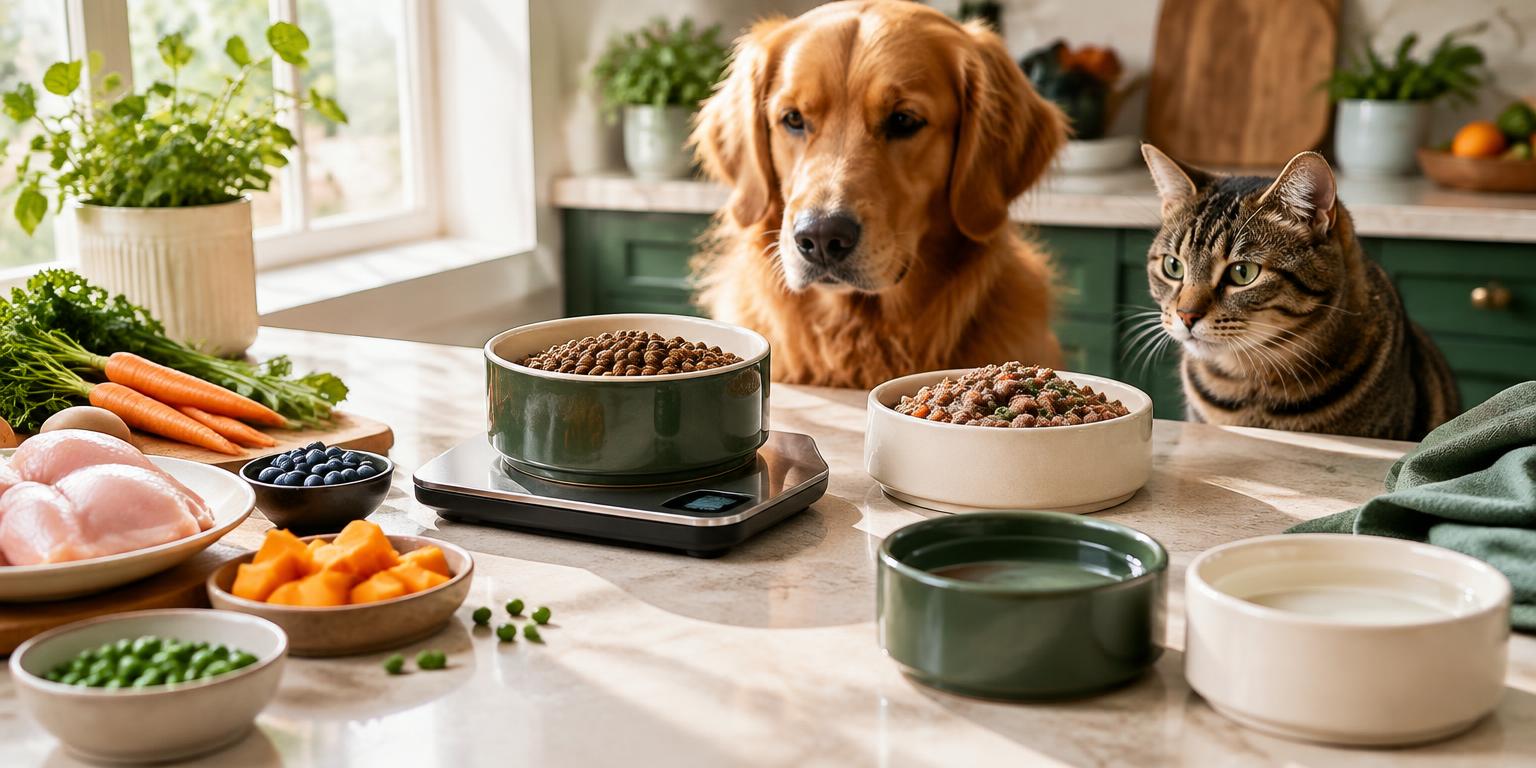
Use a complete puppy food
Choose a food labelled complete for growth, or for all life stages. Large-breed puppies (expected adult weight over about 25 kg) should have a large-breed puppy food, which controls calcium and energy to support steady bone growth.
How many meals
A common guide is four meals a day until about 12 weeks, three until about six months, then two. Your vet may adjust this for your puppy.
Portions and body condition
Packet amounts are starting points. Check body condition every week or two: you should feel the ribs easily under a thin layer of fat. Growing too fast raises the risk of joint problems in large breeds.
Mistakes to avoid
- Adding calcium supplements to a complete food
- Free-feeding all day
- Too many treats — keep them under 10% of daily calories
- Changing food suddenly; mix over 7–10 days
When to switch to adult food
Small breeds usually switch around 9–12 months; large and giant breeds may stay on puppy food until 12–18 months. Ask your vet.
Frequently asked questions
- Should I feed raw to a puppy?
- Raw diets carry bacterial risks and are easy to unbalance for growth. Discuss with your vet first.
References
- Global Nutrition Guidelines — WSAVA
- Nutritional Guidelines — FEDIAF