
Petarium Daily · 2 October 2026 · 11 min read
How to Toilet Train a Puppy: A Kind, Practical Guide
To toilet train a puppy, take them to a suitable toilet spot frequently, reward them immediately after they finish and prevent accidents through close supervision. Expect gradual progress over weeks to months, with night-time breaks and adjustments for your puppy’s age, health and individual needs.
Key takeaways
- Offer toilet breaks after waking, eating, drinking and playing, as well as regularly between these events.
- Reward your puppy at the toilet spot immediately after they finish.
- Never punish accidents or restrict drinking water to prevent them.
- Use a safe outdoor area or a clearly defined indoor toilet if outdoor access is unsuitable.
- Contact a vet for painful urination, blood, sudden regression or unusually frequent accidents.
To toilet train a puppy, take them to the same suitable toilet spot frequently, especially after waking, eating, drinking and playing. Stay nearby and reward them immediately after they finish. Indoors, supervise closely and clean accidents without punishment. Start with opportunities roughly every 30–60 minutes while awake, adjusting to your puppy’s pattern; reliable habits usually develop over weeks to months, not a guaranteed weekend.
What do you need before toilet training starts?
Choose a quiet, easily reached toilet area and agree a routine with everyone at home. Ask the breeder, rescue or previous carer which surface your puppy already uses: a familiar texture can ease the transition. Our complete new puppy guide covers the wider preparations, but toilet training itself needs only simple equipment and consistent attention.
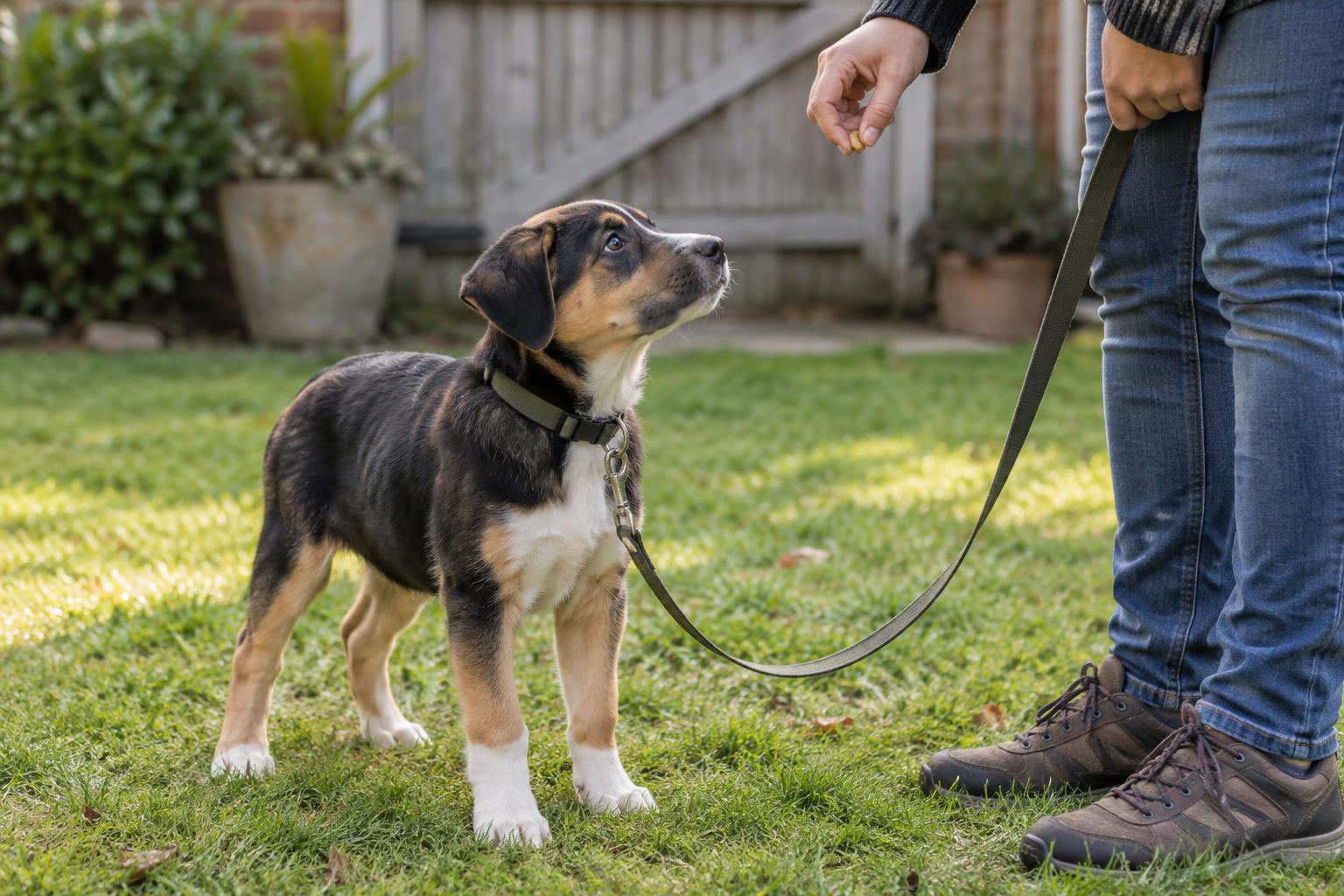
- Small food rewards, ready beside the exit but out of your puppy’s reach.
- A comfortable harness or collar and a lightweight lead for supervised trips where needed.
- An animal-safe enzymatic cleaner suitable for the affected flooring or fabric.
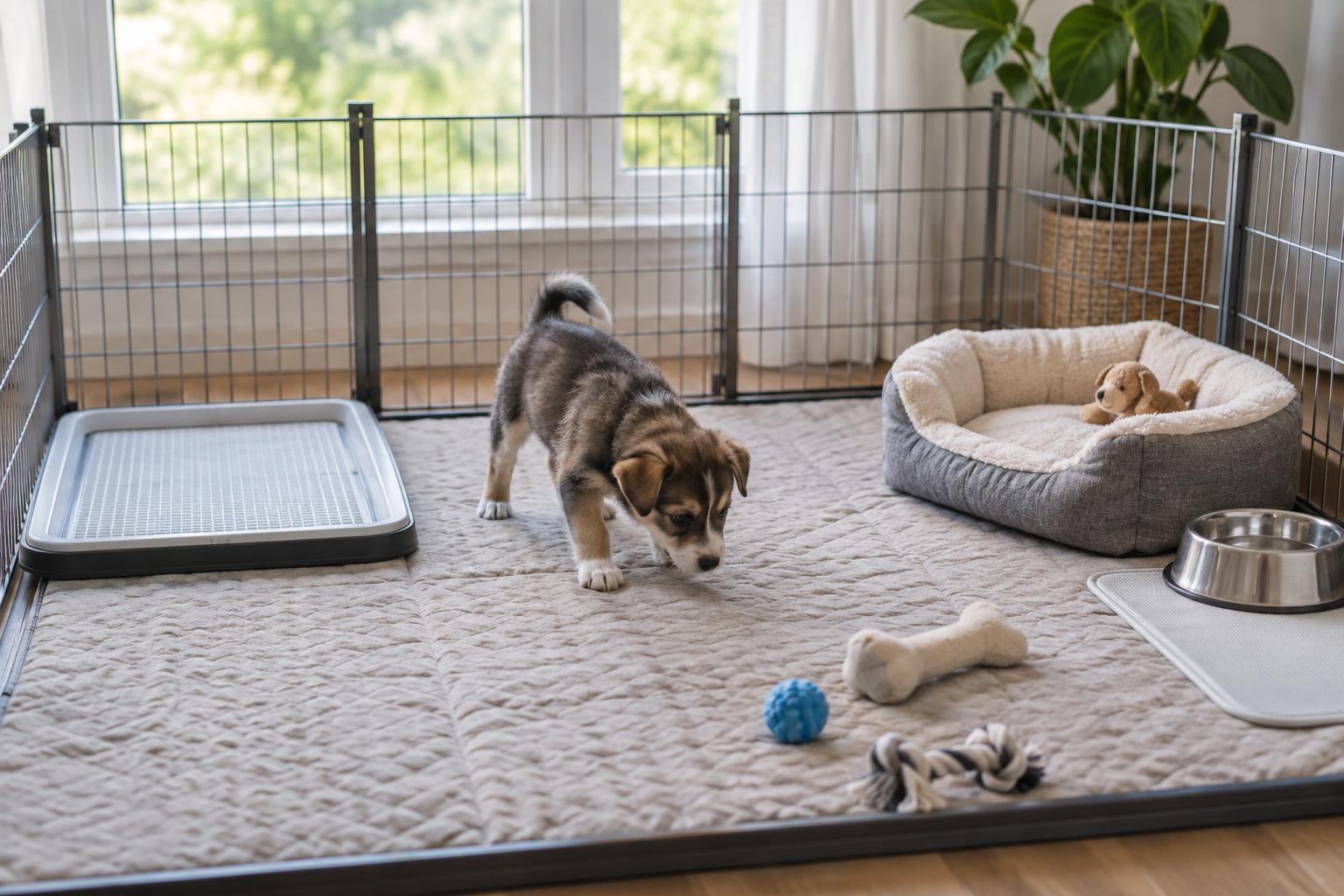
- Gates or a roomy pen to create a manageable, puppy-proofed area.
- A notebook or phone log recording meals, drinks, naps, toilet trips and accidents.
How do you toilet train a puppy step by step?
- 1
Take them out before they urgently need to go
Offer a trip immediately after waking and promptly after meals or energetic play. Respond to sniffing, circling or sudden restlessness straight away rather than waiting for a scheduled break.
- 2
Go to a consistent spot
Accompany your puppy rather than simply opening the door. Keep the trip quiet and allow gentle sniffing. Familiar smells and surfaces help them recognise the purpose of the visit.
- 3
Give them a few calm minutes
Stand quietly without repeated instructions. If nothing happens, return indoors under close supervision and try again shortly, often within 10–15 minutes if you suspect they still need to go.
- 4
Reward immediately after they finish
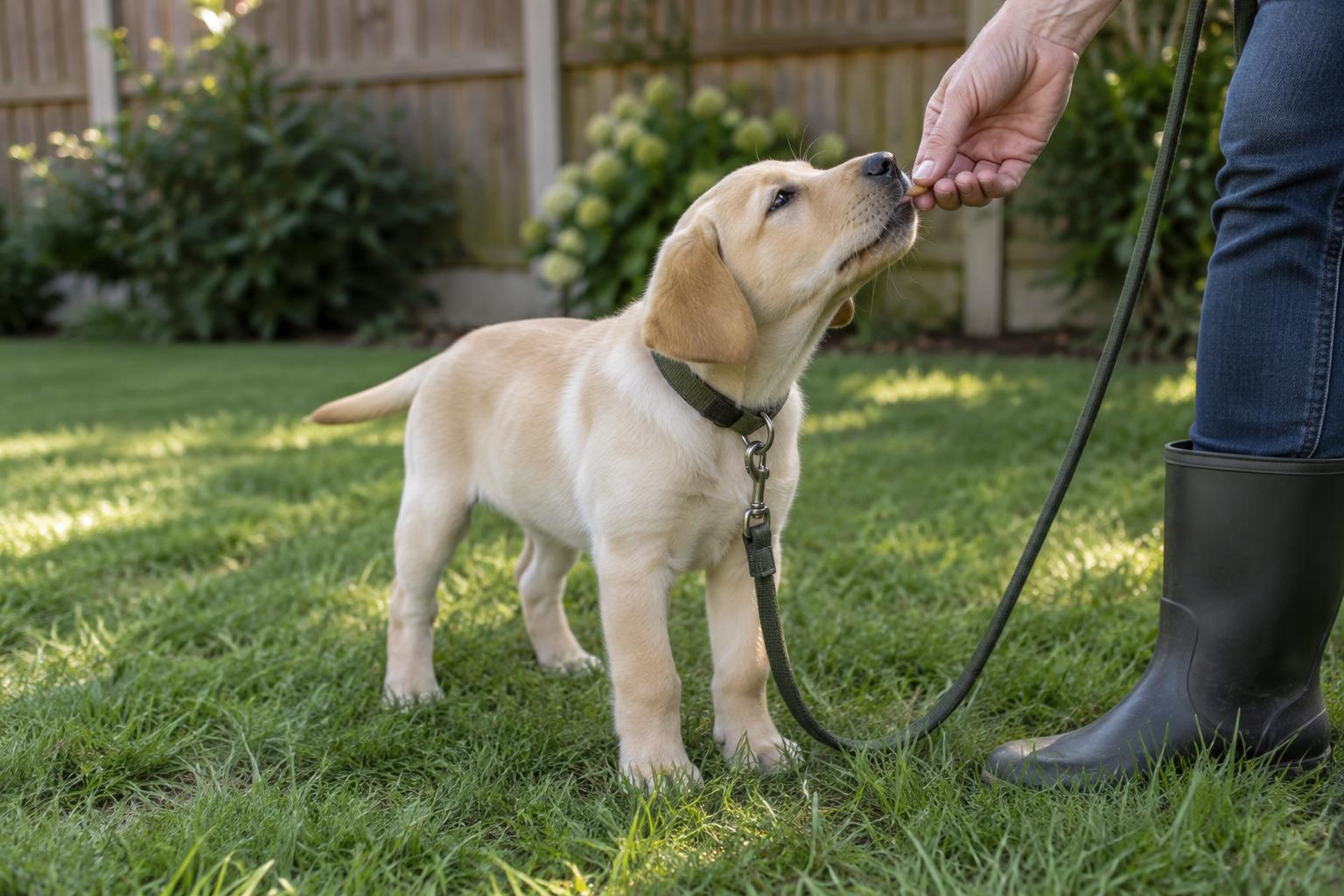
Offer quiet praise and a tiny treat while still at the toilet spot. Waiting until you return indoors rewards coming inside rather than the toilet behaviour you wanted.
- 5
Introduce an optional cue
Once the routine is familiar, softly say a phrase such as ‘toilet time’ as they start. Later, you can use it before they go. Avoid repeating it constantly.
- 6
Allow a little exploration afterwards
Where practical, follow success with a short sniff or gentle interaction. If toileting always ends outdoor time, some puppies learn to delay it.
How often should you take a puppy out?
A young puppy needs opportunities based on events as well as the clock. They may need another wee soon after drinking or during active play, even if they recently went outside. Start generously, keep notes and lengthen intervals gradually only when they remain comfortable and accident-free. Sleeping puppies often manage longer than awake, active puppies.
| Trigger | What to do |
|---|---|
| Waking from any sleep | Go straight to the toilet area, including after daytime naps. |
| Finishing a meal | Offer a prompt trip and watch for a second need later. |
| Having a drink | Offer an opportunity soon afterwards; never restrict water. |
| Playing or becoming excited | Pause for a toilet break and offer another afterwards. |
| Quiet awake time | Begin with opportunities around every 30–60 minutes. |
| Bedtime | Offer a final quiet trip immediately before settling. |
A starting range for daytime toilet opportunities
Regular, age-appropriate meals make patterns easier to spot, although puppies do not all poo on the same timetable. Follow suitable feeding guidance for growing puppies rather than reducing food to avoid accidents. Keep fresh drinking water available, including overnight; discuss unusual thirst with your vet rather than rationing water.
How long does puppy toilet training take?
Many puppies improve noticeably within a few weeks, but dependable house training commonly takes several months. There is no fixed completion age: previous learning, access to a toilet area, health and individual development all matter. Our realistic house-training timeline explains why a good week is progress, not proof that supervision can stop.
Can you calculate holding time from a puppy’s age?
The popular ‘age in months plus one equals hours’ rule is not a reliable welfare limit. Evidence for a precise universal formula is limited, and it ignores sleep, activity, drinking and individual variation. Do not use it to justify leaving a puppy without toilet access. Extend the gap between opportunities according to observed comfort and success, not a birthday.
How do you spot toilet signals and handle accidents?
Watch for focused floor-sniffing, circling, wandering away, returning to an old accident spot or suddenly stopping play. Some puppies give almost no warning. Keep them in the same room when possible, and use gates to prevent unnoticed wandering. During your first 24 hours with a new pet, assume they do not yet understand where to go.
- 1
If you catch an accident beginning
Stay calm. If practical, gently guide your puppy to the toilet area without startling them. Reward if they finish there; never clap, shout or frighten them.
- 2
If you find it afterwards
Say nothing to your puppy. They cannot reliably connect your reaction with an earlier accident. Consider whether you missed a waking, feeding or play-related trip.
- 3
Clean the area thoroughly
Blot up liquid and use an animal-safe enzymatic cleaner according to its instructions. Keep your puppy away while cleaning and until the area is safe to use. Never mix cleaning products.
How do you toilet train a puppy at night?
Young puppies often need overnight breaks, even when daytime training is improving. Start with their sleeping area close enough for you to notice waking and restlessness. Offer a final toilet trip before bed, then respond promptly if they wake. If accidents happen before you hear them, temporarily set an alarm before their usual accident time.
Keep overnight trips brief and quiet: subdued lighting, no energetic games, then back to a comfortable bed. Gradually move a planned break later as dry nights become consistent. Do not leave a distressed puppy crying because you assume they are seeking attention; they may need to toilet, feel frightened or be uncomfortable.
Does a crate help with toilet training?
A crate can help some puppies settle and make waking easier to notice, but it is optional and never replaces toilet breaks. It must allow comfortable standing, turning, stretching and lying down. Introduce it gradually using a kind crate-training approach, and never shut a puppy in to force them to hold on.
How do you toilet train in a flat or use puppy pads?
Outdoor training can work in a flat, but allow for corridors, lifts and getting dressed. Keep supplies ready and offer trips before urgency builds. Carry a small puppy safely if necessary. A balcony is suitable only if securely enclosed against falls and escape, with a hygienic toilet surface; never leave a puppy there unattended.
Pads or a washable toilet tray can provide a practical indoor option when access or health circumstances require it. Choose one consistent location, away from bedding, food and water. Reward its use as you would outdoors. If your eventual goal is outdoor toileting, increase rewarded outdoor opportunities and gradually reduce reliance on the indoor area.
Can a puppy go outside before vaccinations are complete?
Ask your vet about local infection risk and your puppy’s vaccination plan. A secure private garden not visited by unknown dogs is generally lower risk than communal dog areas, but it is not automatically risk-free. Avoid public dog-toileting hotspots until your vet advises they are suitable. Meanwhile, plan safe puppy socialisation, such as being carried to observe the world where appropriate.
What if you work or need to leave your puppy?
A young puppy cannot be expected to stay clean through a full working day without suitable support. Arrange a trusted carer and frequent opportunities, or provide a separate indoor toilet area where necessary. Practise comfortable alone-time training separately; toileting during absences can reflect distress as well as an overfull bladder, particularly alongside howling, pacing or attempts to escape.
Why is your puppy still having accidents?
| What you notice | What to consider |
|---|---|
| Toileting just after coming indoors | Outdoor distractions or an unfinished toilet trip; supervise and retry shortly. |
| Accidents behind furniture | Too much unsupervised freedom, or previous frightening reactions. |
| Repeated use of one indoor spot | Lingering scent or a learned surface preference; clean thoroughly and manage access. |
| Accidents during greetings | Excitement or appeasement-related urination; keep greetings calm and never scold. |
| Reluctance in rain or darkness | An uncomfortable location; try a sheltered, quiet, well-lit spot. |
| Sudden regression after reliable training | Changes in routine, stress or illness; consider a veterinary check. |
Temporarily return to closer supervision, shorter intervals and immediate rewards. Consistent positive reinforcement training teaches what works without adding fear. If progress remains poor despite a workable routine, speak to your vet before assuming it is a training problem; pain, digestive upset and urinary conditions can all affect cleanliness.
When should you contact a vet?
Keep a record of what has changed, including whether your puppy passes normal amounts or only droplets. Tell the vet about appetite, drinking, stools and energy levels. Do not restrict water, give human medicines or assume repeated squatting is disobedience. Your vet can advise whether an examination and urine or other testing are needed.
What should your daily toilet-training checklist include?
- Offer breaks after waking, meals, drinks and play, plus regular opportunities between them.
- Accompany your puppy and reward immediately after they finish.
- Supervise indoors and expand access to the home gradually.
- Record accidents and adjust the routine instead of blaming the puppy.
- Keep water available, clean calmly and arrange care when you cannot be there.
The aim is not to test how long your puppy can hold on. It is to make the right choice easy and rewarding while their control develops. Expect occasional setbacks, especially after travel or routine changes, and respond with more support rather than stricter rules.
Frequently asked questions
Can you toilet train a puppy in seven days?
You can establish a useful routine and see improvement within seven days, but reliable toilet training usually takes longer. A puppy may stay dry because you are providing frequent opportunities, not because they can independently recognise, signal and manage every need. Keep supervising and rewarding success after the first good week.
Should I wake my puppy up to wee at night?
Some young puppies benefit from a planned overnight break, especially if they soil their sleeping area before waking you. Base the timing on their pattern rather than a universal age formula. If your puppy consistently sleeps comfortably and stays dry, you may not need to wake them. Never ignore waking, restlessness or distress.
Should I put puppy pads in the crate?
A sleeping crate should not routinely double as a toilet. If your puppy needs toilet access while you cannot take them out, use a larger safe pen with a separate bed and toilet area instead. Puppies with health problems or special care needs may require a different arrangement agreed with their vet.
Why does my puppy wee inside immediately after going outside?
They may have been distracted, felt uneasy outdoors or not fully emptied their bladder. Accompany them to a quiet spot and reward after they finish. If nothing happens, supervise closely indoors and try again shortly. Frequent tiny wees, straining, pain or a sudden change warrant veterinary advice rather than simply more training.
How do I teach my puppy to ask to go outside?
First establish the toilet routine; do not wait for a young puppy to invent a signal. Later, you can reward a simple action at the door, such as touching a bell, and immediately offer a toilet trip. Signals are optional and do not replace scheduled opportunities. Some puppies remain subtle even when well trained.
Are puppy pads bad for toilet training?
Pads are not inherently bad. They can meet a genuine need in flats, during certain health situations or when outdoor access is difficult. However, learning to toilet on an indoor surface adds a transition if your eventual goal is outdoors. Keep the pad in a defined area and consistently reward the location you want.
Should I stop giving my puppy water before bed?
No: do not routinely withhold drinking water to prevent accidents. Puppies need access to fresh water, and intake varies with food, activity and temperature. Offer a final toilet trip and arrange overnight breaks instead. If your puppy drinks or urinates noticeably more than usual, contact your vet rather than restricting their intake.
Sources and further reading
- Toilet training your dog — RSPCA
- Dog advice — Blue Cross
- Dog advice and training guidance — Dogs Trust
- Pet Health Hub — PDSA
- Canine parvovirus — American Veterinary Medical Association
More from Petarium Daily
- How to Crate Train a Puppy: A Kind, Step-by-Step Guide
Teach your puppy to enjoy a crate by rewarding voluntary entry, introducing the closed door for seconds and gradually building comfortable resting time. Stay nearby at first, provide frequent toilet breaks and reduce the difficulty whenever your puppy shows distress.
- Yavru köpek maması: A Complete Guide to Puppy Food
Yavru köpek maması means puppy food: choose a complete diet formulated for growth and suitable for your puppy’s expected adult size. Feed measured meals, adjust portions using weight and body condition, and change foods gradually rather than relying on a universal grams-per-day rule.
- How Long Do Rabbits Live? Lifespan and Healthy Ageing
Pet rabbits usually live for around 8–12 years, although some reach their teens and others die younger. Genetics play a part, but appropriate feeding, spacious housing, rabbit companionship, vaccination and prompt veterinary care all help support a longer, healthier life.