
Bringing a pet home
The First 24 Hours With a New Pet
Calm, quiet and predictable beats exciting. What to do — and what to resist doing — on day one.
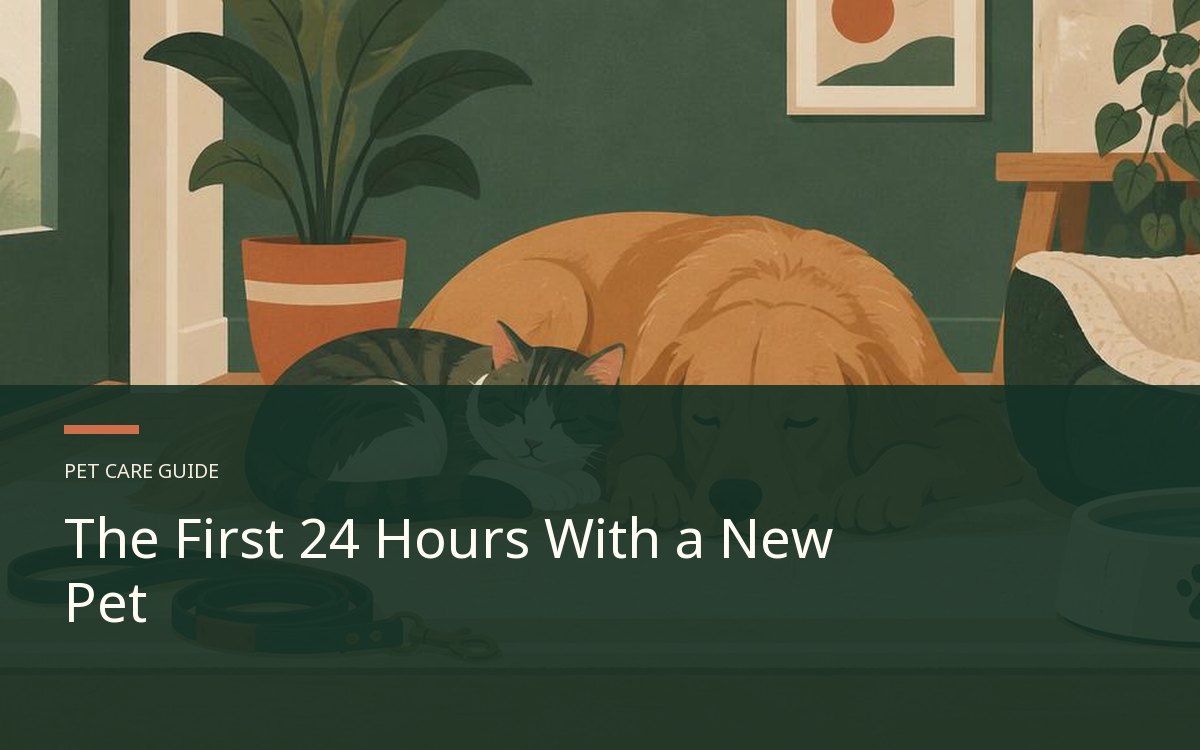
Illustrative cover using relevant category imagery; it does not depict the exact subject.
Arrive quietly and preserve familiar cues
Bring the animal directly to its prepared resting area and keep the first period calm. Limit handling, photographs and visitors; excitement can overwhelm an animal that is still orienting to unfamiliar sounds and smells. If possible, retain familiar food, bedding and litter or substrate while the animal settles. Offer water and a chance to toilet as appropriate, then allow uninterrupted rest. A hiding animal should not be dragged out simply to reassure people.
Observe without forcing interaction
Sit nearby and speak softly, letting the pet choose whether to approach. Keep children and other pets at a respectful distance until a safe, gradual plan is in place. Watch whether the animal can find water, food and its toilet area, and note appetite, elimination, movement and breathing. Some hesitation can accompany change, but do not assume any concerning symptom is merely stress. Record what you see so you can describe changes clearly if seeking advice.
Keep food, routine and safety simple
Continue the established diet and normal meal pattern unless given specific advice to change it. Avoid new treats or a sudden diet switch during the adjustment period. For puppies, provide frequent calm toilet opportunities and reward the desired behaviour; for cats, keep the litter tray easy to find and away from food. Ensure the room is secure before leaving the pet alone. Do not leave collars, toys or equipment that may snag or be chewed unsupervised.
Know when to seek help and what to arrange
Obtain the prior caregiver’s veterinary records and medication instructions, and arrange an initial health appointment appropriate to the animal. Contact a clinic promptly if the pet has trouble breathing, collapses, repeatedly vomits, appears injured or has another severe or rapidly worsening sign. Species and age affect how quickly changes become serious; ask a veterinarian rather than relying on a universal waiting period. Keep the clinic number accessible and explain the move, timeline and observed signs.
Keep introductions and handling deliberately small
Make the first day about safe settling rather than meeting everyone. Let the pet explore one prepared area at its own pace, and avoid passing it from person to person. If it is necessary to move or handle the animal, use familiar equipment and a calm, secure technique suitable for the species. Keep resident animals separated and prevent children from entering the settling area unsupervised. Watch for relaxed engagement as well as signs of withdrawal; a pet that chooses to hide or sleep is not being unfriendly. Familiar smells, predictable voices and low activity provide useful reassurance.
Create a short information record
Write down arrival time, what the animal has eaten and drunk, toileting, sleep and any unusual behaviour. Keep transport and adoption records, vaccination details, current food packaging and contact information together. Confirm any medication instructions with the prescribing clinic rather than relying on memory or an informal note. Ask the previous caregiver what is normal for this individual, but treat new or serious concerns on their own merits. When you contact a veterinarian, a concise timeline and clear description can make the conversation more useful and help determine the appropriate next step.
Arrange an overnight handover
Before bedtime, confirm who will respond to toileting needs, distress or equipment alerts and where the veterinary contacts are stored. Check water access and secure the settling area without removing appropriate ventilation. Keep essential observations brief so the animal can rest. For an enclosure-dependent species, verify readings using the established care plan rather than adjusting temperatures by guesswork. If an animal is unwell, call for advice rather than waiting until morning because the first day is expected to be stressful.
Frequently asked questions
- What is a useful first step?
- Write down the animal’s routine and the specific question, then discuss individual needs with a veterinarian or suitable welfare professional.
- Can I use the same advice for every species?
- No. Care, safe equipment and risks vary by species and individual; use species-specific guidance.
- When should I contact a veterinarian?
- Contact a veterinarian about health concerns or persistent changes, and seek prompt help for severe, sudden or worsening signs.
- What should I do if the plan is not working?
- Pause any stressful or uncertain step, keep the animal safe, and ask a veterinarian or qualified professional for tailored advice.
References
- Pet care advice — RSPCA
- Pet owner resources — AVMA
- Pet health and welfare — PDSA
- Pet care and welfare advice — RSPCA