
Bringing a pet home
Introducing a New Cat to a Resident Cat
A staged, scent-first introduction over two to four weeks prevents most long-term multi-cat conflict.
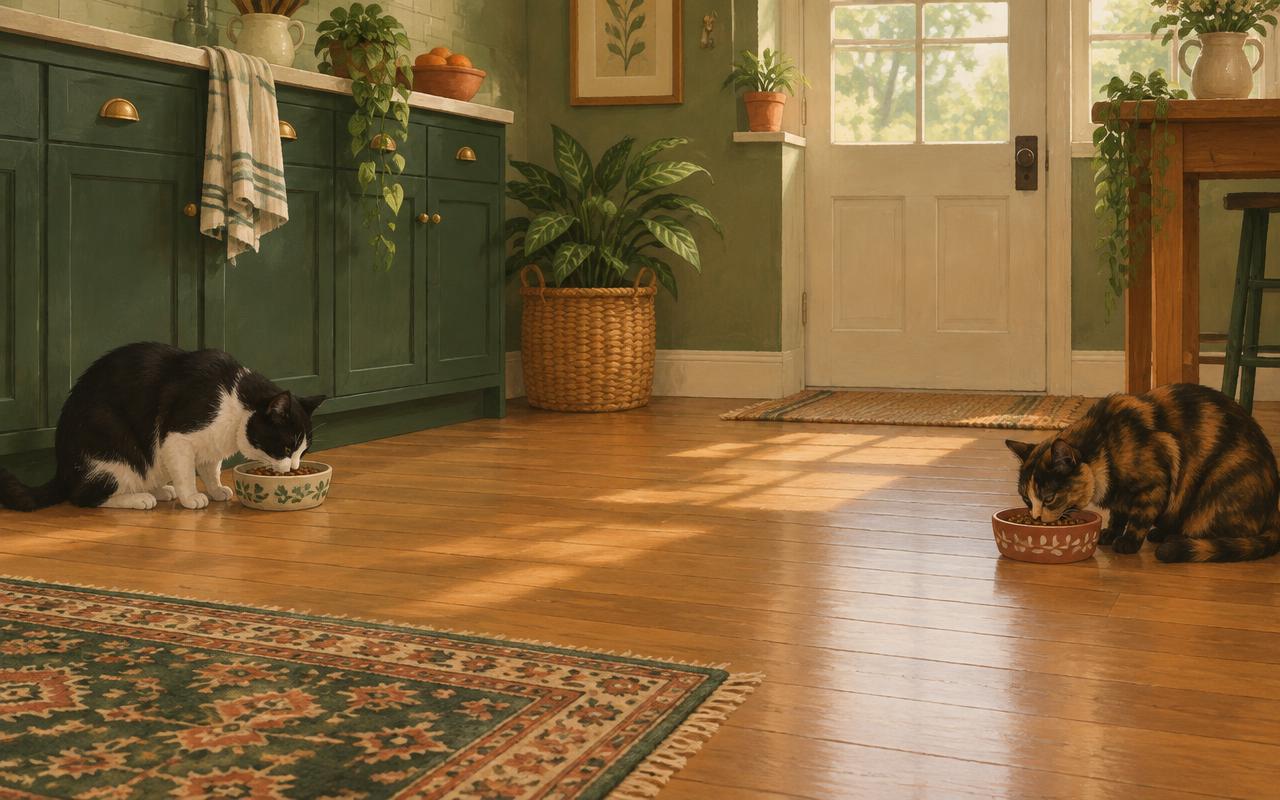
AI-generated editorial illustration of the subject; not a photograph of a specific animal, product or case.
Set up a genuine separate territory
Before arrival, prepare a room with food, water, litter, scratching surfaces, resting places and hiding options. Keep the resident cat’s routine and access to familiar areas as stable as possible. The newcomer should be able to eat, sleep and toilet without being watched or blocked by the other cat. Check that doors and windows are secure, and make sure the room is not used as a punishment space. Separate territories lower pressure while each cat learns the other exists.
Use scent as low-pressure information
Exchange bedding or use a clean cloth gently rubbed around each cat’s cheek, then place it where the other can investigate voluntarily. Do not hold a cat near the scent item. Pair its presence with pleasant ordinary activities, such as eating at a comfortable distance from the closed door. If either cat stops eating, hides persistently or becomes highly aroused, increase distance and slow down. Scent familiarity is not a race; repeated calm exposure is more useful than forcing contact.
Build visual contact in manageable steps
Once both cats remain relaxed with the closed door, allow brief, secure glimpses through a barrier. Ensure neither cat can rush, climb over or become trapped against it. Use food or play only if both remain comfortable, and keep an escape route available. End calmly before either becomes tense. Gradually adjust duration and distance according to behaviour, not a calendar. If staring, growling, lunging or avoidance intensifies, return to the last comfortable stage and give both cats time.
Protect resources and read the whole pattern
Provide multiple separated food, water, litter, resting and scratching locations so one cat cannot guard access to everything. Offer high places and more than one route through shared rooms. Look for quiet signs of tension such as waiting outside a tray, blocking a hallway, reduced play or one cat changing its usual resting place. Do not punish hissing; it is communication. Persistent aggression, injury, appetite change or toileting changes warrants professional advice and possibly a behaviour plan.
Move to shared space only when both are ready
Before allowing direct access, look for steady, ordinary behaviour around the scent and barrier: eating, resting, grooming and moving away without fixation. Arrange a brief meeting in a spacious area with exits and elevated routes, and have a person available for each cat. Keep a barrier or towel at hand to interrupt sight calmly if needed; never reach between fighting cats. Do not hold either cat in place or force nose-to-nose contact. End the session while both remain manageable, then separate them and continue familiar routines.
Measure progress by comfort, not friendship
Some cats learn to share space peacefully without becoming close companions. Keep separate resources and safe resting options even after introductions appear successful. Monitor each cat’s appetite, toileting, sleep, play and willingness to move around the home, since stress may appear as subtle avoidance rather than fighting. If one cat persistently blocks access or either animal’s behaviour changes, return to separation and seek advice from a veterinarian or qualified feline behaviour professional. After a conflict, allow arousal to settle before attempting any reintroduction; rushing can make the association more difficult.
Notice blocked access before fighting begins
Watch routes to food, litter and resting places from each cat’s perspective. A cat sitting quietly in a narrow doorway can prevent another from moving without an obvious attack. Reposition resources and open alternative routes rather than placing all bowls side by side. Check that vertical retreats have safe exits and are accessible to cats with mobility limitations. Record which areas each animal avoids. Persistent avoidance deserves attention even if there is no hissing or injury; quiet coexistence should still allow normal daily activity.
Frequently asked questions
- What is a useful first step?
- Write down the animal’s routine and the specific question, then discuss individual needs with a veterinarian or suitable welfare professional.
- Can I use the same advice for every species?
- No. Care, safe equipment and risks vary by species and individual; use species-specific guidance.
- When should I contact a veterinarian?
- Contact a veterinarian about health concerns or persistent changes, and seek prompt help for severe, sudden or worsening signs.
- What should I do if the plan is not working?
- Pause any stressful or uncertain step, keep the animal safe, and ask a veterinarian or qualified professional for tailored advice.
References
- Pet care advice — RSPCA
- Pet owner resources — AVMA
- Pet health and welfare — PDSA