
Updated 2026-09-29
Teaching a puppy to be alone
Build a puppy's tolerance for being alone gradually, preventing separation problems before they start.
DogsSeveral short sessions daily over weeks
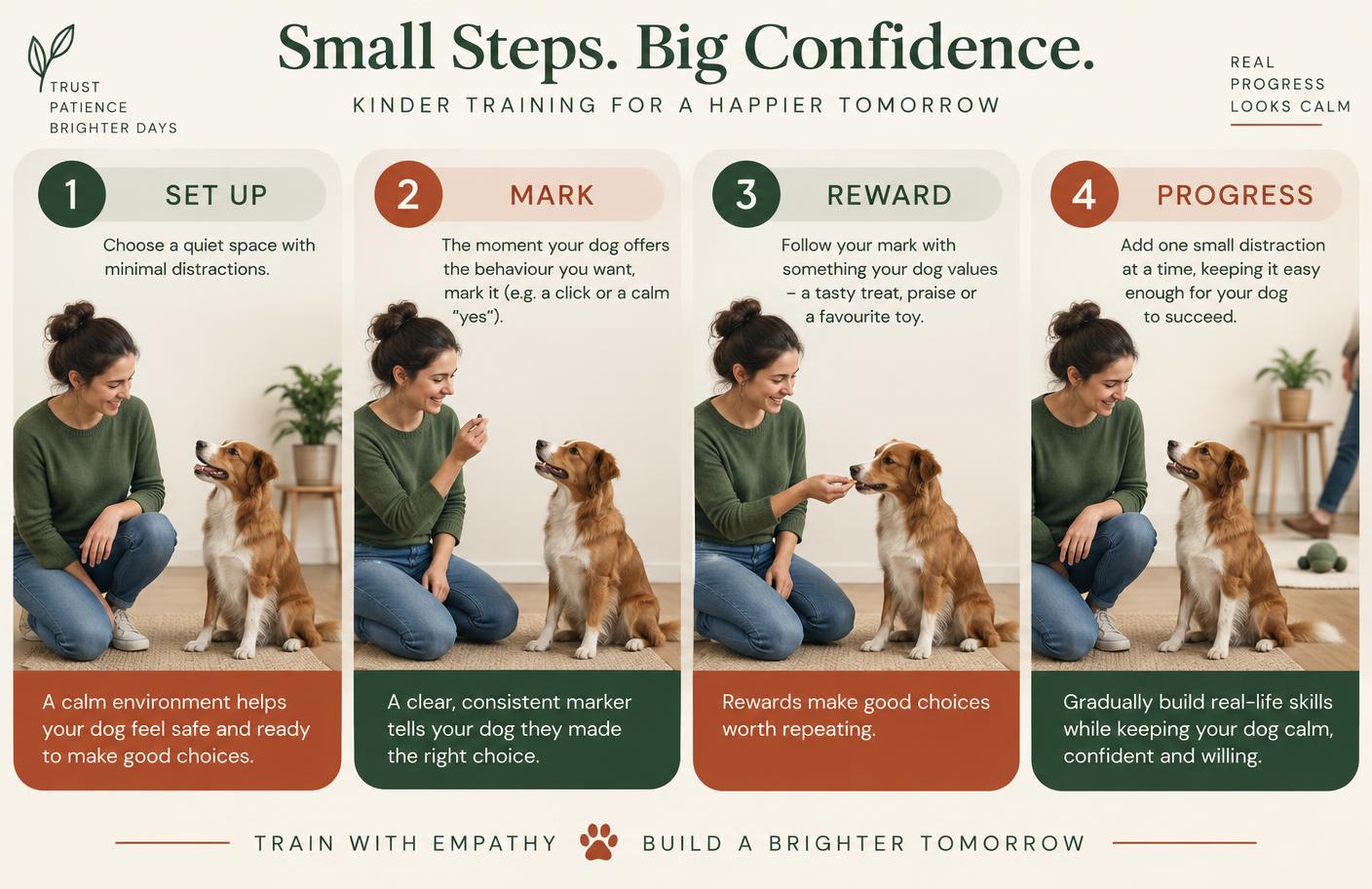
Step by step
Step 1
Start with you in the room
Give a stuffed toy and sit quietly nearby. The puppy learns that alone-with-something-good is normal.
Step 2
Step behind a barrier
Move behind a baby gate for a few seconds, then return before any worry. Repeat many times a day.
Step 3
Leave the room briefly
Step out for seconds, not minutes, returning calmly. Vary the length so the puppy cannot predict.
Step 4
Build minutes slowly
Increase absences only as fast as the puppy stays relaxed on camera. Whining means the last step was too big.
Step 5
Keep departures and returns boring
No fuss, no big goodbyes. Calm arrivals and departures keep alone-time emotionally neutral.
Troubleshooting
- Distress within seconds suggests separation anxiety developing — pause and consult a qualified behaviourist early.
- Never let a puppy 'cry it out'; panic practised becomes panic learned.