
Petarium Daily · 1 October 2026 · 12 min read
How to Crate Train a Puppy: A Kind, Step-by-Step Guide
Teach your puppy to enjoy a crate by rewarding voluntary entry, introducing the closed door for seconds and gradually building comfortable resting time. Stay nearby at first, provide frequent toilet breaks and reduce the difficulty whenever your puppy shows distress.
Key takeaways
- A crate should be an optional safe resting place, never a punishment.
- Build confidence with the door open before practising very short closures.
- Teach comfortable confinement and being alone as separate skills.
- Respond to crying by checking needs and distress, not by forcing a puppy to cry it out.
- Use a puppy-proofed area or arrange care when your puppy cannot comfortably manage the planned absence.
To crate train a puppy, make the crate rewarding with its door open, then practise closing it for a few seconds while you stay nearby. Gradually increase time only while your puppy remains relaxed, adding distance separately. Provide frequent toilet breaks and never force entry, use the crate as punishment or leave a frightened puppy to cry it out.
Does every puppy need a crate?
No. A crate can provide a quiet bed, support supervised house-training and help a dog become comfortable with temporary confinement. However, it is not essential equipment for raising a puppy, and some puppies settle better in a secure pen or puppy-proofed room.
The aim is a puppy who feels safe, not one who has stopped protesting through exhaustion. Using positive reinforcement training means rewarding behaviour you want and adjusting the setup when your puppy struggles. A crate cannot replace companionship, exercise, exploration, toilet access or teaching.
How should you choose and set up the crate?
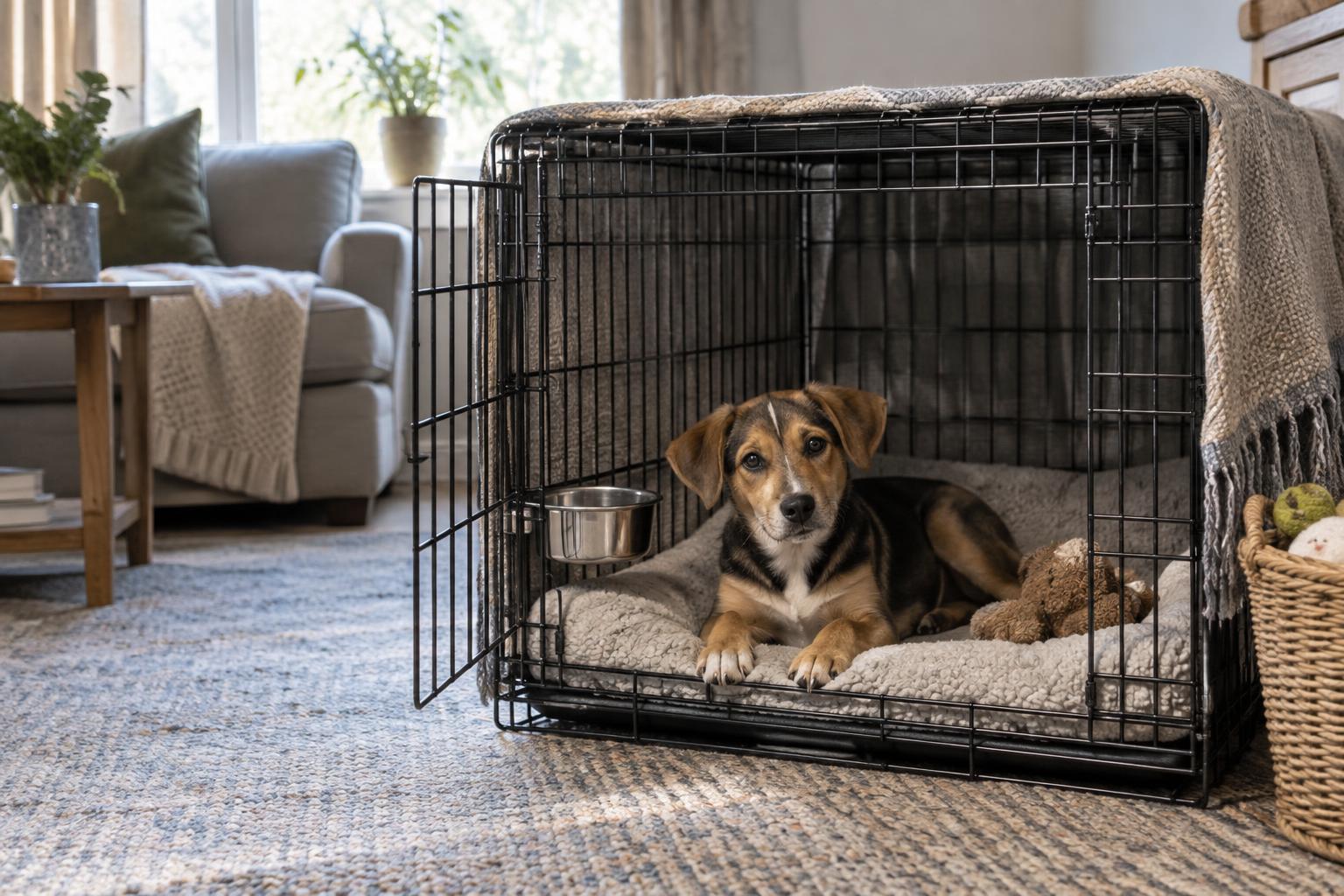
Choose a crate large enough for your puppy to stand naturally, turn around and lie fully stretched out. Check that the door, gaps and catches cannot trap paws or jaws, and reassess the fit as your puppy grows. Our guide to choosing a dog crate explains sizing, materials and positioning.
- Place it near family activity but away from busy walkways, direct sun, radiators and draughts.
- Secure the door open during introductions so it cannot swing shut and frighten your puppy.
- Use comfortable, washable bedding that your puppy does not shred or swallow.
- Provide fresh water in a stable or securely attached bowl; do not restrict drinking to prevent accidents.
- Offer only appropriately sized toys that you have already checked under supervision.
- If partially covering the crate helps, maintain ventilation and keep fabric beyond chewing reach.
What are the steps for crate training a puppy?
Start after a toilet trip, when your puppy is calm but awake enough to participate. Try sessions lasting roughly one to three minutes, stopping sooner if interest fades. These are practical starting points, not scientifically fixed targets; several easy repetitions are more useful than one long struggle.
- 1
Reward approaching the open crate
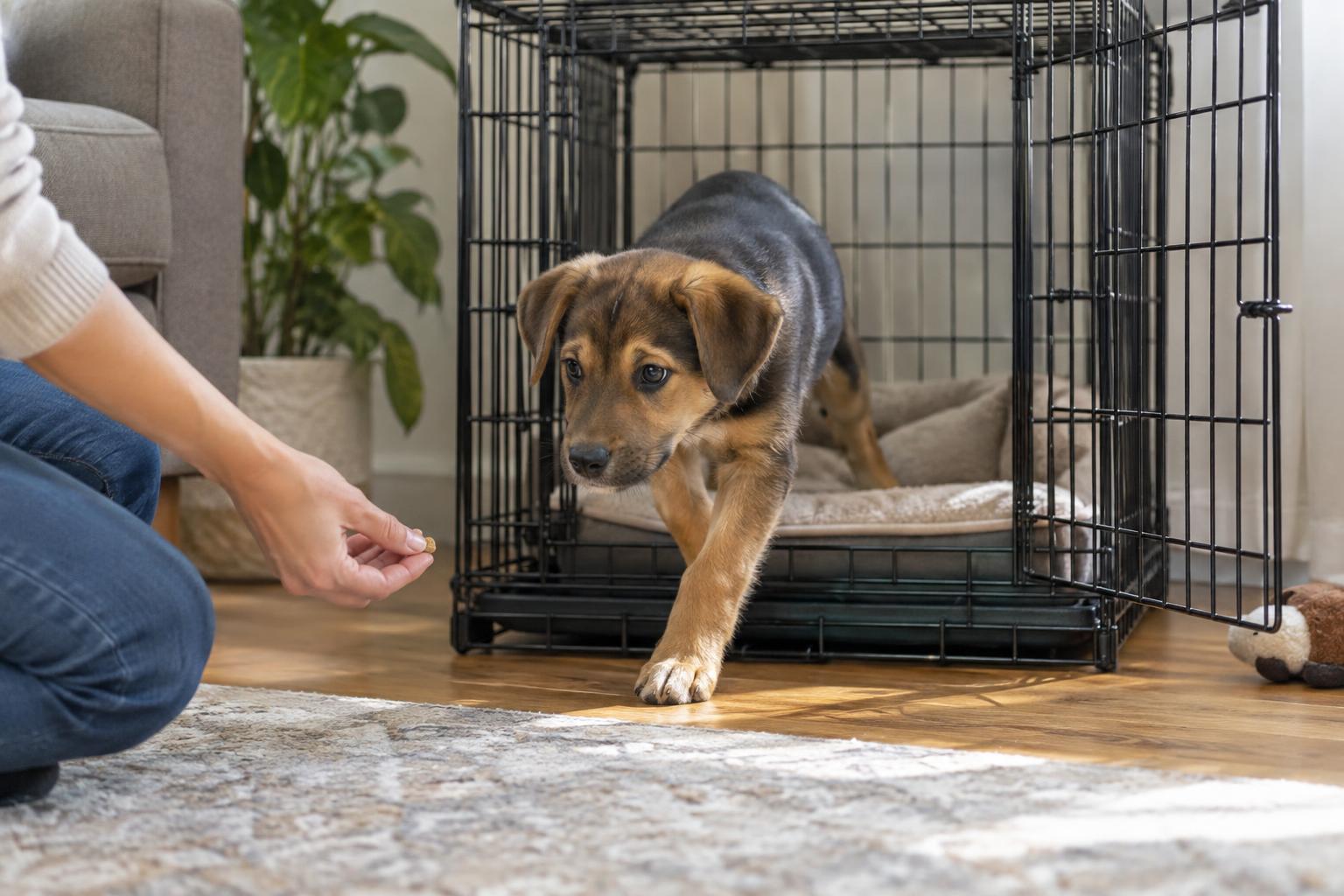
Sit nearby and reward looking at, sniffing or approaching the crate. Place food near the doorway, then slightly inside if your puppy is comfortable. Do not push, pull or carry them in to begin an exercise.
- 2
Build voluntary entry
Scatter a few small food rewards inside and let your puppy enter and leave freely. Reward all four paws going in without closing the door. If they stretch in while keeping their back feet outside, make the task easier.
- 3
Make staying inside worthwhile
Feed part of a meal inside, moving the bowl only as far in as your puppy willingly follows. Reward sitting or lying down. Once entry is predictable, say a simple cue such as “bed” just before they step inside.
- 4
Introduce door movement
Touch the door, reward and pause. Progress to moving it slightly, then briefly bringing it towards the frame. If your puppy freezes, rushes out or stops eating, return to a smaller movement rather than shutting it quickly.
- 5
Close and immediately reopen
When door movement is unremarkable, close it for a second or two, reward and reopen while staying beside the crate. Repeat easy successes. Gradually try a few more seconds, mixing shorter repetitions between harder ones.
- 6
Build relaxed resting, then distance
Extend time while sitting nearby, watching for a loose body and comfortable breathing. Separately practise standing up, taking one step away and returning. Do not increase duration, distance and separation together, and finish before your puppy becomes worried.
How long does crate training take?
There is no reliable universal timetable. Some puppies happily enter on the first day but need much longer to tolerate a closed door or someone leaving. Others need days or weeks of gradual work, particularly after frightening confinement experiences. Follow the crate comfort exercise without treating any calendar deadline as a test.
| Current stage | Ready to progress when… | Make it easier if… |
|---|---|---|
| Open-door exploration | Your puppy enters willingly and can leave calmly. | They lean away, hesitate or snatch food and retreat. |
| Brief door closure | They remain loose-bodied when the door moves and closes. | They rush the door, freeze or repeatedly paw at it. |
| Resting with you nearby | They settle without constant feeding or reassurance. | They repeatedly get up, pant or scan for an exit. |
| Small increases in distance | Your movements do not interrupt comfortable resting. | They startle, follow anxiously or become vocal. |
How long can a puppy stay in a crate?
There is no single safe maximum for every puppy. Toilet needs, age, health, recent activity and emotional comfort all matter. Young puppies commonly need toilet opportunities every one to two hours while awake, sometimes more often. That is a toilet-planning guide, not permission to confine a puppy for that long.
The popular “age in months plus one hour” rule is not a dependable welfare limit. A puppy may physically hold urine yet feel distressed, and being asleep overnight differs from awake daytime confinement. A crate is unsuitable for keeping a puppy contained throughout a working day; arrange company, breaks and suitable care.
Young puppies need substantial sleep across 24 hours
Protect naps, but provide several comfortable resting options rather than assuming every sleep belongs behind a closed door. If your puppy wakes, becomes restless or asks to come out, check their needs. Unusual sleepiness, difficulty waking or a sudden change in energy is not something to dismiss as normal puppy sleep.
How does crate training work with toilet training?
Many puppies prefer not to soil their sleeping area, so a crate can help you notice when they wake and need to go out. It does not teach bladder control or replace frequent trips. Combine it with a realistic puppy house-training routine and reward toileting in the right place.
- Offer a toilet trip before each closed-door session.
- Take your puppy out promptly after waking, eating, drinking or lively play.
- Watch for sniffing, circling, restlessness or suddenly disengaging from an activity.
- Reward immediately after toileting in the designated place.
- Keep a simple record of sleep, meals and accidents to identify individual patterns.
If an accident happens, clean it thoroughly with a pet-safe enzymatic cleaner and shorten the next interval. Never punish your puppy or shrink the crate below a comfortable size to discourage toileting. Repeated accidents can reflect an unsuitable schedule, anxiety, previous housing conditions or illness rather than stubbornness.
Where should a puppy sleep on the first few nights?
Keep your puppy close enough to hear and reassure them, often beside your bed initially. A newly arrived puppy has lost familiar company and may find isolation frightening. If comfortable closed-door confinement has not yet been taught, use a safe pen or puppy-proofed sleeping area rather than forcing an overnight crate session.
- 1
Prepare a quiet bedtime
Finish with calm interaction and a toilet opportunity. Avoid frantic play immediately before settling, and do not withhold water to try to guarantee a dry night.
- 2
Stay nearby
Use your presence and a quiet voice to help your puppy settle. Comforting a worried puppy does not prevent independence; it makes the new environment feel safer.
- 3
Respond to waking
If your puppy wakes and fusses, offer a quiet toilet trip without turning it into playtime. Return to the sleeping area afterwards and check comfort if they still cannot settle.
- 4
Move the bed gradually if needed
Once nights are consistently comfortable, move the sleeping setup towards its intended location in small stages. Stop or reverse the move if distress returns.
What should you do if your puppy cries in the crate?
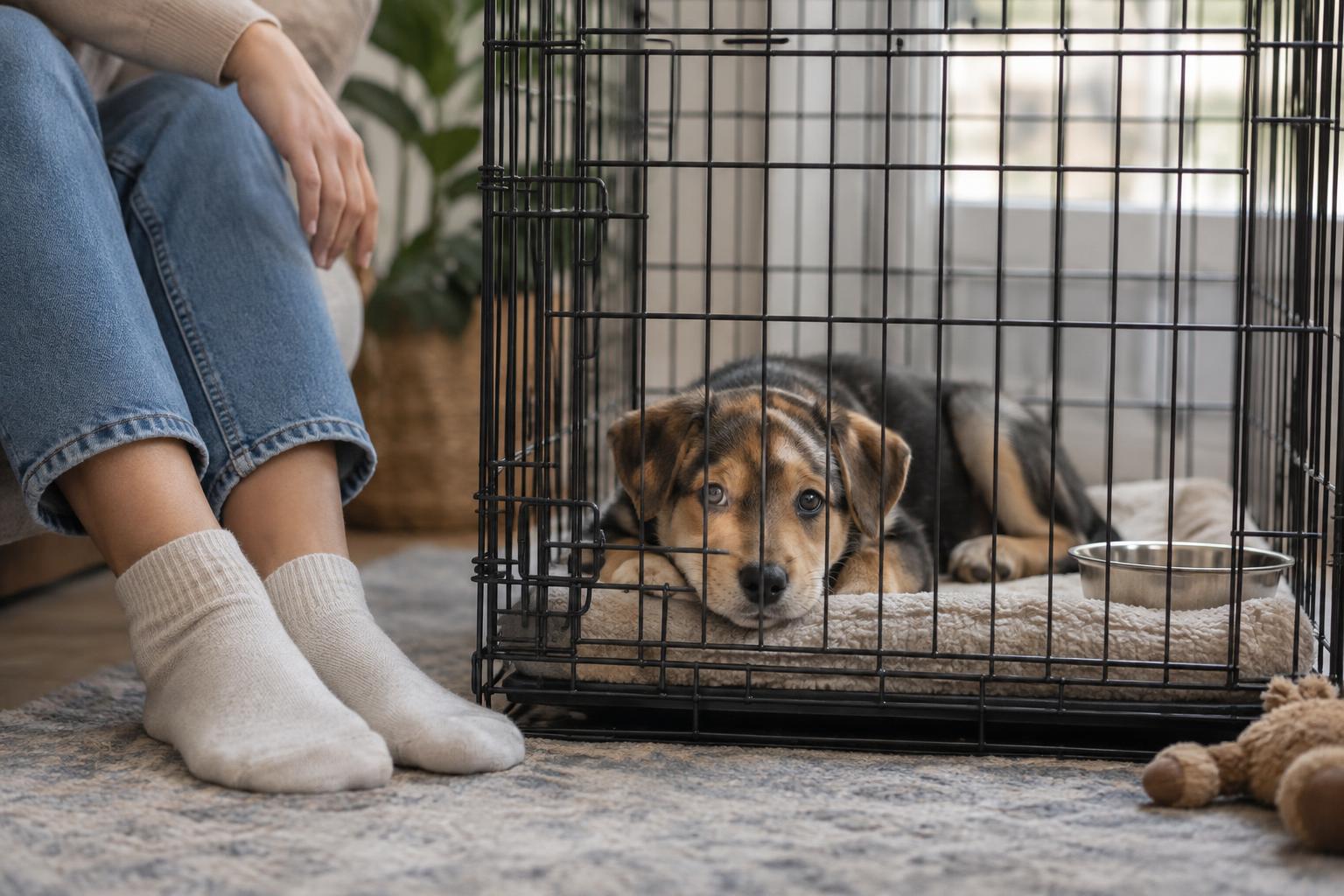
Crying is information, not proof of manipulation. Your puppy may need the toilet, feel frustrated, be uncomfortable or fear being trapped or alone. Check promptly rather than timing a compulsory wait, and look at the whole body: an isolated whine and frantic escape attempts need different responses.
| What you notice | What to do |
|---|---|
| Waking, circling or sniffing | Offer a quiet toilet trip promptly. |
| A brief whine with otherwise relaxed behaviour | Stay close, check needs and make the next repetition easier. |
| Escalating barking, panting, drooling or frantic digging | End confinement calmly and safely; reassess the training plan. |
| Biting bars or forceful escape attempts | Prevent injury and stop crate use until you have a safer plan. |
| Repeated crying with physical symptoms | Contact your vet rather than assuming a training problem. |
Whenever possible, open the door before distress begins. If your puppy is already frightened, do not insist on silence before helping them out; welfare takes priority over a training rule. Never shout, hit the crate or use startling noises, because these can make both confinement and your approach feel threatening.
When can you leave a crate-trained puppy alone?
Being comfortable in a crate does not automatically mean being comfortable alone. Practise teaching a puppy to be alone separately, beginning with tiny movements or absences your puppy can manage calmly. A camera can help you spot pacing, panting or persistent watching that silence alone would miss.
Return before worry develops and increase absence gradually rather than jumping from seconds to a shopping trip. Arrange family help, a suitable sitter or other safe care for unavoidable longer absences. Do not use a meal toy to mask an absence your puppy cannot otherwise cope with.
What if your puppy dislikes the crate but settles elsewhere?
Use the alternative that safely meets their needs. A pen or puppy-proofed room can allow more movement, separate resting and water areas, and an appropriate toilet arrangement when necessary. Barriers can also cause distress, so introduce these gently. There is limited evidence that routine household crating itself prevents separation-related problems.
What does a realistic daily crate-training routine look like?
| Part of the day | Suggested approach |
|---|---|
| After waking | Go to the toilet first, then offer food and appropriate interaction. |
| During a calm waking period | Practise a few easy entries or brief closures, then finish. |
| When ready to nap | Offer the crate or another comfortable bed; close the door only if already comfortable. |
| After the nap | Provide a prompt toilet opportunity and time outside the crate. |
| Evening | Repeat a manageable exercise and prepare a calm sleeping arrangement. |
Fit training around meals, gentle play, rest and positive experiences outside the home. Protect the puppy socialisation window with safe, pleasant exposure appropriate to your vet’s vaccination advice. Crating should never become a way to avoid supervising normal puppy exploration or managing biting and chewing.
When should you contact a vet or behaviour professional?
For persistent distress, ask your vet to check for medical contributors and recommend an appropriately qualified, reward-based behaviour professional. A crate is not a treatment for separation anxiety and may increase injury risk in a panicking dog. Until assessed, use the safest arrangement your puppy can tolerate and avoid rehearsing frightening confinement.
Which crate-training mistakes should you avoid?
- Luring your puppy inside and unexpectedly locking the door before they are ready.
- Increasing time, distance and separation in the same session.
- Using the crate only when everyone leaves the house.
- Crating for excessive periods because the puppy is quiet.
- Punishing accidents or treating crying as deliberate disobedience.
- Expecting a puppy to tolerate confinement without enough toilet opportunities, company and activity.
Keep the crate one small part of a broader new puppy care plan. Success means your puppy enters willingly, rests comfortably and still receives the freedom, care and companionship they need. If a different safe sleeping arrangement works better, choosing it is good care—not failed training.
Frequently asked questions
What age should you start crate training a puppy?
You can begin gentle, open-door introductions when your puppy comes home, commonly at around eight weeks or older. Reward voluntary exploration without expecting immediate confinement or independent sleeping. Previous experience matters more than a particular starting age, and older puppies and adult dogs can also learn to feel comfortable in a crate.
Can you crate train a puppy in three days?
Some puppies learn to enter and rest in an open crate within a few days, particularly if they already have positive experience. That does not mean they are ready for prolonged confinement or being left alone. There is no guaranteed three-day method; progress according to relaxed behaviour rather than a deadline.
Should you put a blanket over a puppy’s crate?
A partial cover helps some puppies settle, while others prefer an unobstructed view. Keep ventilation clear and avoid covering the crate in a warm room or direct sunlight. Secure fabric beyond chewing reach and remove it if your puppy pulls it through the bars, becomes hotter or seems more worried.
Should a puppy have water in the crate overnight?
Fresh water should remain available, including during overnight confinement, unless your vet has given specific medical instructions. Use a stable or securely attached bowl and check that bedding remains dry. Withholding water is not an appropriate toilet-training method; provide toilet opportunities and discuss unusually increased thirst or urination with your vet.
Is it all right to move a sleeping puppy into the crate?
You can offer the crate as a sleeping place, but moving a sleeping puppy inside does not teach comfortable confinement. They may wake frightened if the surroundings have changed and the door is locked. Build positive associations while awake, and avoid using sleep as a shortcut around gradual door training.
Can two puppies share a crate?
Give each puppy their own suitable resting space rather than routinely shutting them together in one crate. Puppies need to move away from each other, sleep undisturbed and access water without competition. Introduce each space positively and practise individual comfort gradually; do not abruptly isolate puppies who become distressed when separated.
When can you stop using a puppy crate?
There is no required finishing age. Gradually offer more freedom when your puppy can rest safely in a puppy-proofed area, with suitable supervision and a reliable toilet routine. Trial short periods first. You can keep the crate available with its door secured open if your dog enjoys using it as a bed.
Sources and further reading
- RSPCA — guidance library — RSPCA
- Blue Cross — guidance library — Blue Cross
- Crate training — Dogs Trust
- Crate Training Your Dog: An Overview — VCA Animal Hospitals
More from Petarium Daily
- Yavru köpek maması: A Complete Guide to Puppy Food
Yavru köpek maması means puppy food: choose a complete diet formulated for growth and suitable for your puppy’s expected adult size. Feed measured meals, adjust portions using weight and body condition, and change foods gradually rather than relying on a universal grams-per-day rule.
- How Long Do Rabbits Live? Lifespan and Healthy Ageing
Pet rabbits usually live for around 8–12 years, although some reach their teens and others die younger. Genetics play a part, but appropriate feeding, spacious housing, rabbit companionship, vaccination and prompt veterinary care all help support a longer, healthier life.
- Dog Training Tips: A Practical Guide to Better Behaviour
The most effective dog training tips are to reward behaviours you want, practise in manageable steps and prevent unwanted habits without frightening or hurting your dog. Short, enjoyable sessions, consistent cues and realistic expectations help puppies and adult dogs learn.