Petarium Daily · 30 September 2026 · 11 min read
Dog Training Tips: A Practical Guide to Better Behaviour
The most effective dog training tips are to reward behaviours you want, practise in manageable steps and prevent unwanted habits without frightening or hurting your dog. Short, enjoyable sessions, consistent cues and realistic expectations help puppies and adult dogs learn.
Key takeaways
- Reward the behaviour you want immediately, using something your dog genuinely values.
- Start somewhere quiet and increase distractions gradually.
- Teach a useful alternative to unwanted behaviour rather than relying on punishment.
- Use leads, barriers and supervision to prevent unsafe behaviour while learning.
- Sudden behaviour changes, pain or escalating aggression need veterinary advice.
The best dog training tips are simple: reward behaviour you want, make each task achievable and practise consistently without fear or force. Start in a quiet place, use clear cues and finish before your dog loses interest. These principles work for puppies, rescue dogs and older companions, although progress depends on health, temperament and previous experience.
What makes dog training effective?
Dogs repeat behaviours that bring worthwhile results. Food, play, attention and permission to sniff can all act as rewards, depending on the individual and situation. Positive reinforcement training means adding something your dog values after a behaviour so that behaviour becomes more likely.
- Reward promptly: deliver the reward while the connection with the behaviour is still clear.
- Use one cue: say “sit” once rather than repeating it while your dog struggles.
- Keep criteria clear: decide whether you are rewarding a loose lead, four paws down or another observable action.
- Agree household rules: everyone should use the same cues and reward the same behaviours.
- Manage the surroundings: barriers, distance and supervision prevent mistakes while skills develop.
How should you use treats and other rewards?
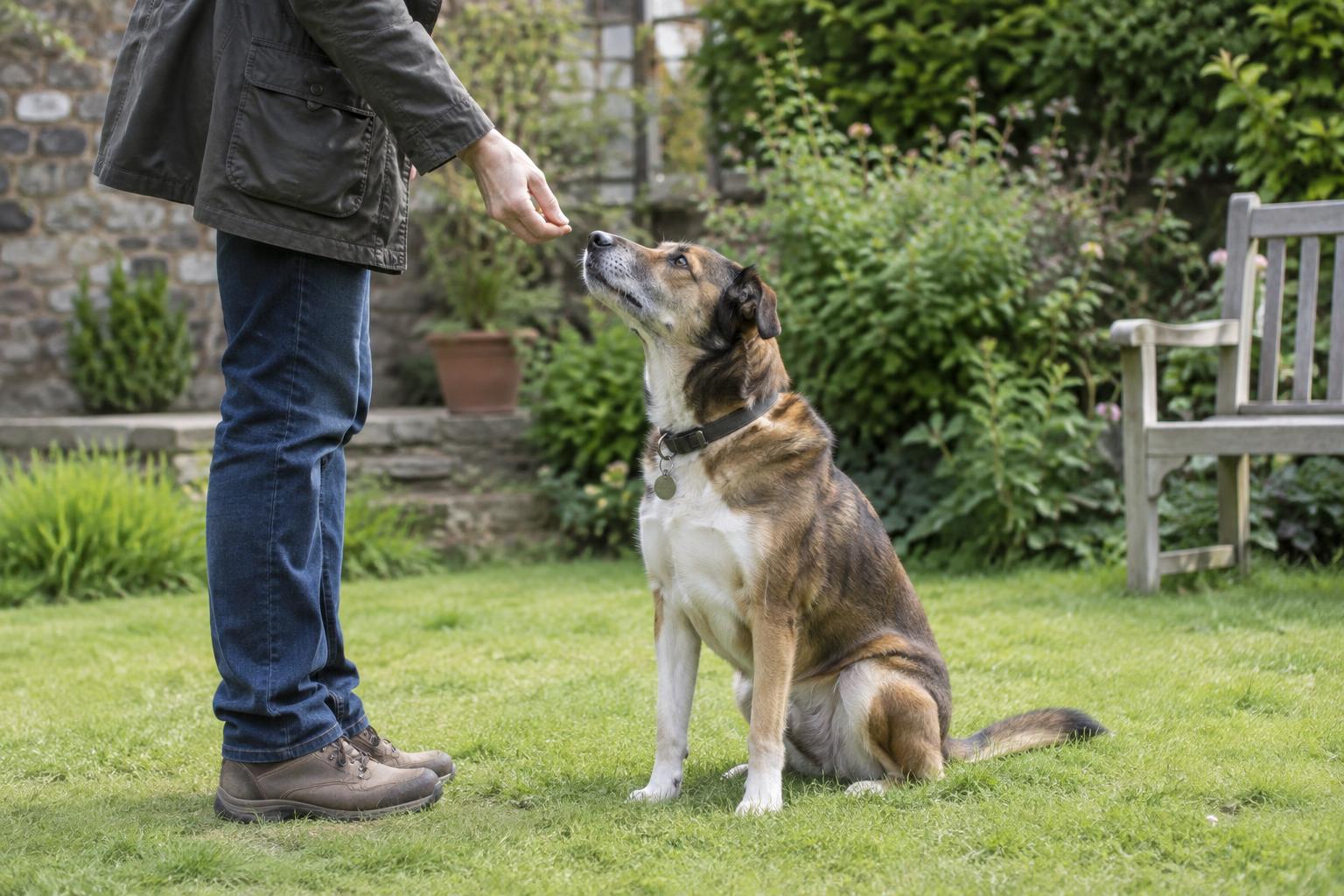
Choose tiny, easy-to-eat rewards so your dog can swallow comfortably and continue learning. For an easy exercise at home, part of their normal food allowance may work; outdoors, a more appealing reward may help. A marker word such as “yes” identifies the exact successful moment, then predicts a reward.
Initially, reward each successful attempt. Once a behaviour is reliable, vary food rewards gradually while continuing to reinforce it with praise, play or access to enjoyable activities. As a general nutritional guideline, treats and other extras should provide no more than 10% of daily calories; dogs on therapeutic diets may need stricter limits.
Keep training rewards within the daily food allowance
How long and how often should you train your dog?
For many dogs, one to five minutes is a useful starting point for focused practice, repeated when both of you are comfortable. This is a practical suggestion, not a scientifically established optimum. A puppy may manage only a few repetitions, while an experienced adult may enjoy longer sessions with breaks.
| Dog or situation | Useful approach | What to watch for |
|---|---|---|
| Young puppy | Practise one simple skill for a few repetitions between rest periods. | Disengagement, mouthing or frantic activity can mean a break is needed. |
| Adolescent dog | Revisit easy foundations and reward generously around manageable distractions. | Previously reliable responses may become inconsistent. |
| Adult beginner or newly adopted dog | Start quietly with predictable routines and achievable exercises. | Stress may initially reduce appetite or interest in interaction. |
| Older dog | Use comfortable surfaces and adapt movements to mobility and hearing. | Reluctance to move may reflect pain rather than unwillingness. |
Dogs do not automatically understand that a kitchen cue also applies in a busy park. Practise in several quiet locations before adding distractions. Increase distance, duration or distraction one at a time; repeated failure means you should simplify the task, not become firmer.
Which skills should you teach first?
- 1
Responding to their name
Say your dog's name once in a quiet room. Mark and reward when they turn towards you. Their name should predict useful information, not a telling-off; do not require sustained eye contact.
- 2
Touching your hand
Present an open palm close to their nose. Mark and reward a voluntary nose touch, then add a cue once the movement is familiar. Hand targeting can guide your dog without grabbing their collar.
- 3
Settling on a mat
Reward looking at, stepping onto and eventually relaxing on a comfortable mat. Place rewards calmly on the mat. Build duration gradually and use a release cue so the exercise has a clear ending.
- 4
Leaving something alone
Hold a low-value treat inside a closed hand without teasing your dog. Reward from the other hand when they disengage. Progress to protected items on the floor; do not practise with anything dangerous.
- 5
Dropping an object
Offer a suitable toy, then exchange it for food or another toy. Mark the release and often return the original toy. Avoid chasing or prising open the mouth, which can encourage guarding or swallowing.
How do you teach a reliable recall?
Recall means returning promptly when called, even when something else is interesting. Start indoors with a distinctive cue, then practise in a securely enclosed space. Coming back should predict something worthwhile, not always the end of freedom or a procedure your dog dislikes.
- 1
Begin very close
Call when your dog is already likely to approach. Move a little away if helpful, then reward generously when they reach you.
- 2
Practise the complete return
Reward beside you and separately build comfort with a gentle harness or collar touch. Sometimes release your dog straight back to sniffing.
- 3
Add outdoor difficulty safely
Use a long line attached to a well-fitting body harness where suitable. Increase distractions gradually and manage the line to prevent tangling or sudden stops.
How do you stop pulling on the lead?
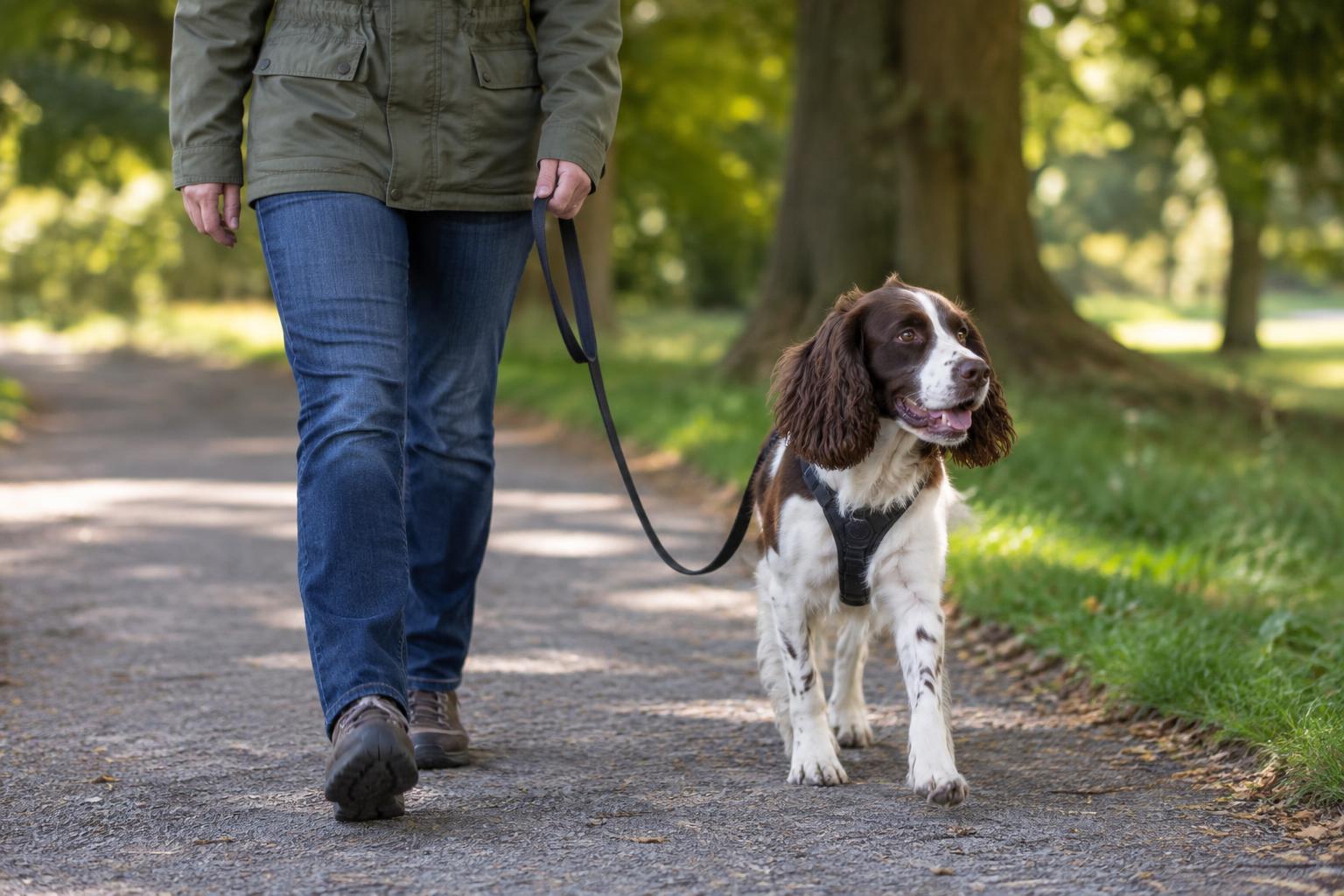
Loose-lead walking means the lead stays slack; it need not mean a formal heel position throughout the walk. Pulling often persists because it gets the dog closer to interesting smells or people. Teach that a slack lead makes progress possible, while allowing plenty of appropriate sniffing.
- 1
Reward the starting position
In a quiet area, reward your dog near your side with the lead loose. Take one or two steps and reward again.
- 2
Respond calmly to tension
Pause or gently change direction without jerking. Mark and reward when your dog reconnects and the lead slackens, then continue.
- 3
Make the walk achievable
Use short practice sections between sniffing breaks. If your dog cannot engage, move farther from distractions rather than repeatedly stopping in an overwhelming place.
What are the most useful toilet-training tips?
Take puppies outside after waking, eating, drinking and active play, and whenever they begin sniffing or circling. Stay nearby and reward immediately after they finish toileting in the right place. Our puppy house-training guide explains how supervision and frequent opportunities reduce accidents.
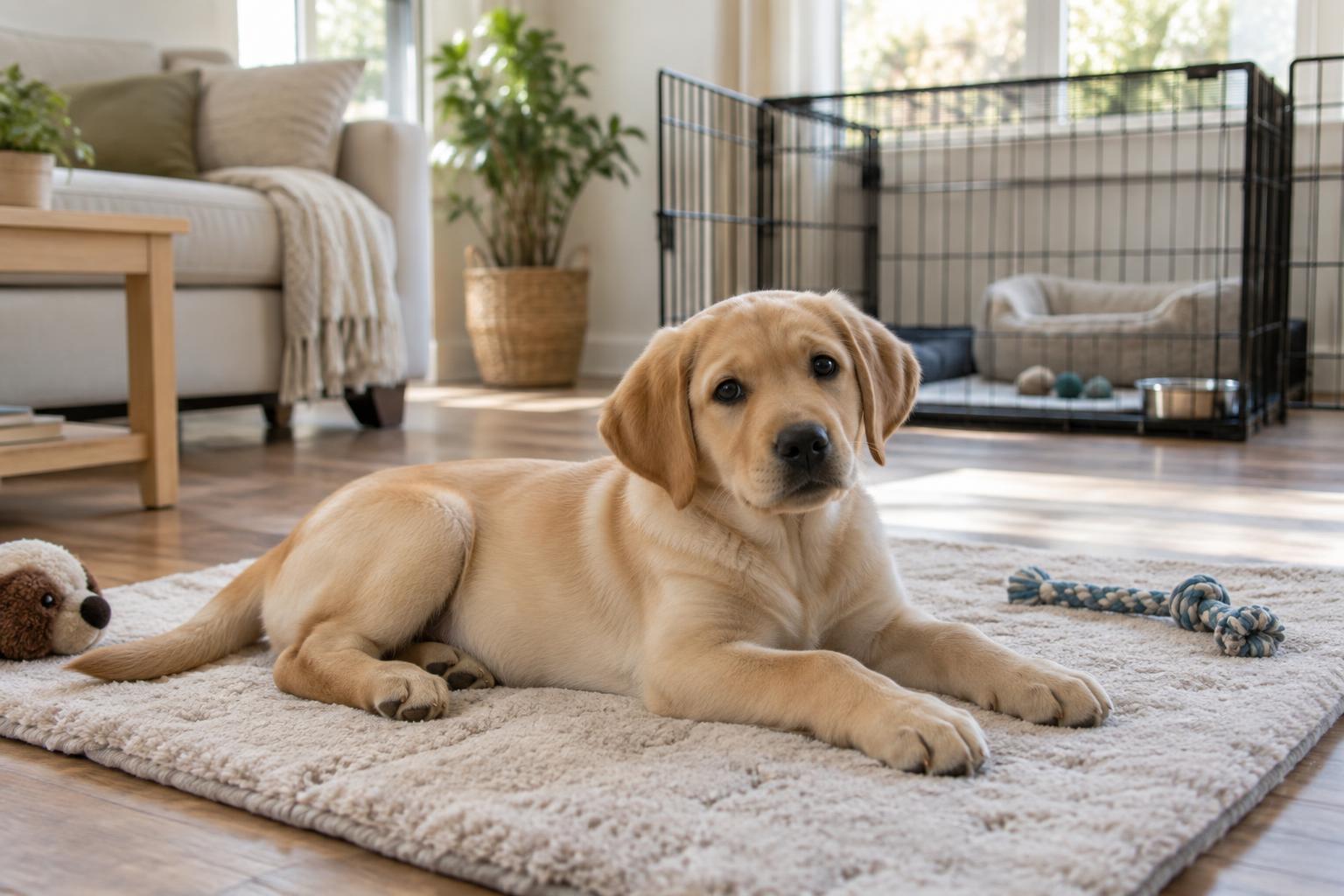
Indoors, supervise or use a comfortable puppy-proofed area when you cannot watch closely. A crate is optional, must be introduced positively and should never force a puppy to hold on beyond their ability. Clean accidents thoroughly with a suitable pet-safe cleaner; punishment can teach a dog to hide toileting.
How should you handle common unwanted behaviours?
| Behaviour | Immediate management | Useful alternative to reward |
|---|---|---|
| Jumping up | Use a barrier or lead to prevent overwhelming greetings; ask visitors not to encourage jumping. | Four paws on the floor or standing calmly for attention. |
| Puppy mouthing | Pause interaction calmly and offer an appropriate toy; check whether rest or a toilet break is needed. | Gentle play with toys and calm interaction. |
| Barking at windows | Reduce the view and create distance from the trigger. | Turning towards you or settling away from the window. |
| Stealing household objects | Put tempting items away and trade safely instead of chasing. | Choosing suitable toys and releasing objects willingly. |
| Counter-surfing | Keep food out of reach and prevent unsupervised kitchen access. | Resting on a mat away from food preparation. |
Exercise, sniffing, suitable chewing and undisturbed sleep support behaviour, but simply exhausting a dog is not a training plan. Barking, chewing or restlessness may also reflect fear, frustration or discomfort. If toileting slips, revisit your house-training routine while considering whether a health check is needed.
How do you socialise a puppy without overwhelming them?
A puppy's particularly sensitive socialisation period is roughly three to 12 weeks, with some guidance extending it to around 14 weeks. This is not a deadline after which learning stops. Offer brief, positive experiences of different people, surfaces, sounds and suitable dogs, allowing the puppy to observe without compulsory greetings.
Ask your vet how to balance early socialisation with local infectious-disease risks and vaccination status. Safe observation while carried, and carefully managed contact with healthy, appropriately vaccinated dogs, may be options. Socialisation means learning that everyday experiences are safe, not meeting as many dogs as possible.
- Loose movement, voluntary exploration and willingness to disengage usually suggest the situation is manageable.
- Turning away, crouching, repeated lip-licking or trying to leave can indicate discomfort; interpret the whole situation.
- Freezing, lunging, frantic escape attempts or inability to recover mean you should stop and create distance.
- Taking food does not automatically prove a dog feels comfortable.
What if your dog is frightened, reactive or aggressive?
Create distance first and avoid situations that provoke repeated barking, lunging or snapping. Do not force a frightened dog to stay close to a trigger until they stop reacting; stillness can reflect shutdown rather than comfort. A vet can assess possible medical contributors and recommend suitably qualified behaviour support.
Where bite risk exists, use secure separation and professional guidance. Gradual positive muzzle training can make a well-fitting basket muzzle a helpful safety tool, provided the dog can pant and receive rewards. A muzzle does not make forced handling, close encounters or unsupervised contact safe.
What does a realistic daily training plan look like?
- 1
Choose one priority
Pick the skill that will improve daily life most, such as returning when called or settling during meals.
- 2
Prepare the environment
Choose a quiet space, have rewards ready and make sure your dog has had a toilet opportunity.
- 3
Practise a small, achievable step
Reward several easy successes. If your dog struggles repeatedly, lower the difficulty or take a break.
- 4
Use the skill in everyday life
Reward a check-in on walks or calm waiting before opening a door. Keep safety barriers in place regardless of training progress.
Track what your dog could do, where they practised and which distractions were present. “Returned from a short distance in the garden” is more useful than “good today”. Progress is rarely perfectly linear; stress, illness and environmental changes can temporarily make familiar skills harder.
How do you choose a good dog trainer?
Ask exactly what happens when a dog gets something wrong. A suitable trainer should explain how they use reward-based learning, adapt sessions and protect welfare. Training titles alone do not guarantee competence, so check relevant education, practical experience, insurance and continuing professional development.
- Look for clear explanations, achievable homework and willingness to involve your vet.
- Choose classes with space between dogs, controlled interactions and breaks when needed.
- Avoid guaranteed cures, dominance-based explanations and demands to ignore signs of distress.
- For aggression, significant fear or separation-related distress, seek veterinary assessment and appropriately qualified behaviour help.
Successful training is not about winning a contest with your dog. It is about making useful behaviour understandable and rewarding while meeting their needs. Start small, protect safety and judge progress against your own dog's starting point.
Frequently asked questions
What is the first thing I should teach my dog?
Start with responding to their name and feeling comfortable engaging with you. Say the name once in a quiet setting, then reward a voluntary turn towards you. Alongside this, establish toilet opportunities, rest and safe management. Recall and settling are often more useful everyday priorities than teaching lots of tricks.
Can you train an older dog?
Yes. Older dogs can learn new skills, although established habits may need patient practice and careful management. Adapt exercises for mobility, hearing, vision and stamina, and use comfortable surfaces. If your dog suddenly struggles with familiar tasks or seems reluctant to participate, arrange a veterinary check rather than assuming age or stubbornness explains it.
How long does it take to train a dog?
There is no single reliable timescale. A simple behaviour may begin to appear within a few sessions, while dependable responses around distractions usually require much more practice. Fear-related problems can need a longer professional plan. Measure progress by successful behaviour in specific situations, not by promises of a fully trained dog within a fixed number of days.
Why does my dog listen indoors but ignore me outside?
Outdoor smells, movement and other dogs compete strongly for attention. Your dog may also not have learnt that the cue applies in that setting. Start in a quieter outdoor space, work at closer range and use appealing rewards. If they cannot engage, reduce distractions or increase distance rather than repeating the cue more loudly.
Will treats make my dog refuse to work without food?
Not if you distinguish rewards from visible bribes. Fade food lures early, give the cue without displaying a treat and reward afterwards. Once the skill is reliable, vary rewards gradually and include play or sniffing opportunities. Continue paying generously for difficult or safety-critical behaviours, especially recall, rather than aiming to eliminate rewards altogether.
Should I ignore bad behaviour?
Not automatically. Ignoring a behaviour only helps in some situations, such as when attention is maintaining it, and it does not teach an alternative. Fear, pain, distress and dangerous behaviour need an appropriate response. Prevent rehearsal where possible, meet the underlying need and reward a safer behaviour your dog can realistically perform.
Can I train my dog to cope with being left alone?
Many dogs benefit from gradual practice with absences short enough that they remain comfortable, but separation-related distress needs an individual approach. Do not leave a panicking dog to cry it out or assume a crate will solve the problem. Contact your vet and qualified behaviour support, and arrange help to minimise distressing absences meanwhile.
Sources and further reading
- Dog training — RSPCA
- Dog training advice — Dogs Trust
- VCA Animal Hospitals — guidance library — VCA Animal Hospitals
- Global Nutrition Guidelines — World Small Animal Veterinary Association
- Dog bite prevention — American Veterinary Medical Association
More from Petarium Daily
- Yavru köpek maması: A Complete Guide to Puppy Food
Yavru köpek maması means puppy food: choose a complete diet formulated for growth and suitable for your puppy’s expected adult size. Feed measured meals, adjust portions using weight and body condition, and change foods gradually rather than relying on a universal grams-per-day rule.
- How Long Do Rabbits Live? Lifespan and Healthy Ageing
Pet rabbits usually live for around 8–12 years, although some reach their teens and others die younger. Genetics play a part, but appropriate feeding, spacious housing, rabbit companionship, vaccination and prompt veterinary care all help support a longer, healthier life.