
Petarium Daily · 8 October 2026 · 10 min read
How Do Cats Communicate? Vocal, Visual, and Scent Signals
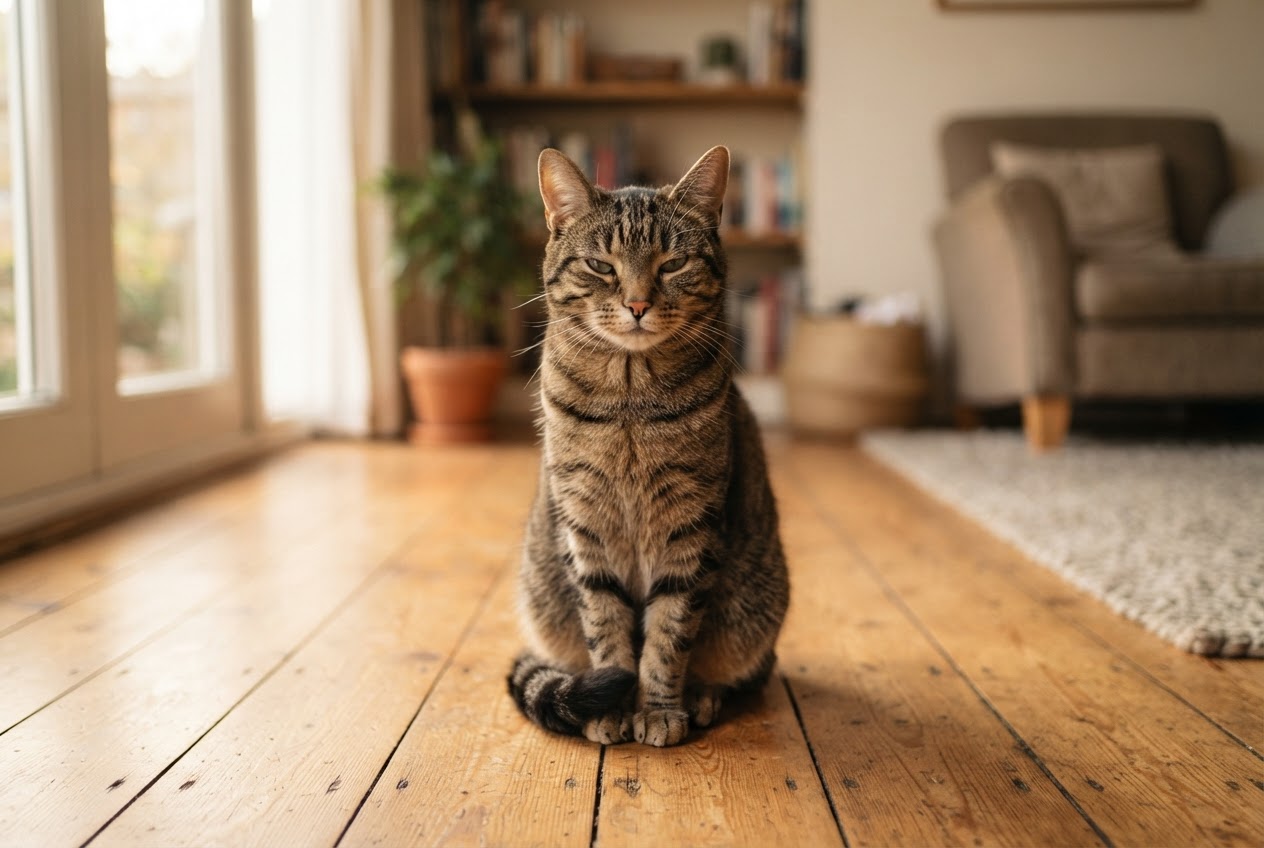
Cats communicate using a subtle, multi-layered system combining vocal sounds, body posture, facial expressions, and chemical scent marking. By understanding how feline signals work together in context, you can accurately interpret your cat's emotional state and strengthen your bond.
Key takeaways
- Cats rely heavily on chemical communication, using pheromones from facial and body glands to mark territory and convey safety.
- Adult cats rarely meow at other adult felines; the domestic meow is primarily adapted to direct communication with humans.
- Tail carriage, ear positioning, and pupil dilation offer immediate, real-time insights into your cat's stress and comfort levels.
- Purring does not always signal contentment; cats also purr to self-soothe when experiencing fear, physical pain, or distress.
- A sudden change in communication style or vocal frequency frequently indicates an underlying medical issue rather than behavioural stubbornness.
How Do Cats Communicate?
Cats communicate using an intricate blend of visual postures, chemical scent cues, vocal sounds, and tactile touch. Because domestic felines descend from solitary territorial hunters, their ancestral communication system evolved primarily to maintain safe distance and avoid physical conflict rather than negotiate group dynamics. Today, our companion cats use these same evolutionary tools to negotiate daily life with both human families and other pets.
Understanding how your cat expresses feelings requires assessing the whole animal within its immediate environment. A twitching tail, an arched spine, or a sharp chirrup can mean vastly different things depending on ear rotation, pupil size, and current surroundings. By exploring feline signals systematically, owners can learn to read the subtle messages their companions send every day.
Visual Signals: How Cats Speak with Body Language
Visual cues represent the most immediate, real-time method cats use to express intention. Felines continually adjust their ears, eyes, whiskers, and spine to convey emotional states ranging from relaxed confidence to defensive arousal. Learning to interpret cat body language: how to read your cat's subtle signals prevents miscommunication and prevents unwanted defensive reactions.
The Tail: The Feline Emotional Barometer
A cat's tail is exceptionally mobile and serves as one of the clearest indicators of current mood. When evaluating tail signals, consider both elevation and movement velocity:
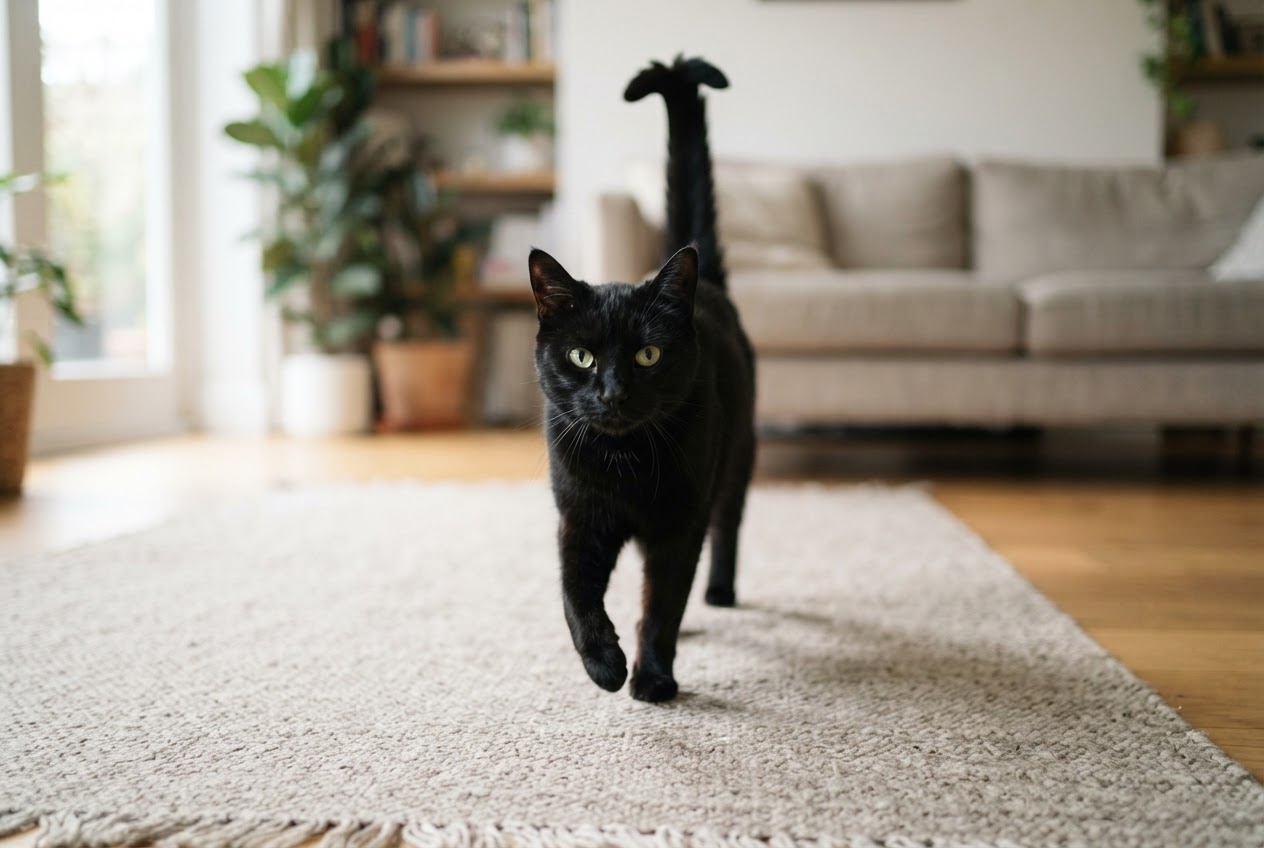
- Upright with a gentle hook: Indicates a friendly, confident greeting. The cat feels secure and welcomes polite interaction.
- Horizontal or neutral: Reflects an emotionally neutral or exploratory state, common when navigating a calm room.
- Tucked tightly under the body: Signals intense fear, submission, or an effort to appear physically smaller.
- Puffed or bristled: Shows extreme arousal, defensive fear, or an attempt to deter a perceived threat by exaggerating body size.
- Rhythmic swishing or thumping: Conveys rising frustration, cognitive conflict, or overstimulation. When a tail starts thumping, hands should be removed immediately.
Ears, Eyes, and Whiskers
Subtle shifts around the head reveal significant emotional nuances. Cats possess more than twenty individual muscles controlling each outer ear, permitting independent movement toward auditory stimuli. Forward-facing ears denote engagement or interest, sideways 'airplane ears' suggest irritation, and flattened ears pressed firmly against the skull indicate acute terror or imminent self-defence.
Pupil dilation provides further clues regarding the nervous system. Sudden dilation in bright light indicates surging adrenaline triggered by fear, pain, or play arousal. Conversely, slow, rhythmic blinking—often called the feline smile—conveys profound trust. Returning a slow blink shows your cat that you are relaxed and peaceful.
Scent and Chemical Communication: The Invisible Language
While humans rely overwhelmingly on visual and auditory input, cats exist in a richly aromatic world. Chemical communication operates as an asynchronous bulletin board: a cat leaves a scent profile that informs other animals who passed by, how long ago they were there, and their physiological state—long after the sender has left.
Cats possess specialised sebaceous scent glands distributed across their bodies, primarily situated:
- Around the cheeks, chin, and lips (temporal and perioral glands)
- Along the forehead and between the ears
- At the base of the tail and along the dorsal spine
- Between the digital pads on the underside of the paws
- Within the anal sacs
Rubbing and Facial Marking (Bunting)
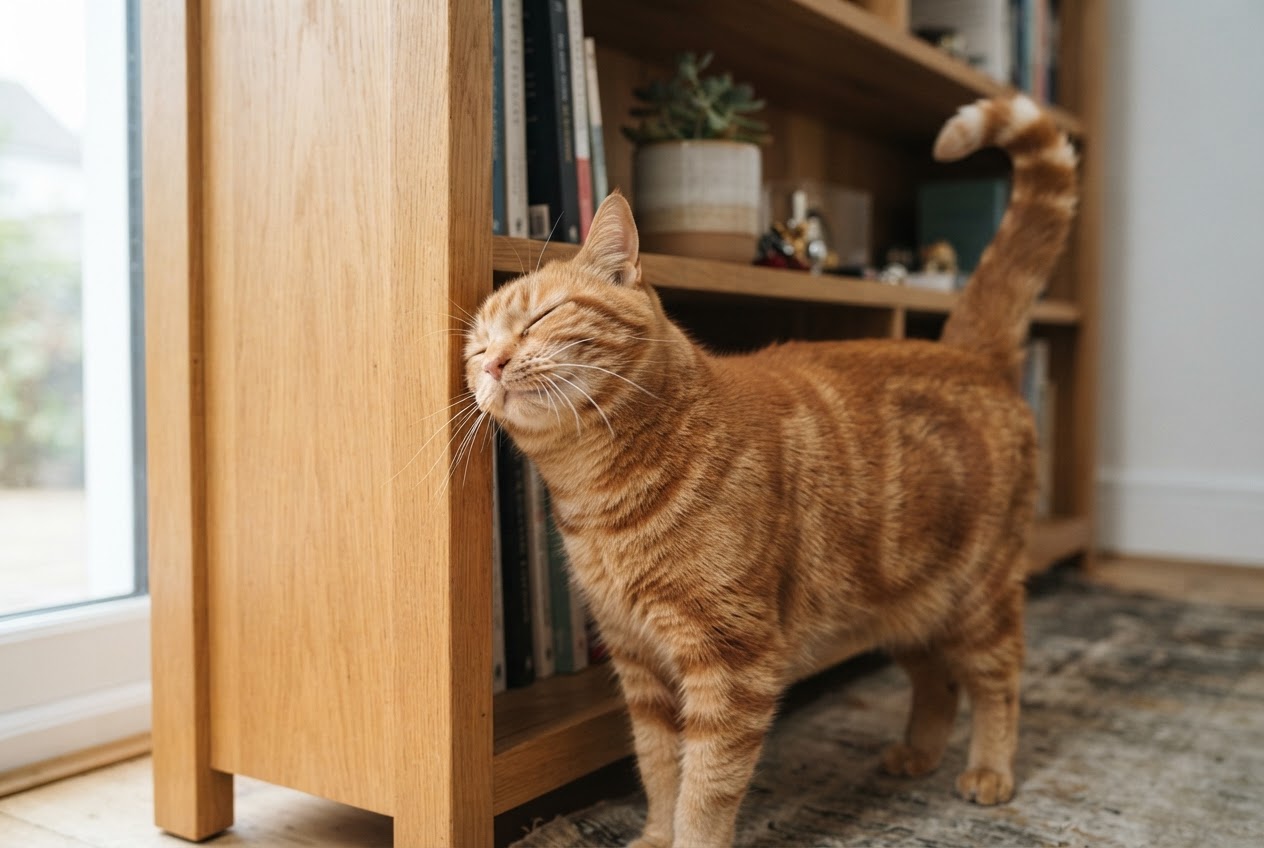
When your cat bumps their forehead against you or glides their cheek along furniture, they are engaging in head rubbing, known ethologically as bunting. This deposits faction pheromones (specifically the F3 fraction), which establish comforting, communal territory markers. Far from mere affection, bunting serves to weave you into the cat's safe, known environment.
Scratching and Urine Spraying
Scratching surfaces serves a dual communication purpose. It creates a noticeable physical gouge that provides a visual territorial boundary while simultaneously depositing secretions from the interdigital glands on the paw pads. Urine spraying, where an intact or anxious cat projects a small volume of urine backwards onto vertical surfaces, signals territorial dispute or deep environmental stress.
Indoor elimination issues are often misunderstood. When a cat urinates outside their box, resolving the issue involves evaluating both territorial security and comfort. Selecting an appropriate litter tray setup from choosing a cat litter box setup helps ensure normal scent-marking needs do not clash with human hygiene requirements.
Vocal Communication: Deciphering Feline Sounds
Felines maintain a wide vocal repertoire compared to many other carnivores. Scientists classify feline vocalisations into three structural categories: murmurs (produced with the mouth closed), vowel sounds (formed as the mouth opens and closes), and strained intensity sounds (high-arousal vocalisations created under emotional stress).
| Sound Type | Acoustic Characteristics | Underlying Emotional State | Intended Audience |
|---|---|---|---|
| Purr | Continuous, low-frequency vibration (25–150 Hz) | Contentment, self-soothing, or severe pain | Conspecifics, human carers, self |
| Standard Meow | Variable pitch, mid-frequency, open-to-close mouth | Soliciting food, attention, or door opening | Almost exclusively directed at humans |
| Chirp / Trill | Rising staccato inflection, short duration | Friendly greeting, acknowledgment, excitement | Kittens, familiar cats, familiar humans |
| Hiss | Forced exhalation through arched tongue, no vocal fold use | Fear, defensive warning, boundary enforcement | Perceived threats, other animals, humans |
| Growl / Yowl | Sustained, low to high modulation, guttural resonance | Offensive aggression, territorial defence, pain | Rival cats, unfamiliar intruders |
| Chatter | Rapid rhythmic jaw vibration, high clicks | Predatory frustration, targeted arousal | Unreachable prey (e.g. birds through a window) |
The Paradox of the Purr
The domestic cat purr remains one of nature's most widely misinterpreted signals. Purring occurs when the laryngeal muscles contract rhythmically, oscillating the glottis at 25 to 150 cycles per second. While cats undeniably purr when resting warmly on a human lap, veterinary staff also observe cats purring during labour, under intense terror, or while dying.
Current clinical research suggests that the lower frequencies of purring stimulate bone density maintenance, ease respiratory effort, and release endogenous endorphins. Thus, a cat purring while curled in a tight ball with flattened ears is not displaying joy, but rather attempting to soothe physical pain or psychological distress.
How Environmental Stress Influences Communication
Cats are creatures of absolute habit and territorial predictability. When unexpected changes occur within the home—such as introducing a new pet, rearranging furniture, or hosting loud guests—their communication pathways frequently become strained. Anxious felines may stop vocalising altogether or swing toward high-frequency yowling.
In homes housing multiple species, inter-animal signals can easily misalign. A canine's eager tail wag often signifies excitement, whereas a feline interprets that same wide tail movement as escalating irritation. To avoid defensive friction, manage cross-species resources carefully by following best practices for feeding dogs and cats in the same household.
Furthermore, acute frustration triggered by outside threats can result in sudden, unexpected reactions. A cat watching an unfamiliar stray through a window may find itself unable to engage the rival, subsequently turning to scratch or bite the nearest human or animal companion. Recognising the warning signs of redirected aggression in cats prevents dangerous household misunderstandings.
Estimated Proportions of Primary Communication Channels in Domestic Cats
Practical Steps: How to Respond to Your Cat's Signals
Translating observational knowledge into practical daily handling improves human-feline welfare. When you respect a cat's communicative cues, their confidence flourishes and trust deepens.
- 1
Offer an Index Finger Greeting
Extend a loose, still index finger at the level of the cat's nose, positioned roughly 10 centimetres away. This mimics the nose-to-nose sniff cats use to greet one another. Allow the cat to bridge the remaining distance. If they rub their cheek against your finger, social engagement is welcomed.
- 2
Check for Consent During Petting
Pet your cat gently for three seconds along the base of their ears or under the chin, then pause completely and withdraw your hand. If your cat leans in, nudges your hand, or purrs, continue. If they remain still, look away, or twitch their skin, cease contact immediately.
- 3
Engage in Slow-Blinking
When your cat looks in your direction, soften your facial expression and slowly close your eyelids for two full seconds before opening them gently, then glance slightly to the side. This non-confrontational cue communicates peaceful intent.
- 4
Respect Defensive Boundaries
If a cat flattens their ears, hisses, or thumps their tail, never attempt to comfort them with physical affection. Retreat quietly, lower your visual profile, and provide them an unobstructed exit path to a safe, elevated resting spot.
Recognising Medical and Pain Signals
Because cats are both predators and mid-tier prey animals in nature, their instinctive response to physical illness or injury is concealment. Showing weakness in the wild invites predation or expulsion from territory. Consequently, physical discomfort is expressed through quiet, subtle alterations in standard behaviour rather than overt crying.
A stoic cat suffering from oral inflammation or fractured teeth might avoid dry food while lingering near the feeding dish. Routine examinations for dental disease in dogs and cats can reveal chronic sources of hidden pain. Similarly, a cat that suddenly resists grooming or shows sudden irritability when handled along the hips may be managing osteoarthritic joint stiffness.
Significant alterations in vocalisation are common red flags in older felines. Senior cats who wander the home at night yowling loudly may be experiencing sensory decline or systemic endocrine changes. Investigating hyperthyroidism in older cats: signs, tests and treatment choices alongside cognitive assessments can help explain disoriented evening calling.
Summary of Feline Communication Channels
Deciphering how cats communicate transforms the relationship between owner and companion. Rather than treating cats as aloof or unpredictable, viewing their body posture, vocalisations, and scent habits through an evolutionary lens reveals an animal that is constantly and clearly expressing its needs.
For ongoing guidance on understanding feline physical expressions, read our dedicated piece on recognising pain in cats: a species that hides it well. Developing an accurate eye for your cat's communicative cues ensures early detection of disease, minimises avoidable stress, and builds a trusting lifelong bond.
Frequently asked questions
Why does my cat meow directly at me but never at other cats?
Adult cats rarely use meows with other adult felines, communicating instead through scent, posture, and facial expressions. Over thousands of years of domestication, cats discovered that humans respond reliably to auditory signals. Cats therefore adapt their vocal pitch and frequency to solicit food, access, and affection from their human owners.
Why does my cat show its belly if it does not want to be petted there?
Exposing the abdomen is a visual sign of relaxation and profound safety, not an invitation for tactile touch. In feline body language, exposing vulnerable vital organs proves the cat feels secure in your presence. Reaching down to stroke the abdomen violates that trust and often triggers an automatic defensive reflex involving claws and teeth.
What does it mean when a cat slowly blinks at you?
Slow blinking is widely recognised by animal behaviourists as an expression of relaxation and trust. Because unblinking eye contact represents an aggressive stare in feline communication, deliberately breaking gaze with a prolonged, soft blink confirms that you are not perceived as a threat.
Why does my cat chatter its teeth when watching birds out the window?
Chattering is an involuntary behavioural response triggered by high predatory arousal combined with frustration. Ethologists believe the rapid jaw movements mimic the specialised killing bite felines use on small prey, expressed when physical barriers prevent them from completing a hunt.
Can a cat purr when it is terrified or unwell?
Yes. While purring is frequently associated with contentment, felines also purr to self-soothe when experiencing extreme stress, physical trauma, or terminal illness. The low-frequency vibration releases natural endorphins and may aid physical healing, meaning purring must always be evaluated alongside overall posture.
Why does my cat rub its face and body against my legs?
This behaviour, called bunting or allorubbing, deposits secretions from scent glands on the cheeks and forehead onto your clothing. It blends your personal scent with theirs to create a shared, familiar household aroma that reassures the cat and establishes social cohesion.
What does a flickering or twitching tail tip mean?
A twitching or flickering tail tip signifies rising emotional arousal, micro-decisions, or impending frustration. Unlike a dog's friendly wag, a swishing feline tail indicates internal conflict or sensory overstimulation, warning the handler to pause physical interaction immediately.
Sources and further reading
- Understanding Cat Behaviour and Body Language — cats.org.uk
- Cat Communication: How Cats Speak to Us and Each Other — icatcare.org
- How to Read Cat Body Language — rspca.org.uk
- Reading Feline Body Language and Vocals — pdsa.org.uk
- Feline Social Communication and Behaviour — merckvetmanual.com
More from Petarium Daily
- How Long Does It Take to Toilet Train a Puppy? A Realistic Guide
On average, it takes between four and six months for a puppy to become reliably toilet trained, though full consistency can take up to a year. Progress depends heavily on the puppy's age, physical bladder maturity, breed size, and the consistency of their daily routine.
- What Is a Pet Health Plan? Coverage, Costs, and Value
A pet health plan is a monthly subscription run by a veterinary practice that spreads the cost of routine, preventative healthcare such as vaccinations and parasite treatments. It is not insurance and does not cover unexpected illness, injuries, or emergency treatments.
- House Rabbit Care: The Complete Indoor Guide
House rabbit care involves providing a large, predator-safe indoor living space, a high-fibre diet dominated by feeding hay, and companionship from a neutered partner. By thoroughly rabbit-proofing your living areas and monitoring daily digestive health, indoor rabbits can thrive safely alongside your family.