
Petarium Daily · 3 October 2026 · 10 min read
Cat Body Language: How to Read Your Cat's Subtle Signals
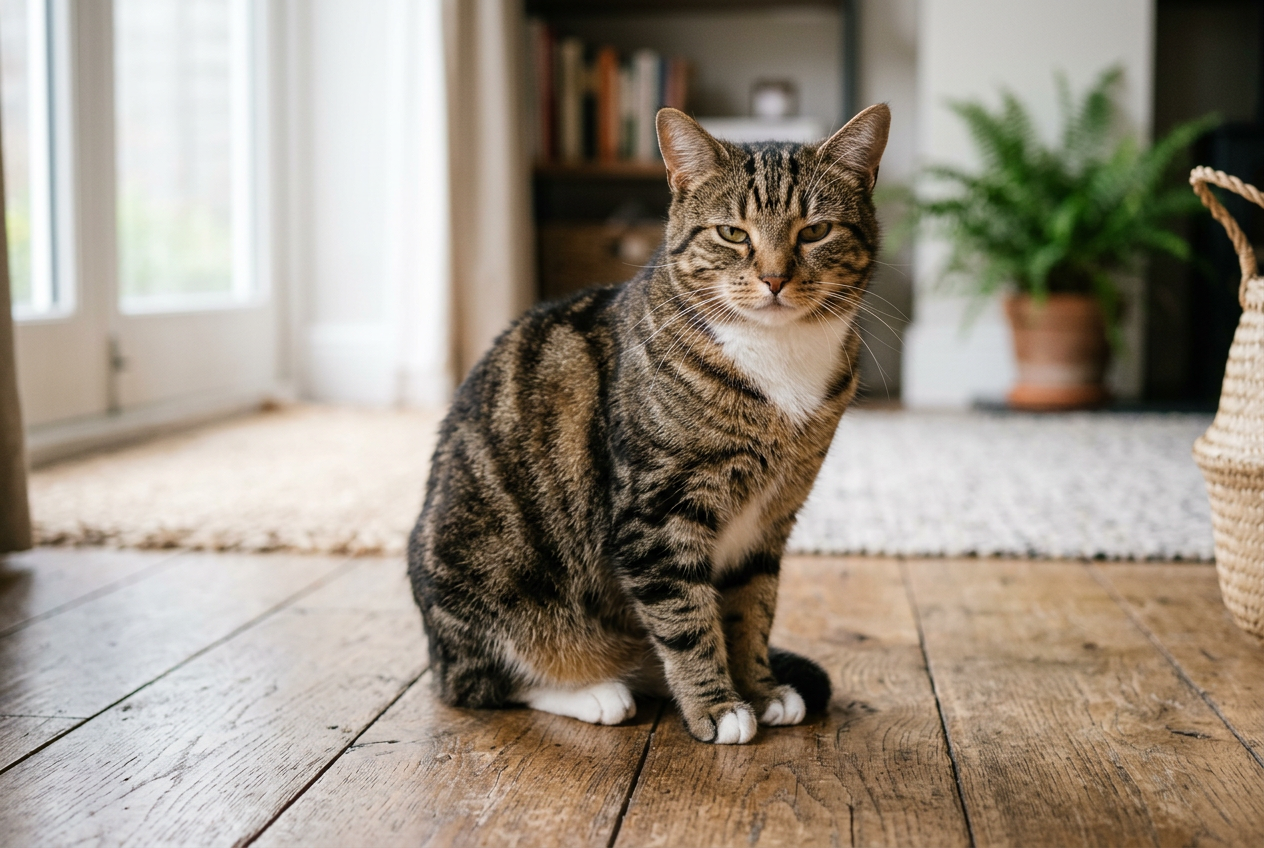
Cat body language is a sophisticated visual communication system relying on subtle shifts in the ears, eyes, tail, whiskers, and overall posture. Because cats are both solitary hunters and prey animals, recognising these understated signals is essential for preventing fear, reducing stress, and building trust.
Key takeaways
- Always assess the whole cat in context rather than focusing on a single feature like the tail or eyes.
- A slow blink conveys relaxed comfort, whereas dilated pupils and flattened ears indicate acute arousal, fear, or distress.
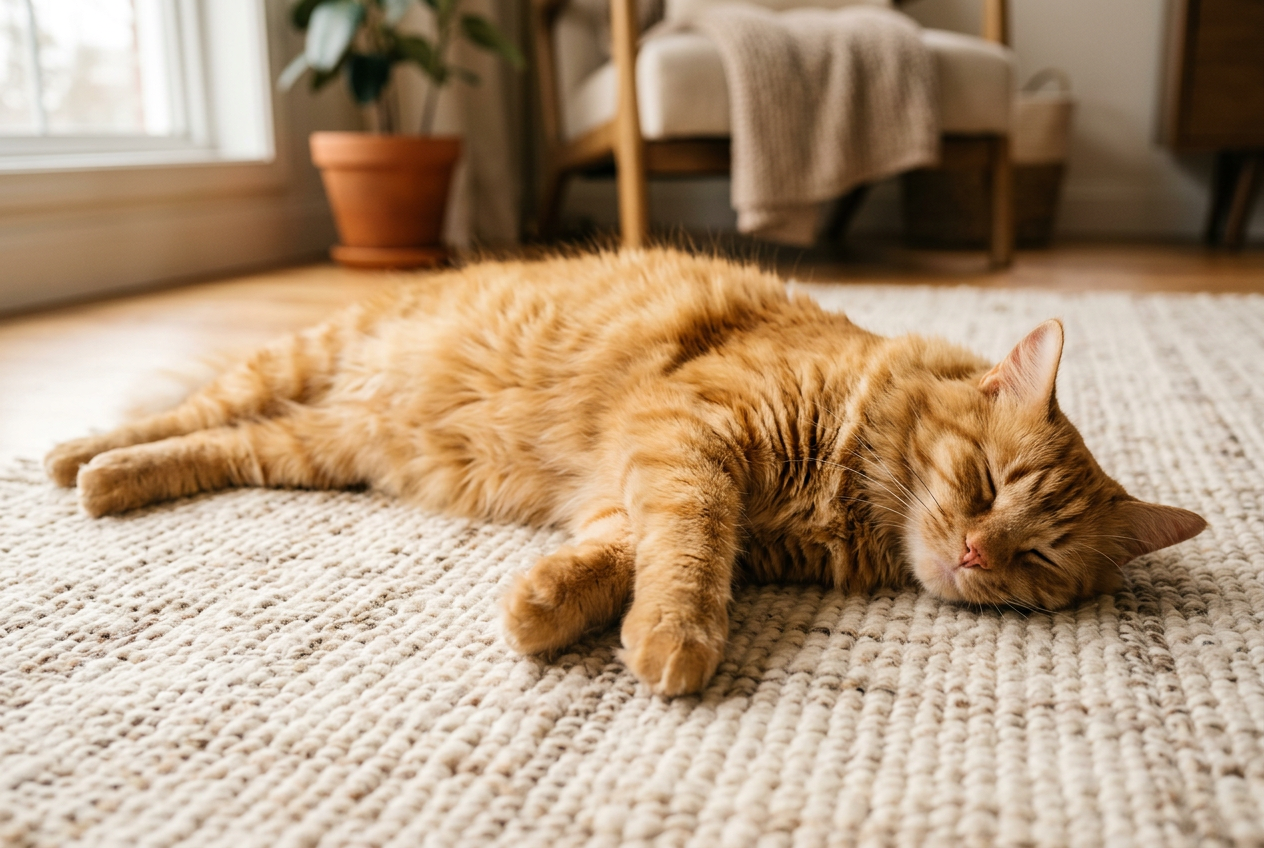
- An exposed belly is a sign of deep trust and relaxation, not an open invitation for a stomach rub.
- Tail swishing, twitching, or thumping signals rising conflict, overstimulation, or annoyance.
- Subtle postural shifts, such as a hunched crouch or tightened muzzle, frequently indicate underlying physical pain.
Why Is Understanding Cat Body Language Essential?
Unlike pack-oriented domestic dogs, cats evolved primarily as solitary hunters that did not develop elaborate facial expressions to manage complex group hierarchies. As both predators and potential prey for larger carnivores, cats instinctively mask vulnerability. Their communication system is therefore quiet, fast, and remarkably nuanced. While many owners easily spot overt actions like hissing or purring, the vast majority of feline communication happens through micro-movements of the ears, whiskers, skin, and tail.
Learning to read cat body language allows you to meet your cat's environmental and emotional needs before frustration turns into fear or defensive aggression. When humans misread feline signals—for instance, mistaking an agitated tail twitch for playful excitement—bites and scratches often follow. By evaluating your cat's emotional state accurately, you protect your bond, reduce household conflict, and identify medical discomfort long before illness becomes critical.
The Head and Face: Decoding Ears, Eyes, and Whiskers
A cat's face provides immediate information regarding their level of emotional arousal. While dog owners might look primarily at a wagging tail or open-mouthed grin—as outlined in our guide to reading canine body language—feline facial expressions require closer, quieter observation. The position of the ears, pupil dilation, and whisker posture work as a unified cluster that reveals internal tension.
What Ear Positions Mean
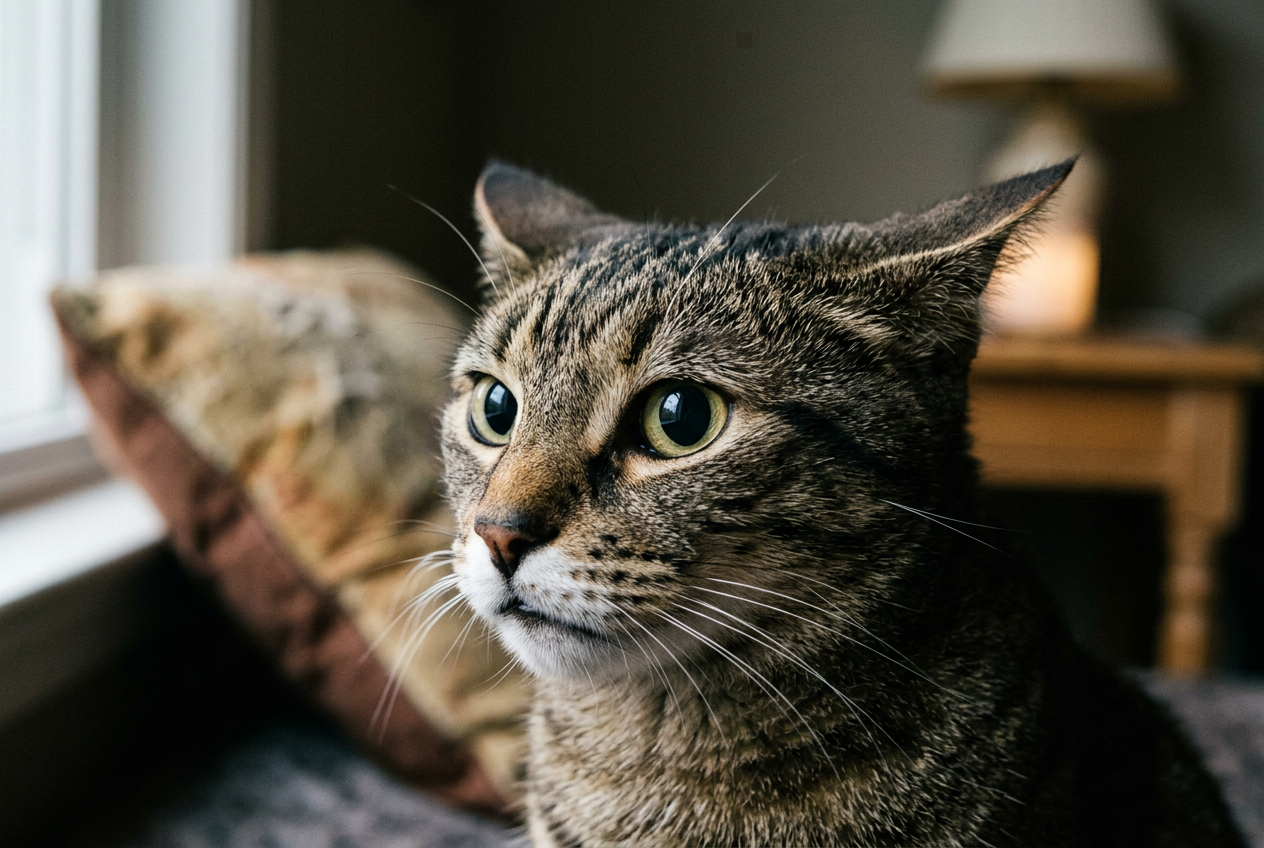
In a calm, resting state, a cat's ears point naturally forward and slightly outward. As interest or mild arousal increases, the ear apertures pivot directly towards the stimulus, standing erect. However, when a cat feels threatened or conflicted, the ears begin to shift backward. 'Airplane ears'—where the pinnae flatten sideways like aircraft wings—signal rising anxiety, uncertainty, or frustration. When the ears are pinned completely flat against the skull, the cat is in a state of intense fear or defensive readiness, protecting the delicate cartilage from potential claws.
Eye Contact and Pupil Dilation
Feline eyes reflect both ambient lighting and the sympathetic nervous system. Direct, unblinking eye contact in the feline world is perceived as an explicit challenge or threat. Conversely, slow, rhythmic blinking—often called a 'cat kiss'—signals that the cat feels secure and non-defensive. Pupil size changes dramatically with adrenaline. Large, fully dilated pupils (mydriasis) in normal daylight indicate intense arousal, terror, or acute predatory focus. Slit-like, constricted pupils can indicate offensive aggression, confidence, or strong direct irritation.
Whisker Tension and Direction
Whiskers (vibrissae) are rich in nerve endings and respond instantly to the cat's emotional state. When relaxed, whiskers fan loosely out from the cheeks, resting slightly downward. When a cat is inquisitive or preparing to pounce on a toy, the whiskers push forward and spread wide to gather sensory data. If a cat feels terrified, defensive, or guarded, they pull their whiskers taut and flat against their muzzle to minimise injury, making their face appear as small and compact as possible.
The Feline Tail: An Expressive Mood Barometer
The tail is arguably the most dynamic visual communicator on a cat's body. Unlike dogs, whose wagging frequently signifies social willingness, a rapidly moving cat tail usually denotes rising internal conflict, irritation, or emotional overload. Reading the height, speed, and shape of the tail gives essential context to the rest of the cat's posture.
- Upright with a loose curve (question mark): A confident, friendly greeting indicating the cat is open to social interaction.
- Straight up with a quivering tip: High excitement and warm recognition, often seen when anticipating meals or greeting a favourite person.
- Horizontal and steady: Neutral, relaxed movement during casual exploration.
- Tucked tightly under the pelvis: Subservience, terror, or an attempt to make the body as small and unobtrusive as possible.
- Swishing, flicking, or thumping: Rapid side-to-side lashing or heavy thumping against the floor signals mounting agitation, overstimulation, or readiness to strike.
- Puffed or 'bottlebrush' tail: The piloerection reflex makes the hair stand on end, an involuntary defensive response designed to make the cat look larger when startled or terrified.
Common Postures and What They Communicate
Evaluating whole-body silhouettes helps distinguish between playful curiosity, true relaxation, and defensive wariness. Much like the differences seen when studying dog body language, an animal's physical footprint indicates whether they feel secure enough to expose vulnerable organs or need to prepare for sudden flight.
| Body Posture | Ears & Eyes | Tail Position | Emotional State |
|---|---|---|---|
| Stretched out on side, belly soft | Ears neutral, eyes half-closed | Loose, extended, still | Deep relaxation, complete security |
| The 'Meatloaf' (paws tucked under chest) | Ears forward, eyes soft or slow-blinking | Wrapped neatly around body | Comfortable, resting, mildly watchful |
| Hunched crouch, feet flat underneath | Ears sideways, wide pupils | Tucked tight against flanks | Anxiety, discomfort, or hidden pain |
| Arched back with bristled fur sideways | Ears flat, wide unblinking stare | Puffed bottlebrush, arched base | Defensive threat, high fear, startling |
| Crouched low, creeping forward slowly | Ears forward, pupils dilated | Low, twitching occasionally at tip | Predatory hunting or stalking focus |
How Daily Activity and Rest Shape Feline Signals
Cats spend a massive portion of their lives resting, observing, or dozing. Understanding their baseline routine makes it far easier to spot deviations caused by stress, illness, or changes in the home environment. When bringing an unfamiliar rescue cat home—a process detailed in our overview on why adoption matters—noticing how much time they spend resting versus hiding in an alert crouch provides direct proof of their gradual acclimatisation.
Typical Daily Time Budget of a Healthy Domestic Cat
A cat spending significantly more than 30% of their waking hours in an alert, vigilant, or tucked posture may be dealing with chronic environmental stress or low-grade medical pain. Shelter evaluators watch these proportions closely, as highlighted in how staff assess feline welfare when shelters decide who gets adopted.
How to Spot Feline Stress and Pain Early
Because cats instinctively conceal weakness, physical illness and musculoskeletal discomfort often masquerade as subtle behavioural changes. Conditions like feline osteoarthritis or early urinary tract inflammation alter posture subtly long before an owner notices overt limping or vocalisation. A cat carrying excess body weight is especially susceptible to joint degradation, a critical factor detailed in our guide to pet obesity.
Recognising the Feline Grimace Scale
Veterinary researchers have validated the Feline Grimace Scale (FGS) as an objective tool for assessing acute pain in domestic cats. It focuses on five distinct facial action units: ear position, orbital tightening (squinting), muzzle tension, whisker change, and head position. A cat experiencing abdominal or dental pain will typically hold their head below their shoulder line, tighten their muzzle into an elliptical shape, flatten their whiskers away from the face, and maintain a tense squint.
Step-by-Step: How to Greet and Interact With a Cat
Many human-cat conflicts occur because humans use direct, forward, and overwhelming body language that cats interpret as predatory or aggressive. Respecting feline personal space and letting the cat control the pace of physical touch dramatically improves your interactions.
- 1
Turn slightly sideways and avoid direct staring
Approach calmly without towering over the cat. Turn your torso slightly to the side and direct your gaze slightly past them rather than locking eyes.
- 2
Offer the 'scent finger'
Extend a single index finger at the cat's nose level, roughly 15 to 20 centimetres away, mimicking the nose-to-nose greeting cats use with each other.
- 3
Wait for positive consent
Allow the cat to approach and sniff your finger. If they rub their cheek, chin, or temple against you (bunting), they are depositing facial pheromones and granting permission to interact.
- 4
Focus touch on preferred scent gland regions
Gently stroke the base of the ears, under the chin, and along the cheeks. Most cats strongly dislike being patted along the lower spine, touched on the paws, or stroked on the belly.
- 5
Pause every five seconds for a consent check
Stop stroking momentarily and observe the cat's reaction. If they nudge your hand, continue; if their tail begins to twitch, skin ripples, or ears turn sideways, stop immediately and give them space.
Context Is Everything: Putting the Pieces Together
No single signal tells the full story. A purr can indicate utter bliss while resting on your lap, but cats also purr to self-soothe when severely injured, giving birth, or in respiratory distress. Similarly, a twitching tail tip can represent intense concentration while watching a robin out the window, or rapid irritation when an owner continues brushing a matted coat.
Always evaluate the environmental setting, the cat's overall history, and their total physical posture before drawing a conclusion. By treating your cat as an individual and continually respecting their subtle non-verbal cues, you establish a quiet, predictable relationship founded on safety, autonomy, and genuine trust.
Frequently asked questions
Why does my cat flick their tail while I am stroking them?
A flicking or swishing tail tip during petting indicates rising overstimulation or physiological arousal. While dogs wag their tails when happy, cats use tail movement to signal that their threshold for touch is being reached. If you continue stroking after the tail begins swishing, the cat may bite or swat to enforce personal space.
What does it mean when a cat slowly blinks at you?
Slow blinking is widely recognised by veterinary behaviourists as a positive emotional signal that conveys safety and a lack of predatory threat. By closing their eyes slowly in your presence, the cat demonstrates comfort and trust. Returning a gentle, slow blink back to your cat helps strengthen mutual social bonds.
Why does my cat show me their belly if they do not want it rubbed?
Rolling over to expose the abdomen is an expression of social trust and relaxation, indicating the cat feels safe enough in their environment to lower their defences. However, the abdomen houses vital organs, so touching it triggers an instinctive, defensive grab reflex. Admire the belly visually rather than touching it.
How can I tell if my cat's posture means they are in pain?
Cats in pain often adopt a hunched, guarded crouch with their paws tucked tightly beneath them, head held lower than their shoulders, and eyes half-closed in a tense grimace. They may isolate themselves, neglect grooming, or hold their ears turned slightly downward and flattened against their temples.
What do flattened 'airplane ears' mean on a cat?
Airplane ears occur when a cat rotates their ear pinnae outward and down so they resemble aircraft wings. This posture indicates mounting uncertainty, frustration, or moderate anxiety. It warns you that the cat is uncomfortable with the current situation and needs immediate distance before their fear escalates.
Is purring always a sign of a happy cat?
No, purring is not exclusively a sign of happiness. While cats frequently purr when content, resting, or nursing, they also produce low-frequency purrs when experiencing severe physical pain, extreme stress, or shock. purring serves as a self-soothing mechanism that releases endorphins to help manage pain and emotional distress.
What does a puffing, arched 'bottlebrush' tail mean?
A puffed bottlebrush tail is caused by piloerection, an involuntary sympathetic nervous system reflex that makes the hair shafts stand upright. It indicates that the cat has been intensely startled, frightened, or threatened. The cat puffs out their tail and arches their back to make their body appear larger to potential adversaries.
Sources and further reading
- Understanding Cat Body Language — Cats Protection
- Cat Behaviour and Welfare Guidelines — International Cat Care (iCatCare)
- Reading Cat Body Language — RSPCA
- PDSA — guidance library — PDSA
- Feline Grimace Scale: Tool for Acute Pain Assessment — NCBI
More from Petarium Daily
- How to Toilet Train a Puppy: A Kind, Practical Guide
To toilet train a puppy, take them to a suitable toilet spot frequently, reward them immediately after they finish and prevent accidents through close supervision. Expect gradual progress over weeks to months, with night-time breaks and adjustments for your puppy’s age, health and individual needs.
- How to Crate Train a Puppy: A Kind, Step-by-Step Guide
Teach your puppy to enjoy a crate by rewarding voluntary entry, introducing the closed door for seconds and gradually building comfortable resting time. Stay nearby at first, provide frequent toilet breaks and reduce the difficulty whenever your puppy shows distress.
- Yavru köpek maması: A Complete Guide to Puppy Food
Yavru köpek maması means puppy food: choose a complete diet formulated for growth and suitable for your puppy’s expected adult size. Feed measured meals, adjust portions using weight and body condition, and change foods gradually rather than relying on a universal grams-per-day rule.