Communication
Reading Canine Body Language Before the Growl
Dogs signal discomfort long before they snap. Learning the early, quiet signals prevents most bites and makes daily handling kinder.
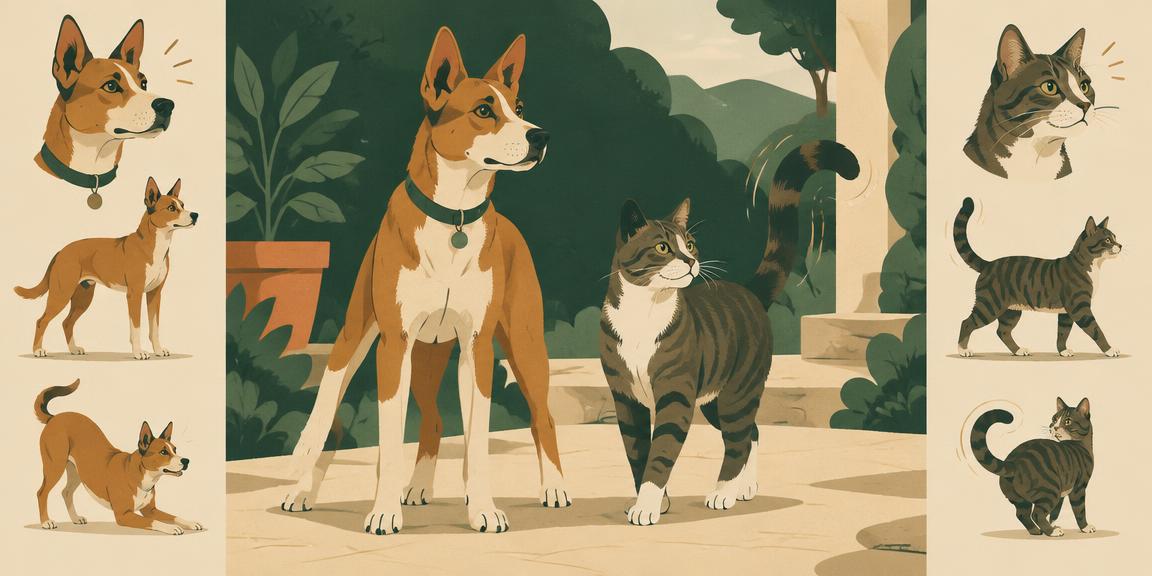
The ladder of communication
Dogs escalate in stages. They look away, lick their lips, yawn, turn the body, move off, freeze, stiffen, show the whites of the eyes, growl — and only then snap. A dog who 'bit without warning' almost always gave several warnings that went unnoticed or were punished out of them.
This is why punishing a growl is dangerous. It removes the signal, not the feeling underneath it.
Signals worth learning first
Look at the whole animal, in context. A wagging tail is not proof of happiness; a low fast wag with a stiff body means something very different from a loose sweep of the whole back end.
- Lip licking and yawning when no food or tiredness is involved
- Head turn or whole-body turn away from a person or dog
- Whale eye — whites showing as the head stays still
- Freezing, especially over food, a toy or a resting place
- A closed tight mouth after relaxed open panting
- Weight shifted backwards, low tail, ears back
What to do when you see them
Increase distance, remove the pressure, and let the dog choose to disengage. Do not lean over, reach for the collar or continue the interaction because the dog 'has to get used to it'. Then work out what made the situation too hard and change it next time.
Children and dogs
Most bites to children happen at home with a familiar dog during ordinary interactions — hugging, leaning on, approaching a sleeping or eating dog. Active supervision means being close enough to intervene, not in the same room. Teach children to let dogs approach them, never the reverse.