
Communication
Reading Dog Body Language
Ears, tail, mouth and posture: a practical guide to what dogs are telling you, including early stress signals.
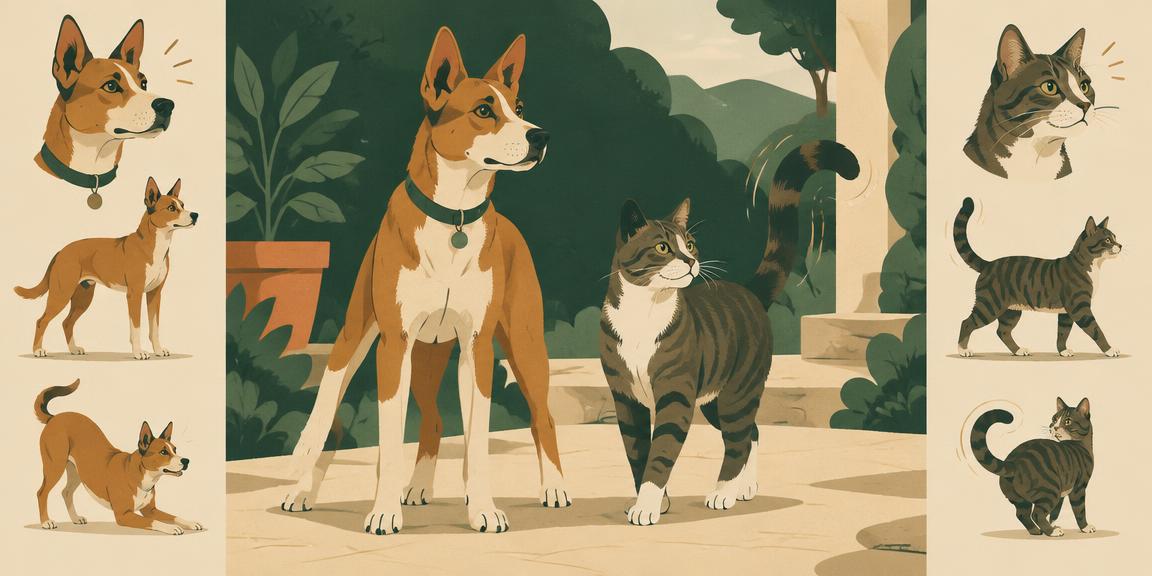
Look at the whole dog
A single signal means little alone. A wagging tail can mean excitement or tension depending on height, speed and the rest of the body.
Relaxed
- Soft eyes and loose mouth
- Ears in a natural position
- Loose, wiggly body
- Weight evenly balanced
Early stress signals
- Lip licking or yawning out of context
- Whale eye (whites of the eyes showing)
- Turning the head away
- Lifting a front paw
- Sudden sniffing or shaking off
Clear warnings
Stiffening, freezing, hard staring, lifting lips and growling are warnings. Never punish a growl: it is the dog asking for space. Increase distance and get help if warnings happen often.
References
- Canine body language — Dogs Trust