
Petarium Daily · 15 October 2026 · 14 min read
How to Care for Newborn Rabbits: Complete Kit Care Guide
Caring for newborn rabbits (kits) primarily involves supporting the mother rabbit, maintaining a warm and clean nest, and checking kits daily without causing distress. Mother rabbits naturally nurse only once or twice in twenty-four hours for just a few minutes, so apparent absence is normal behaviour rather than abandonment.
Key takeaways
- Mother rabbits typically nurse kits once or twice daily, usually in darkness or privacy, for only three to five minutes.
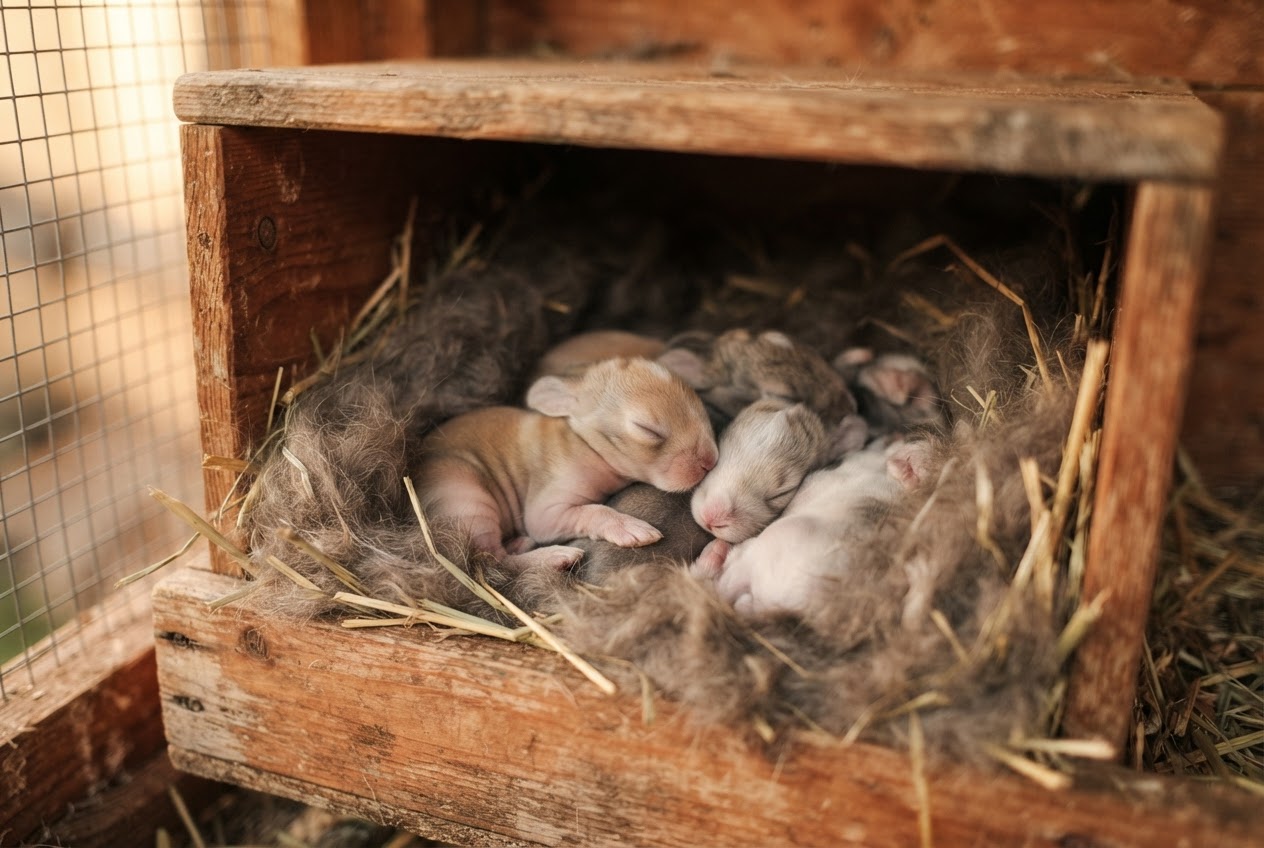
- A well-fed newborn kit has a plump, rounded abdomen, warm skin, pink colouring, and sleeps quietly in the nest.
- Do not remove kits from the mother unless veterinary assessment confirms she has abandoned, attacked, or cannot nurse them.
- Newborn kits are born blind, deaf, and hairless, relying entirely on the nest and littermates to maintain a body temperature around 38.5°C to 40°C.
- Eyes open between 10 and 12 days, and weaning takes place gradually between 6 and 8 weeks of age.
How to Care for Newborn Rabbits: What to Do First
Finding an unexpected litter of newborn baby rabbits—known as kits—can feel overwhelming, but in the majority of cases, the best human intervention is minimal intervention. When owners ask how to care for newborn rabbits, they often assume the doe has abandoned her young because she sits far away from the nest and rarely visits it. In reality, wild and domestic rabbits (*Oryctolagus cuniculus*) have evolved an evolutionary strategy where the mother visits the nest only once or twice in twenty-four hours, usually during quiet night hours, feeding her young in a concentrated session lasting just three to five minutes. Staying away prevents predators from locating the helpless, scentless litter.
Your primary role is to verify that the mother is healthy, ensure the nest box is dry and well insulated, and check the kits once each morning to confirm they are warm and well fed. Rabbit milk is among the richest mammalian milks, dense in protein and fat, allowing kits to consume up to twenty percent of their body weight in a single nursing bout. Knowing how to interpret these natural biological rhythms will prevent unnecessary hand-rearing, which carries high mortality rates even under professional supervision.
If you have not already established a veterinary contact, locate a rabbit-savvy practice immediately. Rabbits have delicate physiological systems, and providing house rabbit care requires an understanding of their sensitive digestion and high susceptibility to stress. For general health expectations, consult our wider overview on how to care for a rabbit.
How Does a Mother Rabbit Naturally Nurse Her Litter?
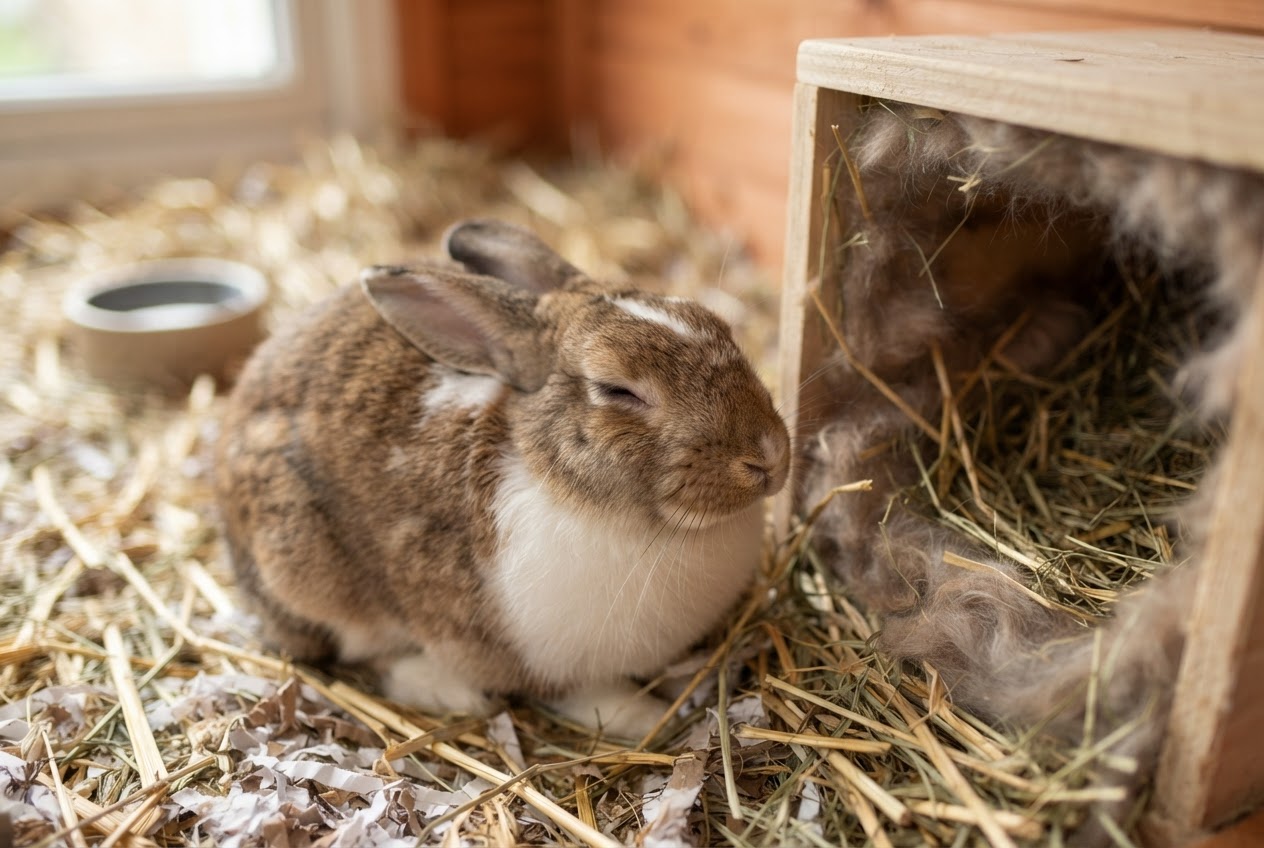
Understanding natural doe behaviour is essential to avoid interfering with successful maternal care. Does do not lie in the nest to cuddle or warm their kits like cats or dogs do. Doing so in the wild would leave a strong scent trail directly to the underground burrow, attracting predators. Instead, the doe enters the nest, stands upright over the litter while the kits turn upside down to suckle vigorously, grooms them briefly, and leaves immediately.
Because this nursing happens predominantly between midnight and 5:00 a.m., owners almost never witness it. A doe ignoring her kits during daylight hours is exhibiting completely normal maternal behaviour. As long as she has free access to the nest box, abundant hay, clean water, and a quiet environment, she will almost certainly attend to her kits on her own schedule.
Setting Up the Ideal Nest Box and Environment
If the doe gave birth on an open cage floor or scattered her kits, you must step in quickly to provide a secure nesting structure. Without a designated nest, newborn kits can easily become hypothermic, crawl away, or suffer injury from adult feet.
A proper nest box should have solid walls to prevent draughts and a raised lip (around 7 to 10 centimetres high) that keeps blind kits inside while allowing the mother to hop in and out with ease. Wooden boxes, sturdy cardboard trays, or metal nest pans all work well. Ensure the base has drainage holes if using plastic or metal, or line it with several layers of clean, unprinted corrugated cardboard and newspaper.
- Base layer: Place 3 to 5 centimetres of dust-extracted wood shavings, paper-based bedding, or clean towels at the very bottom.
- Insulation layer: Pack clean, sweet-smelling meadow hay or soft oat straw deeply into the corners, creating an indented hollow in the centre.
- Lining layer: Place the mother's plucked fur directly inside the hollow. Does pull loose fur from their chest and dewlap shortly before giving birth to insulate the nest.
- Placement: Position the nest box in the quietest, darkest corner of the doe's living space, far away from litter trays, draughts, and household noise.
If the doe did not pull enough fur, you can gently gather loose fur from her body using a soft comb, or use clean unbleached cotton batting (never synthetic fibrous batting, which causes intestinal blockages if swallowed or can wrap around tiny limbs). Maintaining a warm microclimate inside the nest hollow—ideally 30°C to 32°C among the gathered kits—is vital, even if the surrounding room is kept at a comfortable 18°C to 21°C. For outdoor enclosures, review precautions for keeping outdoor rabbits safe and warm in winter.
Step-by-Step Daily Nest Check Routine
Many outdated care guides claim that touching newborn rabbits causes the mother to reject or kill them. This is a myth. Domestic does are familiar with human scent, and monitoring the litter once daily is vital to remove stillborn kits, check body condition, and prevent nest contamination. Establishing a consistent daily care routine keeps disturbances brief and predictable.
- 1
Distract the mother gently
Offer the doe a fresh leaf of safe leafy greens (such as coriander or parsley) or her favourite treat at the opposite end of the room or run to keep her calm and occupied.
- 2
Warm and scent your hands
Wash your hands thoroughly with unscented soap. Rub your hands in clean hay or the doe's clean soiled bedding to mask unfamiliar human perfumes before touching the nest.
- 3
Uncover the nest hollow
Carefully push back the top layer of pulled fur and straw. Move slowly and avoid sudden loud noises that might startle the mother or cause the kits to scatter.
- 4
Examine each kit individually
Gently lift each baby one by one. Check that the kit is warm to the touch, has a taut, pale-pink belly resembling a miniature water balloon, and shows no cuts or abrasions.
- 5
Remove soiled bedding or casualties
Remove any kit that has died immediately to avoid bacterial contamination and fly attraction. Swap out any damp hay beneath the cluster with fresh, dry straw.
- 6
Re-cover the cluster
Bunch the kits back together in the central hollow so their bodies touch to preserve heat. Pull the plucked fur back over the top so the nest looks exactly as it did before your inspection.
How to Tell if Kits Are Fed: Healthy vs Failing Kits
Because you will rarely see the mother nurse, physical indicators are your only reliable metric of maternal success. Weighing each kit on a digital kitchen scale (accurate to 1 gram) at the same time every morning provides objective data. Healthy kits should steadily gain between 5 and 10 grams per day after their first 24 hours of life.
| Clinical Sign | Well-Nursed, Healthy Kit | Unfed or Failing Kit |
|---|---|---|
| Abdomen | Round, plump, slightly translucent 'pear' shape | Sunken, flat, hollow flanks, visible ribs |
| Skin Texture | Smooth, supple, taut pink skin with good elasticity | Wrinkled, dry, loose skin that tents when gently lifted |
| Vocalisation | Quiet, sleeping peacefully in a tight heap | Constant high-pitched squeaking, restlessness, wandering |
| Body Temperature | Warm to the touch (approx. 38.5°C when clustered) | Cold to the touch, lethargic, sluggish movements |
| Daily Weight Trend | Gains 5 to 10 grams daily after day 1 | Static weight or steady daily loss of weight |
If a kit has an empty stomach on day one, do not panic immediately. Does often do not produce full milk supplies until 12 to 24 hours post-kindling. However, if a kit remains sunken, wrinkled, and cold by hour 36, maternal nursing has failed, and intervention is urgently required.
Development Milestones: From Birth to Weaning
Newborn kits develop remarkably quickly compared to other domestic mammals. Tracking developmental stages helps you adjust the housing environment, introduce solid food at the right time, and ensure appropriate socialisation.
Key Developmental Milestones in Rabbit Kits (Days from Birth)
Birth to Day 10: The Altricial Phase
Kits are entirely altricial: naked, blind, and unable to regulate their own internal body temperature. They rely completely on nest insulation and mutual huddling. By day four, fine velvet fur appears across their shoulders and back. By day seven, pigmentation indicates coat colours, and light fuzz covers the body.
Day 10 to Day 21: Sensory Awakening and Ingestion of Cecotropes
Around day 10 to 12, the eyelids separate and the external ear canals open. If eyes remain sealed past day 12, or if you notice crusting or swelling, a veterinary check is necessary to clear mild infections before permanent corneal damage occurs. During this window, kits become noticeably more active, hopping out of the nest box around day 15 to 18.
Around day 18 to 21, kits begin nibbling fine meadow hay and eating their mother's cecotropes—nutrient-rich soft droppings packed with essential microflora. This step is crucial: cecotropes inoculate the young kit's sterile hindgut with bacteria, protozoa, and yeasts necessary to digest cellulose later in life.
Week 4 to Week 8: The Weaning Transition
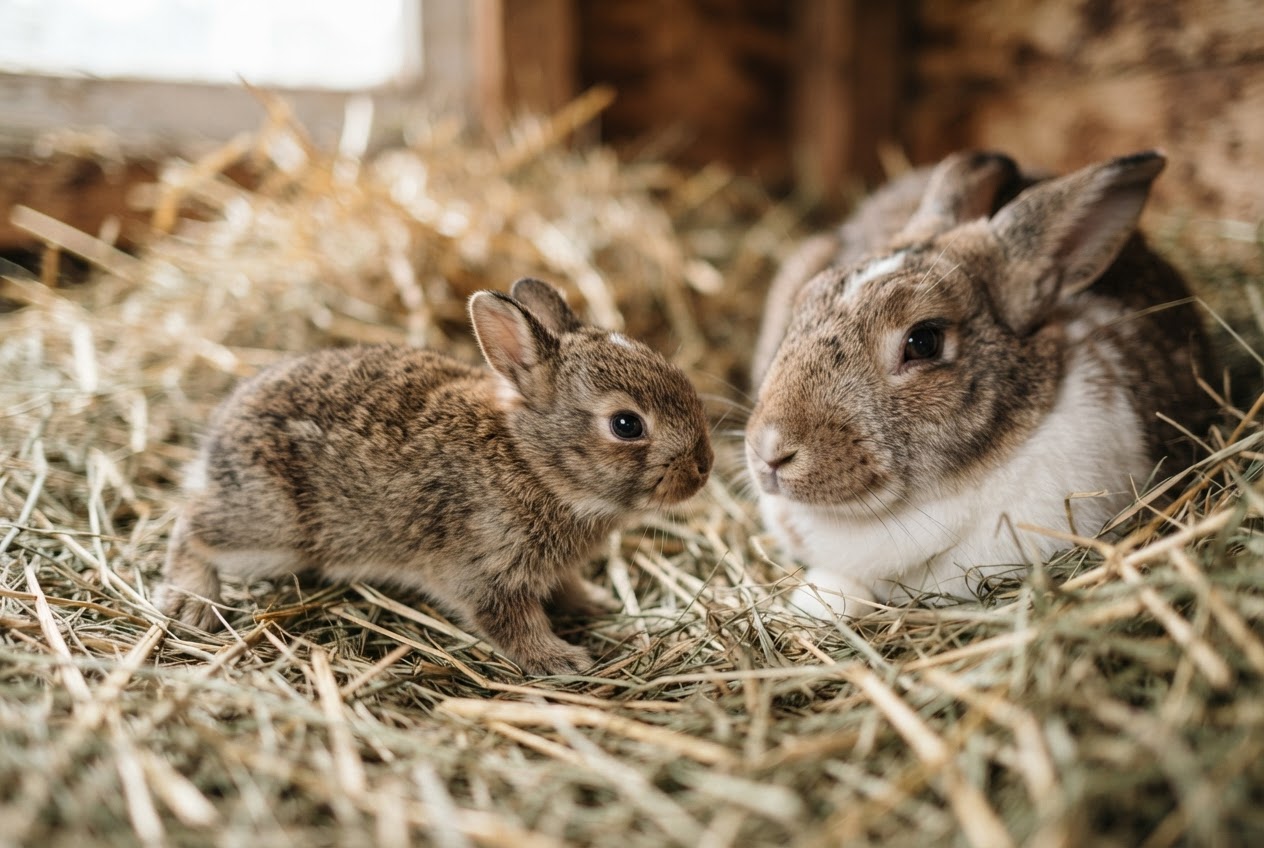
Between weeks four and six, kits consume more hay and junior extruded pellets while maternal nursing diminishes. Never abruptly remove kits from their mother before eight weeks of age. Early weaning disrupts the establishment of the delicate caecal microbiome, leaving kits exceptionally vulnerable to fatal mucoid enteropathy and gastrointestinal stasis.
Hand-Rearing Orphan Kits: When and How to Intervene
Hand-rearing newborn rabbits should strictly be a last resort. Even with round-the-clock commitment and veterinary assistance, mortality rates for hand-reared kits frequently exceed 70% to 80%. This is due to aspiration pneumonia from syringe feeding and the absence of maternal antibodies and digestive 'milk oil'.
Before attempting hand-rearing, attempt all possible ways to preserve maternal care. If a doe seems indifferent, place her gently into the nest box and hold her calmly while placing the kits beneath her teats for five minutes. Often, the suckling reflex will stimulate maternal instincts. If the mother is deceased or medically incapacitated, you must act swiftly.
Hand-Feeding Technique and Volume
Feed kits using a 1 ml syringe fitted with a soft silicone nursing nipple. Never feed a rabbit kit on its back like a human baby; this causes milk to enter the trachea and lungs, producing fatal aspiration pneumonia within hours. Always hold the kit in an upright, sternal position with its head level or slightly tilted forward.
- Position: Allow the kit to sit on a warm towel on all four paws, resting naturally against your hand.
- Pacing: Depress the syringe plunger by a single drop at a time, allowing the kit to lap it up rather than forcing liquid into its mouth.
- Frequency: Feed twice per day (morning and evening), simulating the doe's natural schedule. A kit's stomach capacity is roughly 5 ml per 100 grams of body weight per feeding.
- Hygiene: Sterilise syringes, nipples, and mixing containers between every feeding to prevent bacterial overgrowth.
Stimulating Urination and Defecation
Newborn kits cannot urinate or defecate independently until their eyes open. The mother stimulates this reflex by licking their urogenital area during nursing. For hand-reared kits, you must replicate this after every single feed.
Take a clean cotton ball or makeup pad moistened with warm water. Gently stroke the kit's genital area in a downward motion from front to back. Within a few seconds, the kit should produce pale yellow urine and tiny, soft pellets. Stop as soon as the bladder has emptied to avoid chafing delicate skin, and pat the area completely dry.
Caring for the Nursing Doe
Supporting the mother rabbit is the most effective way to care for the kits. Lactation is the most nutritionally demanding phase of a doe's life, requiring significant energy and hydration to maintain consistent milk production.
- Unlimited clean meadow or timothy hay: Hay must form at least 85% of her total diet to maintain gut motility.
- Alfalfa hay supplement: Introducing alfalfa hay or green alfalfa pellets provides the extra calcium and protein needed for milk synthesis.
- Double water supplies: Lactating does consume enormous amounts of water. Provide both a sturdy ceramic water crock and a sipper bottle, refreshed twice daily with cool, clean water.
- Stress-free environment: Keep dogs, cats, small children, and unfamiliar sounds away from her housing. Stress triggers adrenaline releases that can suppress prolactin and oxytocin, halting milk release.
Adult companionship is also important. If the father is present, he must be separated immediately before kindling. Female rabbits can conceive another litter within hours of giving birth (postpartum estrus). Keep the father nearby behind a mesh divide if they are bonded, ensuring he cannot mate through the bars, while avoiding total social isolation. Long-term companionship is central to welfare, as detailed in our guide on adopting rabbits in pairs.
Common Mistakes to Avoid With Newborn Litters
Well-meaning owners frequently make preventable mistakes that endanger the lives of both kits and mother. Avoiding these critical pitfalls drastically improves litter survival rates.
- Overhandling and micro-managing: Constant hovering and taking kits out multiple times a day stresses the doe and chills the kits. Keep health checks to one brief check per day.
- Using artificial heating pads improperly: Heat lamps or electric heat mats placed inside the box can cook tiny kits or melt their skin. If extra heat is needed, place a warm water bottle wrapped in a fleece towel under one half of the box so kits can move away if too hot.
- Separating the doe too soon: Weaning before eight weeks of age is a primary driver of juvenile rabbit mortality due to immature gut fauna.
- Failing to separate the buck: Leaving an intact male in the enclosure leads to continuous back-to-back pregnancies that exhaust the doe.
- Introducing wet greens to kits prematurely: While the doe eats fresh forage, kits should rely on mother's milk, hay, and safe dry pellets until their digestive tract matures past eight to twelve weeks.
Long-Term Planning: Neutering and Socialisation
By the time the kits reach four to six weeks of age, start planning for their future healthcare and housing. Domestic rabbits reach sexual maturity surprisingly early—dwarf breeds such as the Lionhead rabbit can reproduce as young as ten to twelve weeks of age, while medium and large breeds mature between four and five months.
Separate male and female kits by ten weeks of age to prevent accidental inbreeding. Arrange for veterinary consultations regarding vaccinations against Myxomatosis, Rabbit Haemorrhagic Disease Virus 1 (RHDV-1), and RHDV-2, which can be administered from five to seven weeks onward depending on veterinary protocols. Neutering not only prevents unwanted litters but also reduces reproductive cancers and behavioural territorial aggression, paving the way for successful rabbit bonding and a rich lifespan, as explored in how long do rabbits live.
Frequently asked questions
How often should a mother rabbit nurse her newborn kits?
A mother rabbit typically nurses her kits only once or twice every twenty-four hours. Each nursing session lasts between three and five minutes, usually occurring during quiet nighttime or early morning hours. This hands-off approach is an evolutionary behaviour designed to keep predators from discovering the nest.
Can I touch newborn baby rabbits with bare hands?
Yes, you can safely touch newborn kits for brief daily health checks. Wash your hands with warm, unscented soap and rub them in clean hay or mother's bedding first to mask your scent. Domestic rabbits do not reject their babies simply because a familiar human has handled them.
What should I feed an orphan newborn baby rabbit?
Orphan kits should be fed a specialised kitten milk replacer or veterinary-formulated rabbit milk replacer mixed with goat's milk fat. Never feed cow's milk, infant formula, or sugar water, as these cause lethal digestive upset. Always consult an exotics vet before initiating syringe feeding.
When do newborn rabbits open their eyes and leave the nest?
Kits open their eyes and ear canals between 10 and 12 days of age. They begin taking their first tentative hops outside the nest box between 15 and 18 days old, at which point they start investigating hay and pelleted food.
What temperature should a newborn rabbit nest box be?
The ambient room temperature should remain between 18°C and 21°C, while the microclimate inside the fur-lined nest hollow where kits huddle should stay between 30°C and 32°C. Draughts and dampness must be avoided completely to prevent fatal kit hypothermia.
How can I tell if a newborn rabbit is getting enough milk?
A well-fed kit has a plump, rounded abdomen resembling a marble or small balloon, smooth unwrinkled skin, pink coloration, and sleeps quietly. In contrast, an unfed kit will have sunken flanks, wrinkled skin, wander restlessly, and cry continuously.
At what age can baby rabbits be separated from their mother?
Baby rabbits should not be fully weaned or separated from their mother before eight weeks of age. Weaning earlier disrupts their developing digestive microflora and dramatically increases the risk of fatal enteritis and gastrointestinal stasis.
Sources and further reading
- Rabbit Welfare Association & Fund: Care of Orphaned and Newborn Kits — rabbitwelfare.co.uk
- PDSA: Breeding and Caring for Baby Rabbits — pdsa.org.uk
- RSPCA: Rabbit Housing, Diet and Welfare Guidelines — rspca.org.uk
- Merck Veterinary Manual: Management and Pathology of Lagomorphs — msdvetmanual.com
- VCA Animal Hospitals: Breeding and Neonatal Care in Rabbits — vcahospitals.com
More from Petarium Daily
- What Dog Breed Has the Least Health Problems? A Vet Guide
Statistically, medium-sized crossbreeds and working dogs with moderate physical features suffer the fewest inherited health problems. Among pedigree dogs, breeds such as the Australian Cattle Dog, Border Collie, Whippet, and Brittany consistently report lower veterinary intervention rates and longer average lifespans.
- Are Dogs Good for Mental Health? What Science and Experience Show
Dogs can significantly support human mental wellbeing by reducing loneliness, encouraging physical activity, and offering non-judgemental companionship. However, they are living animals with complex needs, and the financial, behavioural, and emotional demands of ownership can also cause considerable stress.
- How to Care for a Rabbit: A Complete British Guide to Welfare and Health
Caring for a rabbit requires a high-fibre diet consisting of at least 85% fresh feeding hay, secure predator-proof housing with permanent access to an exercise run, and companionship from a neutered fellow rabbit. Because rabbits hide illness instinctively, daily monitoring of their feeding patterns, droppings, and behaviour is vital to catch life-threatening issues such as gut stasis early.