
Adoption
Why Rescue Rabbits Are Usually Adopted in Bonded Pairs
Rabbits are a social species that suffer in solitary housing. What a bonded pair means, and why breaking one up is rarely a good idea.
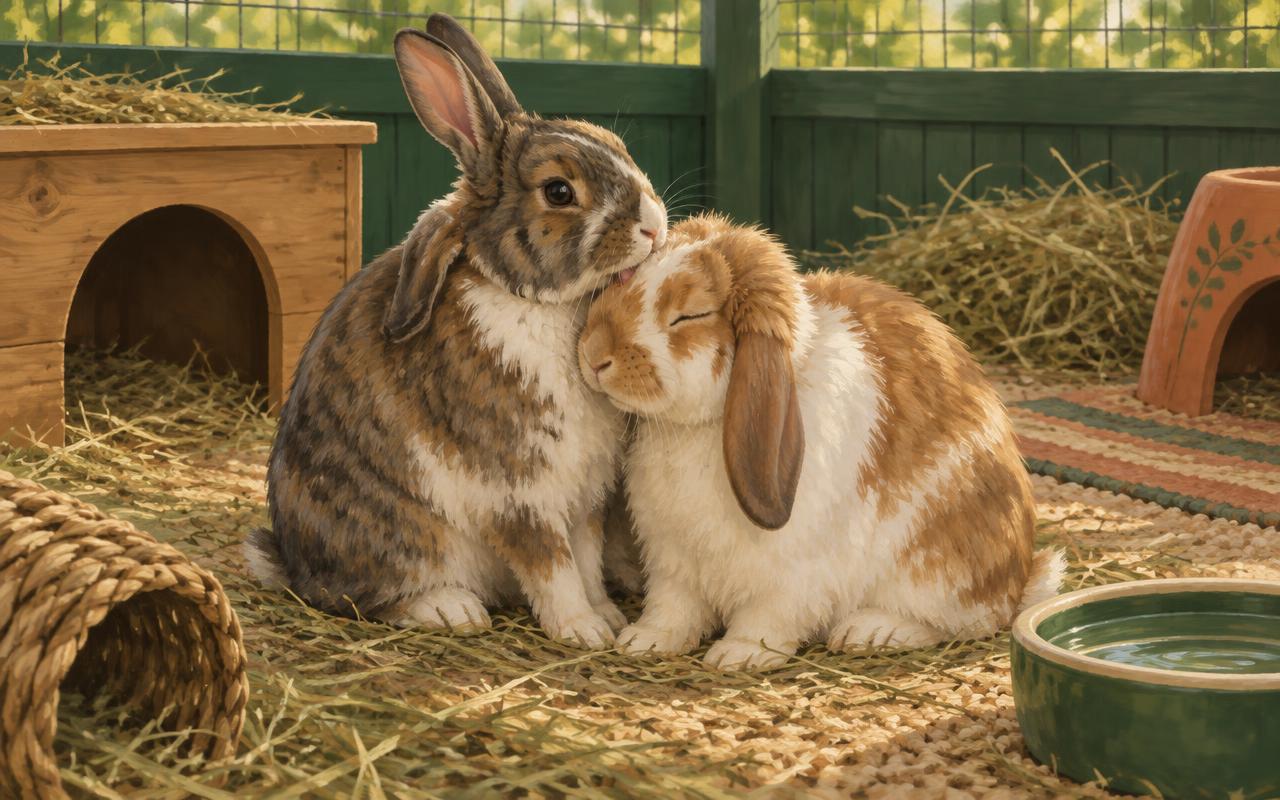
AI-generated editorial illustration of the subject; not a photograph of a specific animal, product or case.
A single rabbit is not a naturally low-maintenance pet
Rabbits are a highly social species that, in the wild, live in warrens alongside dozens of others, and this social need does not disappear in a domestic setting. A rabbit kept entirely alone is at real risk of chronic stress, boredom and reduced welfare, regardless of how much daily attention a devoted owner provides, because human company cannot fully substitute for the specific communication, grooming and companionship another rabbit offers.
This does not mean a single rabbit cannot be cared for responsibly, but it does mean solitary housing should be treated as a welfare compromise to be addressed, ideally through pairing, rather than an acceptable permanent default.
What 'bonded pair' actually means at a shelter
A bonded pair has already been through a structured introduction process, sometimes lasting days to several weeks, and now lives together peacefully, sharing space, grooming each other, resting together and showing no persistent aggression. Shelters generally insist on rehoming bonded pairs together because separating an established bond causes measurable distress to both rabbits, and because there is no guarantee that either rabbit will bond successfully, or as quickly, with a different companion later.
Asking a shelter to separate a bonded pair for convenience, for example because a prospective adopter only has space or budget for one rabbit, is something most reputable rescues will decline, precisely because of this welfare evidence.
If you already have a single rabbit, pairing is still possible
Many rescues can help pair an existing single rabbit with a compatible companion, either by introducing your rabbit to an unbonded rabbit at the shelter under supervision, or by supporting a structured bonding process at home after adoption. Compatibility depends on personality, health, neuter status and the individual introduction process far more than on simply matching sexes or breeds.
Both rabbits should be neutered before attempting to bond them, partly to prevent unwanted litters and partly because neutering reduces hormone-driven aggression and territorial behaviour that can derail an introduction.
The bonding process needs patience and the right setting
Introductions typically begin with rabbits housed near but not within reach of each other, allowing scent and visual familiarity to build before any direct contact, and progress to short, closely supervised meetings in neutral territory that neither rabbit already claims as its own. Rushing this process by placing two unfamiliar rabbits directly into one enclosure risks serious fighting and injury.
Signs that an introduction needs to slow down include prolonged chasing, mounting the head, tight circling, lunging or fur pulling; brief, low-intensity chasing or minor squabbles during early stages are not automatically a sign of failure, but persistent aggression is a reason to separate safely and seek experienced guidance rather than persevere unsupervised.
Health and routine care for a bonded pair
Both rabbits in a pair still need individual monitoring: a change in one rabbit's appetite, droppings or behaviour should prompt a veterinary check for that animal, even if its companion appears completely well, since one rabbit can mask or compensate for a struggling companion's reduced activity. Provide enough resources, space, hiding places, food and water access for both rabbits to use comfortably without one dominating access.
If one rabbit in an established bonded pair needs hospital treatment or extended separation, for example after surgery, ask the veterinary team whether the companion can accompany or visit safely, since prolonged separation of a bonded pair can itself cause stress, though reintroduction after any separation should still be managed carefully rather than assumed to be automatically safe.
What to expect when adopting a bonded pair
Budget for the ongoing costs, including food, housing space and veterinary care, of two rabbits rather than one, and make sure housing is large enough for both animals to move, stretch, exercise and rest comfortably together, since inadequate space can create tension even between well-bonded rabbits. A reputable rescue should be able to tell you the pair's bonding history, any known health issues, and offer post-adoption support if settling-in problems arise.
Frequently asked questions
- Can a single rabbit be happy with just human attention?
- Rabbits are highly social, and human company does not fully replace the specific benefits of rabbit companionship; a solitary rabbit is at higher risk of chronic stress and boredom.
- Will a shelter separate a bonded pair if I can only take one?
- Most reputable shelters will decline, since separating a bonded pair causes measurable distress and there is no guarantee either rabbit will bond successfully with a new companion.
- Do both rabbits need to be neutered before bonding?
- Yes, generally. Neutering both rabbits reduces hormone-driven aggression and territorial behaviour, and prevents unwanted litters, improving the chances of a successful bond.
- How long does bonding two rabbits usually take?
- It varies widely, from days to several weeks, depending on the individuals; the process should be guided by the rabbits' behaviour, not rushed to meet a fixed timeline.
References
- Companionship for rabbits — Rabbit Welfare Association & Fund
- Rabbit care — RSPCA