
Adoption
Adopting an Older Pet: What Senior Animals Need
Why older animals are overlooked, what to ask the shelter, and how to budget for an ageing companion.
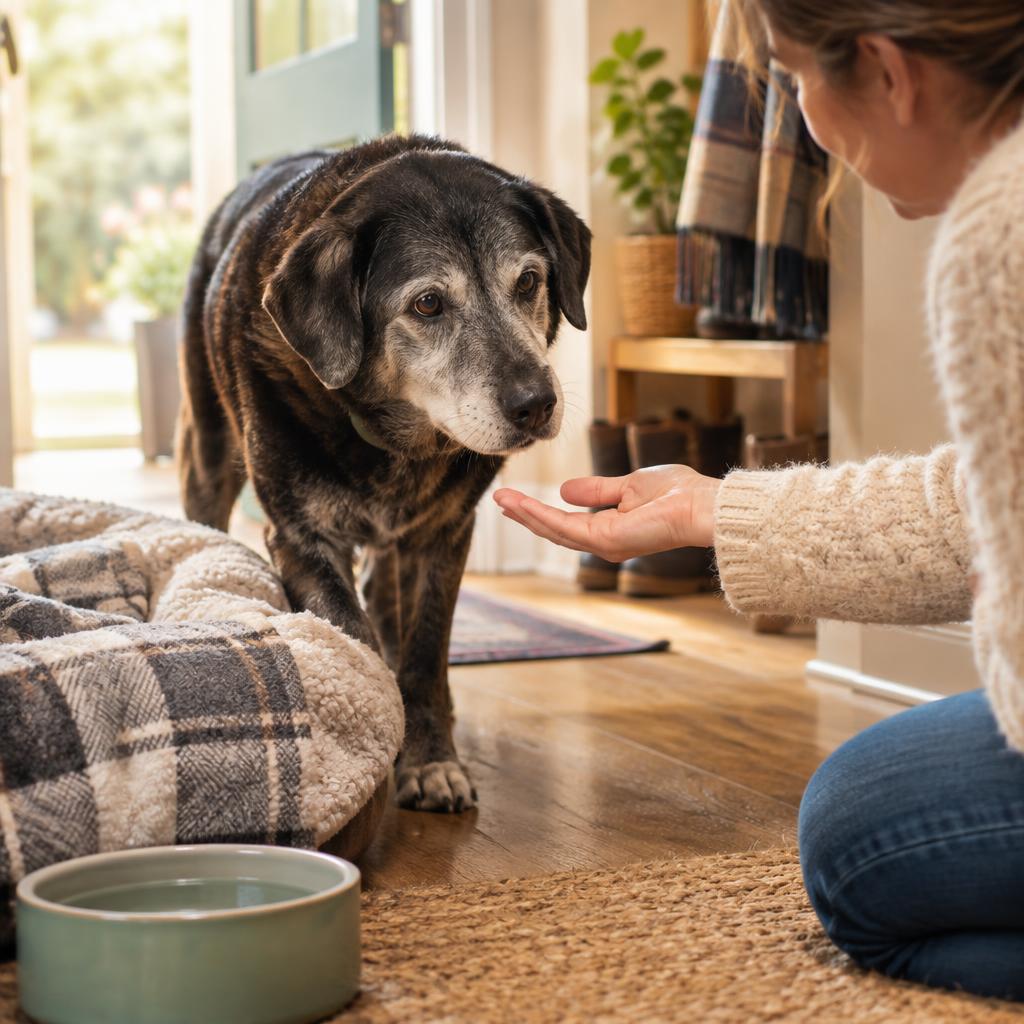
AI-generated editorial image; illustrative, not a clinical demonstration or documentary photograph.
The real benefits of adopting an older animal
Older pets are often overlooked in shelters in favour of kittens and puppies, yet they can make excellent companions: many already have an established, known personality (rather than the unpredictability of how a young animal's temperament will develop), are typically calmer, and may already be house-trained or litter-trained. For people with a quieter lifestyle, less time for intensive puppy or kitten training, or a preference for a lower-energy companion, an older pet can be a genuinely better fit, not just a compromise.
Shelters and rescue organisations can usually tell you a great deal about an older animal's known history, behaviour around children or other pets, and any existing health conditions, giving you more information upfront than is typically available when taking on a very young animal with an unknown future temperament.
Understand likely health considerations
Older pets are statistically more likely to have or develop age-related health conditions such as arthritis, dental disease, kidney or heart issues, and sensory decline (reduced vision or hearing). This does not mean adopting an older pet guarantees high vet costs, but it is sensible to budget for the possibility of more frequent veterinary visits and factor this into your decision, including whether pet insurance is realistic for an older animal (premiums are often higher, and some pre-existing conditions may be excluded).
Ask the shelter for any veterinary records or known health history, and arrange a check-up with your own vet relatively soon after adoption to establish a baseline and catch any emerging issues early.
Give extra time for the settling-in period
Older pets, especially those who have experienced previous homes, loss of an owner, or time in a shelter, may need a longer adjustment period to trust a new environment and new people compared with a young animal with less life experience. Some may show anxiety-related behaviours initially that improve significantly once they feel secure in a stable routine.
Patience during this period matters; attributing early behaviour entirely to a fixed personality before the animal has had time to settle can lead to premature conclusions about whether the adoption is 'working'. Most shelters offer a settling-in period or advice line for newly adopted older pets.
Adjust routines and the home to support an older body
Even an apparently healthy older pet benefits from some adjustments: non-slip flooring, easy access to resting areas without needing to jump, shorter and more frequent walks for dogs, and litter trays with lower sides for cats with reduced mobility. Regular, gentle exercise remains important for maintaining muscle and joint health, but should be adapted to the individual's current fitness rather than assuming the same exercise level as a younger animal.
Diet may also need adjusting; many senior-specific pet foods are formulated with different calorie density and nutrient profiles suited to lower activity levels and age-related health needs, though any significant diet change should be discussed with a vet, especially if the animal has a known health condition.
Consider the emotional and practical trade-offs honestly
Adopting an older pet means potentially fewer years together than adopting a young animal, which is worth reflecting on honestly rather than avoiding, since it can affect family planning, particularly with children who may form a deep attachment. Many adopters feel that providing a loving final chapter for an older animal who might otherwise struggle to find a home is itself a meaningful and rewarding choice, not a lesser one.
There is no universally 'right' answer to the age question; it depends on your circumstances, how you weigh the benefits of a known, settled temperament against a potentially shorter time together, and what you are looking for in a companion.
Questions worth asking the shelter before adopting
Ask about the animal's known medical history, behaviour with children, other pets and visitors, any specific care needs, and why they are being rehomed if known, as this context helps you judge whether a particular older pet suits your household. Many shelters also offer a trial period or will take the animal back if the match does not work out, which can reduce the pressure of an irreversible decision.
If possible, visit more than once and spend time with the specific animal before committing, rather than deciding from a brief initial meeting, since older animals in a stressful shelter environment may not show their typical temperament immediately.
Frequently asked questions
- Are older pets harder to care for than young ones?
- Not necessarily harder, but different — older pets are more likely to need veterinary monitoring and some home adaptations, while often requiring less intensive training and supervision than a young animal.
- Will an older adopted pet bond with a new family?
- Yes, many older pets form strong bonds with new owners, though this may take more time and patience than with a younger animal, particularly if they have had a difficult or unsettled history.
- Should I get pet insurance for an older adopted pet?
- It's worth considering, though premiums are typically higher and some existing conditions may not be covered; ask the shelter and insurers directly about what would be included for that specific animal.
- How long does it take an older pet to settle into a new home?
- This varies widely, from days to several months, depending on the individual animal's history and temperament. Consistent routine and patience generally help more than rushing the process.
References
- Elderly cats care guide — Cats Protection
- Caring for an older dog — Dogs Trust