
Petarium Daily · 13 October 2026 · 9 min read
What Dog Breed Has the Least Health Problems? A Vet Guide
Statistically, medium-sized crossbreeds and working dogs with moderate physical features suffer the fewest inherited health problems. Among pedigree dogs, breeds such as the Australian Cattle Dog, Border Collie, Whippet, and Brittany consistently report lower veterinary intervention rates and longer average lifespans.

Key takeaways
- Crossbreed dogs generally show lower rates of inherited genetic disorders than purebred dogs due to hybrid vigour.
- Pedigree dogs with moderate body shapes, functional muzzles, and natural proportions suffer far fewer physical health complaints.
- Breeds such as Australian Cattle Dogs, Whippets, Border Terriers, and Brittanys rank among the hardiest pedigree choices.
- Conformation choices—especially avoiding extreme flat faces, excessive skin folds, or giant frames—protect long-term canine health.
- Parental health screening tests are the single most reliable predictor of an individual puppy's future health.
Which dog breed genuinely suffers the fewest health problems?
When assessing which dog has the least health problems, veterinary epidemiological research points clearly to the mixed-breed dog as the overall winner, followed by working pedigree breeds with moderate, unexaggerated body structures. Crossbreeds benefit from genetic diversity—a biological phenomenon called hybrid vigour or heterosis—which reduces the likelihood of inheriting recessive genetic disorders that cluster within closed pedigree gene pools.
Among recognised purebred members of the domestic dog family, breeds selected historically for functional outdoor work rather than appearance boast the lowest lifetime rates of major illness. Dogs like the Australian Cattle Dog, Whippet, Border Terrier, and Brittany suffer significantly fewer chronic issues than breeds bred for extreme size, compressed skulls, or exaggerated dwarfism. Conformation—the physical shape of a dog's skeleton, airway, and joints—dictates lifelong health far more than breed popularity.
Why do some dog breeds have fewer health conditions than others?
The disparity between healthy, robust dogs and illness-prone breeds comes down to three core factors: genetic diversity, anatomical conformation, and maternal selection pressure. In closed studbooks, every dog within a breed traces back to a shared foundation stock. When harmful recessive mutations exist in those lines, breeding related dogs together concentrates those mutations, leading to high rates of cardiac, orthopaedic, and neurological disease.
Anatomical exaggeration creates the second major category of canine health problems. When humans select for extreme traits, such as shortened skulls, corkscrew tails, disproportionately short limbs, or excessive loose skin, physical functionality suffers. In contrast, dogs with natural proportions—straight legs, functional airways, erect or semi-erect ears, and proportional spines—avoid the mechanical strains that drive veterinary visits.
Longevity and morbidity research from The Dog Ageing Project shows that adult body size plays an enormous role. Giant breeds experience faster cellular senescence and elevated rates of osteosarcoma and dilated cardiomyopathy, whereas small to medium dogs live significantly longer with lower cancer incidence.

Which pedigree breeds have the best health profiles?
1. Australian Cattle Dog
Bred to work vast pastoral stations under harsh climatic conditions, the Australian Cattle Dog features an athletic, balanced frame free from skeletal distortions. While they can carry hereditary deafness or progressive retinal atrophy, certified DNA testing has made screening straightforward. A historic specimen famously lived past 29 years, and current population studies routinely place their typical lifespan between 13 and 15 years.
2. Whippet
Whippets are an exceptionally robust sighthound breed with minimal predisposition to common structural ailments. Unlike other medium-to-large breeds, they show remarkably low rates of hip and elbow dysplasia, skin fold pyoderma, or chronic ear infections. Their primary clinical vulnerabilities are thin skin prone to minor tears and a sensitivity to cold weather or certain anaesthetic agents, rather than systemic degenerative diseases.
3. Working Terriers (Border Terrier, Wire Fox Terrier)
Traditional working terriers, including the Border Terrier and the Wire Fox Terrier, maintain excellent structural health. Developed for endurance and vermin control, their joints, respiratory tracts, and digestive systems remain functional and resilient. While conditions such as canine epileptoid cramping syndrome occur in isolated lines, responsible breeding practices have maintained a strong health baseline across the group.
4. Brittany and Working Gundogs
Field-type gundogs like the Brittany generally display lower disease burdens than their show-line counterparts. They feature open airways, strong cardiovascular capacity, and moderate bone substance. Because breeders of working lines prioritise field stamina and stamina over cosmetic trends, inherited structural flaws are culled out through functional performance demands.
5. Australian Kelpie and Border Collie
Pastoral herding breeds developed purely for working stamina display high metabolic efficiency and exceptional physical agility. Provided breeders screen for collie eye anomaly (CEA) and multidrug resistance (MDR1 gene mutation), these dogs suffer relatively few spontaneous chronic diseases during their prime years, often remaining active well past a decade.
| Breed / Group | Typical Lifespan (Years) | Key Anatomical Advantage | Primary Health Tests Recommended |
|---|---|---|---|
| Mixed-Breed (Medium) | 13 – 16 | High genetic diversity, balanced conformation | Standard physical wellness screening |
| Australian Cattle Dog | 13 – 15 | Dense bone structure, unexaggerated head and spine | PRA DNA test, BAER hearing test, hip scoring |
| Whippet | 12 – 15 | Very low rates of hip dysplasia and airway obstruction | Cardiac evaluation, eye screening |
| Border Terrier | 12 – 15 | Functional scissor bite, balanced leg-to-body ratio | SLEM DNA test, heart testing |
| Brittany | 12 – 14 | Lightweight athletic build, natural endurance | Hip scoring, eye examination |
How do mixed-breed dogs compare to purebred dogs?
The scientific debate surrounding purebred versus crossbred health has yielded conclusive data in veterinary epidemiology. While purebred dogs excel in predictability of temperament, coat type, and adult size, crossbreeds exhibit lower cumulative morbidity. A landmark study from the University of California, Davis, analysing more than 27,000 canine patients, found that purebred dogs had a significantly higher prevalence of 10 genetic disorders, including aortic stenosis, bloat, dilated cardiomyopathy, and elbow dysplasia.
Mixed-breed dogs were not entirely free from disease; disorders that affect the wider canine population indiscriminately—such as ruptured cruciate ligaments, mast cell tumours, and arthritis and mobility problems—appeared equally in both cohorts. Nevertheless, combining divergent gene pools significantly dilutes the expression of breed-specific recessive illnesses.
First-generation intentional crossbreeds (such as poodle mixes) may still inherit common conditions if both parent breeds share predispositions, such as hip dysplasia or eye disorders. The truest health advantages lie in diverse, multi-generation mongrels where ancestral inbreeding coefficients remain exceptionally low.
Median Lifespan by Canine Conformation Category
Which physical features cause the most health problems?
Prospective owners seeking a robust pet should evaluate physical architecture before looking at breed labels. Canine welfare organisations worldwide, including the British Veterinary Association, actively caution against physical extremes that inherently limit a dog's natural biological function. Choosing a dog that avoids these traits eliminates a significant percentage of potential veterinary crises.
- Extreme Brachycephaly: Severely shortened muzzles lead to respiratory distress, sleep apnoea, chronic heat intolerance, and corneal ulcers, as explored in our guide to flat-faced breed welfare.
- Chondrodysplasia: Disproportionately short, curved legs relative to a long spinal column increase mechanical strain, predisposing dogs to early intervertebral disc disease (IVDD).
- Exaggerated Giantism: Breeds exceeding 45–50 kg face immense skeletal strain, elevated rates of bone cancer, and high risks of gastric dilatation-volvulus (bloat).
- Excessive Skin Folds: Deep facial or cutaneous folds trap moisture, oils, and bacteria, causing persistent, painful dermatitis and chronic ear canal stenosis.
- Screw Tails: Inverted or corkscrew tails frequently result from deformed spinal vertebrae (hemivertebrae), which can lead to spinal cord compression and chronic fecal hygiene issues.
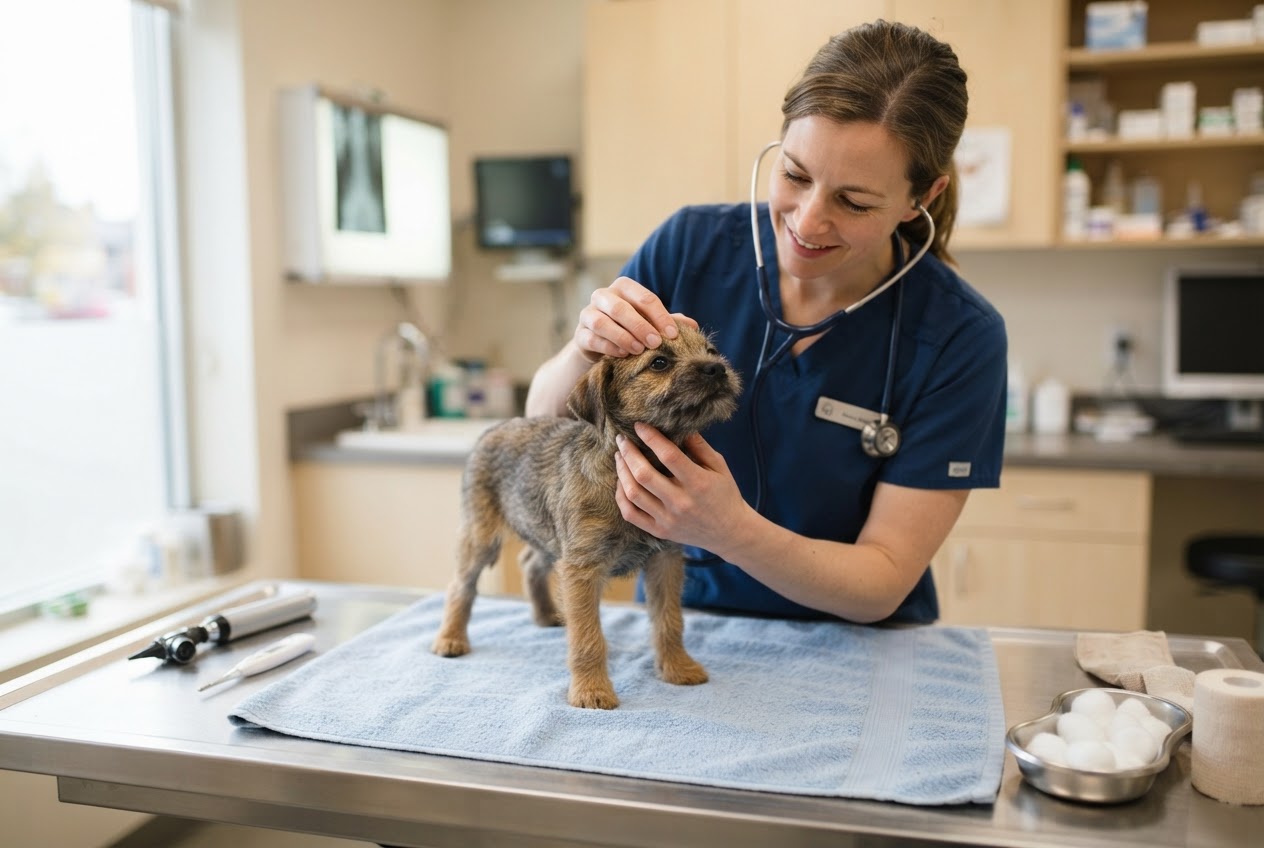
How can you select a healthy puppy from any breed?
Breed predispositions provide a general baseline, but individual breeding decisions dictate real-world outcomes. Even a naturally healthy breed can produce frail offspring if raised by unprincipled operators. Taking systematic steps before committing to a puppy protects both your emotional wellbeing and your finances.
- 1
Evaluate Parental Health Certifications
Ask to inspect official laboratory certificates for DNA screenings and clinical scoring schemes (such as British Veterinary Association / Kennel Club hip, elbow, and eye certificates) for both parents.
- 2
Inspect the Inbreeding Coefficient (CoI)
Use pedigree databases to check the puppy's inbreeding coefficient. Aim for a figure well below the UK breed average to minimise the expression of hidden deleterious alleles.
- 3
Observe Both Parents and Litter Environment
Observe the mother interacting with her puppies in her home environment. Look for easy, unlaboured breathing, fluid mobility, bright eyes, and stable temperament.
- 4
Avoid Unregulated Commercial Breeders
Follow our guidance on choosing a reputable breeder to steer clear of puppy farms where animals are bred without genetic testing or proper maternal welfare.
- 5
Use an Objective Matching Resource
If you are unsure which lifestyle balance suits your household, use our dog breed matcher to weigh physical demands, exercise needs, and hereditary risks.
What practical care steps keep any dog healthy?
Genetics loads the biological gun, but daily environment pulls the trigger. Even the genetically hardiest dog will develop debilitating health conditions if subjected to an improper lifestyle. Longitudinal studies identify body weight management as the single most impactful factor within an owner's control: maintaining a lean body condition score (between 4 and 5 on a 9-point scale) extends canine median lifespan by an average of 1.8 years.
Appropriate physical exercise tailored to the dog's life stage protects joint cartilage and cardiovascular performance. Puppies require measured, varied exercise on forgiving surfaces rather than repetitive high-impact ball chasing, which strains growing growth plates. Routine preventive care—including dental hygiene, proactive parasite control, and regular veterinary auscultation of the heart—prevents minor physiological imbalances from deteriorating into major clinical emergencies.
Finally, having financial resilience through adequate insurance coverage ensures that unexpected accidents or late-stage ailments are treated promptly. Reviewing our guide on understanding pet insurance can help you select a lifetime policy that covers chronic issues without restrictive exclusions.
Frequently asked questions
Are crossbreed dogs always healthier than pedigree dogs?
Not always. While crossbreeds generally enjoy lower rates of inherited recessive disorders due to genetic diversity, they can still inherit common polygenic conditions like hip dysplasia if both parents carry the genetic risk. A puppy from an irresponsible backyard breeder breeding two unhealthy purebreds will not automatically be healthy.
What is the healthiest small dog breed?
Small working terriers like the Border Terrier, alongside breeds like the Cairn Terrier, Miniature Pinscher, and Whippet, consistently rank among the healthiest small dogs. They feature proportionate skulls, open airways, and balanced skeletal structures, avoiding the airway and dental crowding issues common in toy breeds with flatter faces.
Why do giant dog breeds suffer from more health problems?
Giant breeds grow at an accelerated rate from puppyhood to adulthood, causing cellular stress and heightened vulnerability to bone cancer and cardiac failure. Their immense mass also places heavy mechanical wear on cartilage, joints, and ligaments, predisposing them to severe osteoarthritis and mobility challenges early in life.
Which dog breeds have the longest average lifespan?
Small to medium breeds with moderate, unexaggerated anatomy boast the longest average lifespans. Breeds like the Australian Cattle Dog, Jack Russell Terrier, Whippet, Border Collie, and healthy mixed-breed dogs frequently reach 13 to 16 years of age with minimal chronic medication requirements.
Can poor breeding ruin an otherwise healthy breed?
Yes. Even naturally robust breeds can succumb to severe health problems if individuals are bred without pre-breeding screening tests or selected purely for cosmetic deviations. Puppy mills and low-welfare commercial breeders often produce litters with high parasite loads, poor immune function, and hidden hereditary defects.
Do working line dogs have fewer health issues than show line dogs?
In many breeds, yes. Working lines are selected primarily for stamina, physical soundess, visual acuity, and functional breathing. Show lines can inadvertently drift toward cosmetic exaggeration—such as heavier skin folds, sloping backs, or excessive coat density—which can compromise day-to-day physical function and long-term vitality.
How does diet influence a dog's genetic health risks?
While diet cannot change a dog's inherited DNA, balanced nutrition appropriate for age and size prevents secondary health crises. Overfeeding accelerates degenerative joint disease, stresses the cardiovascular system, and worsens metabolic balance. Keeping dogs lean is the most clinically proven way to delay the onset of inherited chronic diseases.
Sources and further reading
- Prevalence of Inherited Disorders in Purebred Versus Mixed-Breed Dogs — avma.org
- rvc.ac.uk — guidance library — rvc.ac.uk
- Breeding Schemes and Health Testing for Dogs — bva.co.uk
- thekennelclub.org.uk — guidance library — thekennelclub.org.uk
- Canine Welfare and Conformation Assessment — dogstrust.org.uk
More from Petarium Daily
- Are Dogs Good for Mental Health? What Science and Experience Show
Dogs can significantly support human mental wellbeing by reducing loneliness, encouraging physical activity, and offering non-judgemental companionship. However, they are living animals with complex needs, and the financial, behavioural, and emotional demands of ownership can also cause considerable stress.
- How to Care for a Rabbit: A Complete British Guide to Welfare and Health
Caring for a rabbit requires a high-fibre diet consisting of at least 85% fresh feeding hay, secure predator-proof housing with permanent access to an exercise run, and companionship from a neutered fellow rabbit. Because rabbits hide illness instinctively, daily monitoring of their feeding patterns, droppings, and behaviour is vital to catch life-threatening issues such as gut stasis early.
- Cat Mouthing: Why Cats Gently Bite and How to Stop It
Cat mouthing occurs when a feline places its teeth lightly against skin or clothing without clamping down aggressively. This behaviour typically stems from playful arousal, petting-induced overstimulation, kitten teething, or an attempt to communicate physical boundaries.