
Petarium Daily · 10 October 2026 · 11 min read
Cat Mouthing: Why Cats Gently Bite and How to Stop It
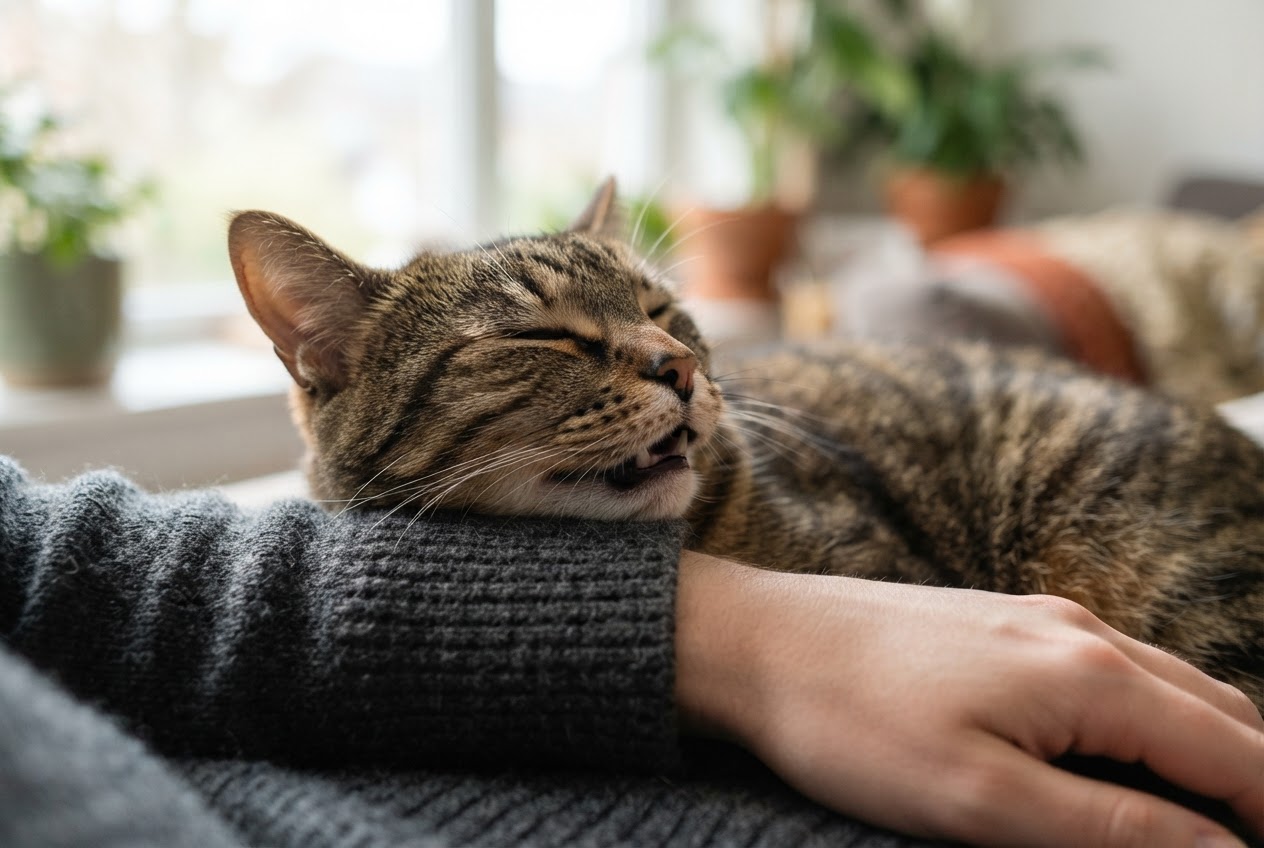
Cat mouthing occurs when a feline places its teeth lightly against skin or clothing without clamping down aggressively. This behaviour typically stems from playful arousal, petting-induced overstimulation, kitten teething, or an attempt to communicate physical boundaries.
Key takeaways
- Cat mouthing differs from aggressive biting because it lacks deep puncture force and deliberate intent to harm.
- Tactile overstimulation during stroking is the most frequent trigger for mouthing in adult domestic cats.
- Never use bare hands or feet as toys, as this inadvertently conditions cats to mouth human flesh during predatory play.
- Sudden onset mouthing in mature cats can signal underlying dental pain, joint discomfort, or systemic distress.
- Consistent redirection to wand toys and immediate cessation of petting successfully extinguish unwanted mouthing.
What Does Cat Mouthing Mean?
Cat mouthing is a common behavioural display in which a feline places its teeth against your skin, fingers, or clothing without exerting the full force of a predatory or defensive bite. While it can feel unnerving to experience a cat's sharp incisors and canines against bare flesh, mouthing is rarely an act of unprovoked malice. Instead, it serves as a tactile and communicative tool through which cats navigate social touch, play, frustration, and sensory overload.
In feline society, the mouth is integral to exploration, grooming, and social negotiation. Understanding the context surrounding the behaviour is the key to managing it. By paying close attention to cat body language and subtle signals, owners can identify whether their cat is initiating gentle play, expressing developmental teething urges, or signalling that physical interaction has exceeded their individual tolerance.
Why Do Cats Mouth Their Owners?
Mouthing arises from several distinct psychological and physical states. Because domestic felines vary widely in their early socialisation and innate tolerance for human handling, the motivation behind a gentle nip differs from one cat to the next.
1. Petting-Induced Overstimulation
The most frequent cause of mouthing in companion cats is petting-induced overstimulation, sometimes referred to clinically as tactile arousal or petting intolerance. While a cat may actively seek affection and lean into strokes around the cheeks and chin, prolonged or repetitive stroking down the back, flank, or near the tail base rapidly overloads their nervous system. Hair follicle receptors become hypersensitive, turning pleasurable physical sensations into uncomfortable electrical prickles.
When a cat reaches this sensory threshold, a quick mouth hold or soft nip to the stroking hand is often their way of saying 'enough'. This is a primary component of how cats communicate vocal, visual, and scent signals to establish immediate interpersonal distance.
2. Predatory and Play Drive
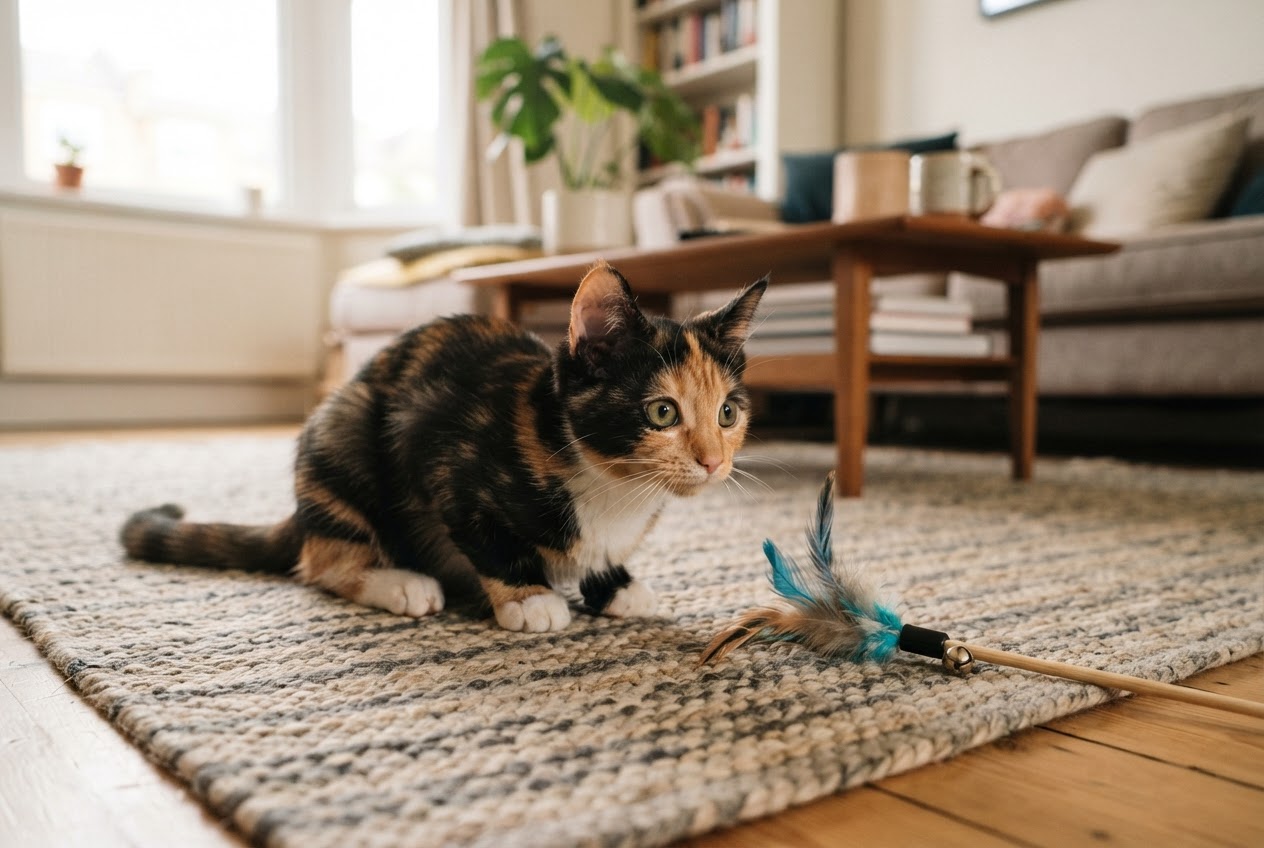
Cats are obligate carnivores with deeply ingrained predatory instincts. Kittens naturally practice stalking, pouncing, grappling, and biting with their littermates. If an owner frequently plays with a kitten using bare hands, fingers, or feet under bedcovers, the cat learns to view human appendages as legitimate prey targets. As the cat matures, sudden hand movements trigger an automatic predatory grab-and-mouth sequence.
3. Kitten Teething and Exploration
Young felines go through a distinct teething phase between roughly 10 weeks and 6 months of age. As deciduous teeth shed and permanent adult teeth erupt through sensitive gum tissue, kittens experience mild inflammation and an irresistible urge to chew on objects to alleviate pressure. Human fingers, knuckles, and forearms are warm and pliable, making them prime targets for exploratory mouthing.
4. Attention Seeking and Reinforcement History
Cats are astute learners. If a cat gently mouths your ankle or wrist while you are working on a computer or reading, and you immediately look down, talk to them, pick them up, or offer a treat, the cat learns that teeth on skin produce an instant human reaction. Even negative attention, such as pushing the cat away or exclaiming loudly, can reward an understimulated cat who craves interaction.
5. Affectionate 'Love Bites' and Social Grooming
During mutual grooming sessions between bonded feline pairs (allogrooming), cats frequently alternate between smooth licks and tiny nibbles with their front incisors. When a cat grooms your fingers or nose and finishes with a tiny, gentle pinch of its front teeth, it is mimicking this mutual grooming ritual. This behaviour is benign, calm, and accompanied by purring and relaxed body posture.
How to Differentiate Mouthing from Fear or Pain Aggression
Differentiating between benign mouthing and true aggression is critical for domestic safety and feline welfare. While mouthing involves minimal pressure and often leaves skin unbroken, defensive bites triggered by fear, pain, or territorial distress carry deliberate velocity, deep punctures, and significant tissue trauma.
Unlike dogs, where structured protocols for teaching bite inhibition to puppies are widely taught in group classes, cat bite inhibition is almost entirely learned in early kittenhood from the mother and littermates. A cat exhibiting true aggression will display marked postural indicators long before teeth make contact.
| Feature | Gentle Mouthing / Playful Nip | Defensive or Pain-Related Bite |
|---|---|---|
| Pressure Exerted | Light to moderate; skin usually intact | High force; punctures, bruising, or lacerations |
| Ear Position | Upright, neutral, or slightly rotated | Flattened backwards ('airplane ears') or pinned against skull |
| Pupil Status | Normal or moderately dilated from excitement | Fully dilated black pools or narrowed slits depending on threat |
| Tail Movement | Gentle wave, upright hook, or slow tip twitch | Rapid lashing, violent swishing, or clamped tight to body |
| Vocalisations | Silent, quiet chirrups, or soft purring | Low growling, hissing, yowling, or spitting |
| Preceding Triggers | Interactive play, prolonged stroking, grooming | Confinement, cornering, sudden pain, intense fear |
Recognising Early Warning Signs Before Mouthing Occurs
Cats rarely mouth out of nowhere. Humans often believe a bite happened 'without warning' simply because feline communication is quiet, subtle, and easily overlooked during casual conversation or television watching. Learning to spot microscopic shifts in feline posture allows you to withdraw your hands before your cat feels compelled to use their teeth.
- The Tail Tip Twitch: The earliest indicator of overstimulation is an intermittent, twitching motion at the very end of the tail, progressing to rhythmic thumping.
- Skin Rippling: The skin along the cat's spine may twitch or shudder rapidly as nerve endings become hypersensitive under physical touch.
- Ear Rotation: Ears shifting from forward-facing to sideways ('swivelled' or 'airplane' ears) signal rising tension and discomfort.
- Pupil Dilation: A sudden widening of the pupils in steady ambient light reveals a spike in autonomic arousal and adrenaline.
- Body Rigidity: A cat that melts into strokes will suddenly freeze, holding its limbs and neck stiffly just seconds before turning to mouth.
- Head Swivelling: The cat sharply turns its head towards the stroking hand, often watching fingers intently with widened eyes.
Step-by-Step: How to Stop and Redirect Cat Mouthing
Modifying mouthing behaviour requires calm consistency, positive reinforcement, and clear environmental boundaries. Physical punishment, shouting, or flicking a cat's nose must never be used; punitive measures break the bond of trust, escalate predatory arousal into defensive aggression, and worsen the biting.
- 1
Cease All Motion Instantly ('Freeze and Disengage')
The moment teeth touch your skin, go completely still. Do not pull away abruptly, as rapid movement mimics fleeing prey and engages the cat's chasing reflex. By becoming completely motionless and relaxing your muscles, you remove the fun and feedback from the interaction.
- 2
Remove Attention Calmly
Without speaking, scolding, or making eye contact, gently tuck your hands into your armpits or stand up and step out of the cat's reach. Wait 30 to 60 seconds until the cat's body language softens and their focus shifts elsewhere.
- 3
Redirect onto an Inanimate Target
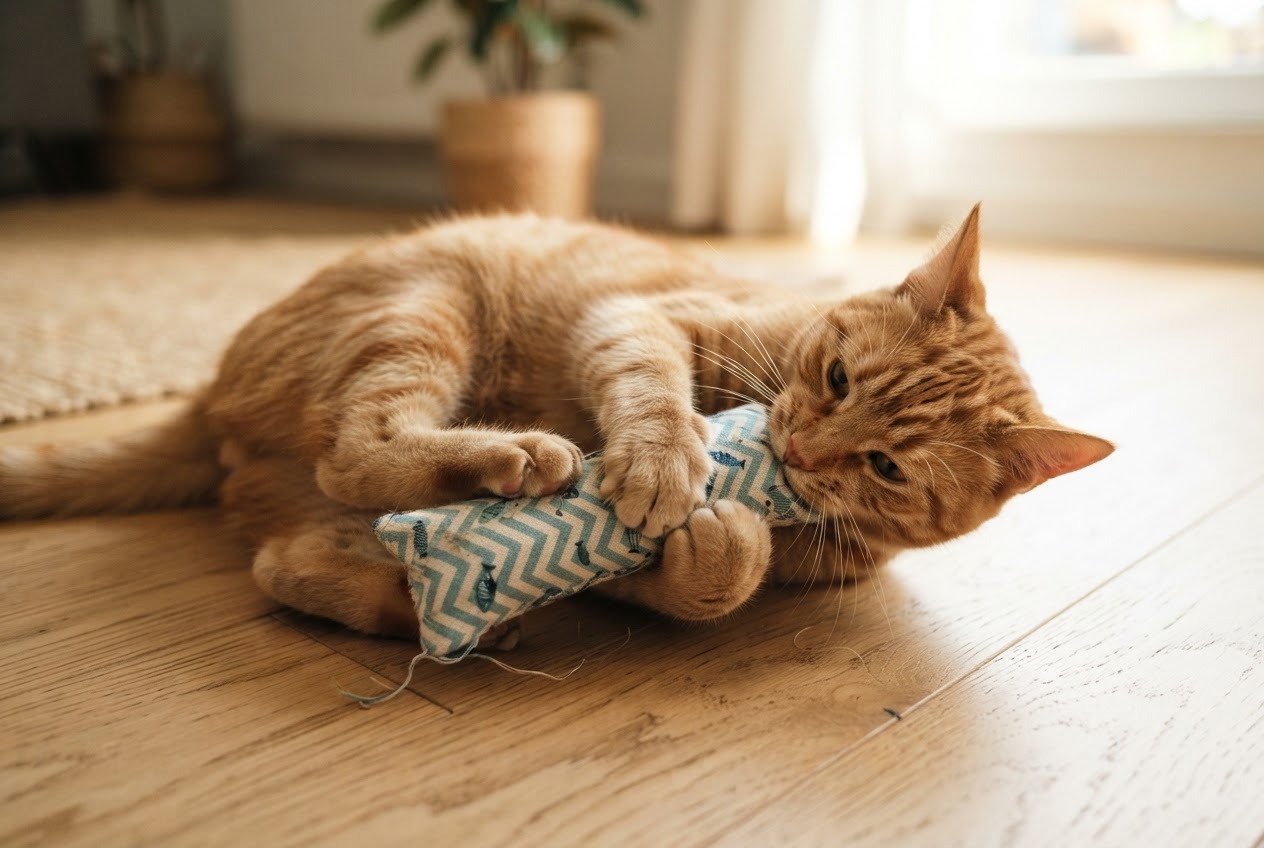
Introduce an appropriate outlet for predatory biting. Toss a catnip mouse, roll a crinkle ball, or present a long fabric kicker toy that the cat can bite, grab, and rabbit-kick vigorously without making contact with human skin.
- 4
Structure Daily Predatory Play
Engage your cat in two to three dedicated 10-minute play sessions every day using wand toys or fishing-rod lures. Allow the cat to complete the full predatory sequence: stalk, chase, pounce, bite, and 'kill' the toy, followed by a meal or treat to signal the end of the hunt.
- 5
Enforce Hands-Free Play Protocols
Ensure every member of the household and any visiting guests adhere strictly to a zero-tolerance policy for using fingers or feet as play objects. Hands should be associated solely with gentle, respectful affection and food delivery.
Developmental Milestones: Teething vs Adult Mouthing
Kittens explore the physical world with their mouths, mirroring early development seen across other domestic species. Understanding typical feline tooth development helps owners recognise whether mouthing is age-typical developmental chewing or habitual learned behaviour that requires structured intervention.
Typical Age Range for Kitten Teething and Oral Exploration
During peak teething between 14 and 24 weeks, kittens suffer sore gums as 30 permanent teeth push out 26 deciduous predecessors. Providing chilled, cat-safe rubber teething rings, dried matatabi dental sticks, or thick braided fleece toys will prevent human fingers from becoming an impromptu chewing aid.
Medical and Physical Triggers for Sudden Mouthing
When an adult cat with no prior history of mouthiness suddenly begins grabbing, mouthing, or nipping when handled, behavioural causes should be secondary to medical assessment. Pain alters neurochemical balances and drastically lowers an animal's tolerance threshold.
Feline odontoclastic resorptive lesions (FORLs), severe gingivitis, cracked molars, and sublingual foreign bodies make normal facial movement excruciating. If an owner inadvertently brushes a painful jaw during a cheek rub, the cat may reflexively snap or mouth to protect itself. Similarly, degenerative joint disease (osteoarthritis) is present in over 80% of cats over ten years of age; touching a stiff lumbar spine, hip, or elbow frequently provokes immediate mouthing.
Common Mistakes Owners Make When Managing Cat Mouthing
Eliminating mouthing requires eliminating human actions that unintentionally reward or provoke the habit. Well-meaning owners frequently fall into behavioural traps that prolong the issue.
- Roughhousing with Hands: Wiggling fingers to get a cat to pounce blurs the boundary between acceptable toy play and unacceptable human contact.
- Pulling Away Too Fast: Snatching hands away in panic triggers the feline prey drive, causing the cat to clamp down tighter or chase with claws extended.
- Using Physical Discipline: Pushing the cat, tapping their nose, or spraying water induces defensiveness, turning mild tactile mouthing into fearful aggression.
- Stroking Vulnerable Body Zones: Petting the belly, rear legs, or base of the tail frequently overstimulates cats; stick to the head, chin, and temporal glands.
- Ignoring Early Arousal Indicators: Waiting until the cat bites before stopping petting reinforces the cat's belief that subtle body language is ignored.
Environmental Enrichment to Prevent Boredom Mouthing
Indoor cats living in under-stimulating environments often mouth their guardians out of pure boredom and unspent metabolic energy. Ensuring your home meets a cat's instinctual needs dramatically decreases unwanted oral fixation.
Incorporate puzzle feeders, lick mats, wall shelves, and high perches overlooking gardens or bird feeders. Rotate toys weekly so novelty remains high, and introduce positive reinforcement clicker training to engage their cognitive abilities. A mentally fatigued, physically satisfied cat is substantially less likely to mouth hands for stimulation.
Frequently asked questions
Why does my cat lick me and then suddenly mouth or bite me?
Licking followed by a gentle bite usually indicates a sudden transition from calm social grooming to mild sensory overstimulation. The repetitive friction of their barbed tongue can heighten skin sensitivity. When that sensory input reaches capacity, the cat instinctively finishes with an inhibitory nip to tell you the interaction has concluded.
Can cat mouthing turn into dangerous biting if ignored?
Yes. If owners ignore the initial gentle mouthing or repeatedly push past the cat's warning signals, the feline will realise that subtle communication fails. Over time, the cat may skip gentle mouthing altogether and escalate directly to hard, defensive biting to protect its personal space and boundaries.
Is my kitten's mouthing just a temporary phase?
Teething-related mouthing usually subsides around six months of age once all permanent adult teeth have erupted. However, if human hands were routinely used as playthings during kittenhood, the behaviour will transition into an ingrained adult habit that persists long after the teething discomfort has vanished.
Why does my cat mouth my ankles when I walk past?
Moving ankles and swinging trousers mimic the rapid darting motions of small prey, triggering predatory play in energetic or bored cats. This frequently happens in narrow hallways or when owners prepare meals. Redirect the cat by scattering dry kibble or throwing a toy ahead of you before walking.
How can I tell if a cat's mouthing is due to pain?
Pain-induced mouthing typically appears suddenly in adult or senior cats, particularly when touched in specific anatomical areas such as the lower back, hips, or mouth. It is frequently accompanied by flinching, guarding postures, vocalisation, decreased grooming, or reduced mobility, requiring prompt veterinary evaluation.
Should I tap my cat on the nose to teach them not to mouth?
No, you should never hit, tap, or flick a cat. Physical reprimands do not teach bite inhibition; instead, they trigger fear, compromise trust, and often provoke retaliatory defensive aggression. The most effective consequence is immediate withdrawal of all attention and freezing movement.
What toys are best for redirecting a cat that loves to mouth hands?
Long fabric 'kicker' toys stuffed with catnip or valerian, fishing-rod wand teasers, and durable rubber chew toys work best. Kicker toys are especially helpful because they allow the cat to wrap its front paws around the target and bite firmly while kicking out its back legs.
Sources and further reading
- Aggression in Cats: Overstimulation and Play — icatcare.org
- Understanding Your Cat's Body Language — cats.org.uk
- vcahospitals.com — guidance library — vcahospitals.com
- pdsa.org.uk — guidance library — pdsa.org.uk
- merckvetmanual.com — guidance library — merckvetmanual.com
More from Petarium Daily
- How to Toilet Train a Puppy in 7 Days: A Realistic Fast-Track Plan
You can establish clean toileting habits in seven days by running an intensive management schedule, taking your puppy outside every 30 to 45 minutes, and rewarding outdoor eliminations immediately. While full physiological bladder control takes several months, a structured seven-day reset dramatically reduces accidents and sets up lifelong house-training success.
- How Do Cats Communicate? Vocal, Visual, and Scent Signals
Cats communicate using a subtle, multi-layered system combining vocal sounds, body posture, facial expressions, and chemical scent marking. By understanding how feline signals work together in context, you can accurately interpret your cat's emotional state and strengthen your bond.
- How Long Does It Take to Toilet Train a Puppy? A Realistic Guide
On average, it takes between four and six months for a puppy to become reliably toilet trained, though full consistency can take up to a year. Progress depends heavily on the puppy's age, physical bladder maturity, breed size, and the consistency of their daily routine.