
Ingredient science
How to Read a Pet Food Label Without Being Sold To
Guaranteed analysis, ingredient splitting, the nutritional adequacy statement and what 'grain free', 'human grade' and 'natural' legally mean — which is often very little.
Start at the back, not the front
The front of a bag is marketing. The regulated information is on the back: the ingredient list, the guaranteed analysis or typical composition, the nutritional adequacy statement, and the manufacturer's contact details. Reading in that order tells you more in thirty seconds than any amount of packaging imagery.
The adequacy statement is the important line
A phrase such as 'complete and balanced for adult maintenance' (or, in Europe, 'complete') means the food is formulated to meet an established nutrient profile for that life stage. Foods labelled complementary are not designed to be fed alone, and many toppers, treats and some fresh products fall into this category.
Better still is a statement that the food passed a feeding trial rather than being formulated to meet a profile on paper. Both are legitimate; the trial is stronger evidence.
Ingredient lists and their tricks
Ingredients are listed by weight before cooking, so fresh meat at the top of the list may contribute far less to the finished product than a dry meal further down once its water is removed. Splitting — listing peas, pea protein and pea fibre separately — pushes a single ingredient down the list while keeping its total contribution high.
Named meat meals such as 'chicken meal' are concentrated protein sources and are not inherently inferior. Conversely, a beautiful ingredient list tells you nothing about whether the finished diet is balanced in calcium, phosphorus, taurine or vitamin D.
- 'Natural' and 'premium' have little or no enforceable definition in most markets
- 'Human grade' requires the whole product and facility to meet human food standards where the term is regulated, and means nothing where it is not
- 'Grain free' is a recipe choice, not a health claim — most food allergies involve proteins, not grains
- 'With chicken' can legally mean a small percentage; 'chicken' alone usually means much more
Calories matter more than most owners realise
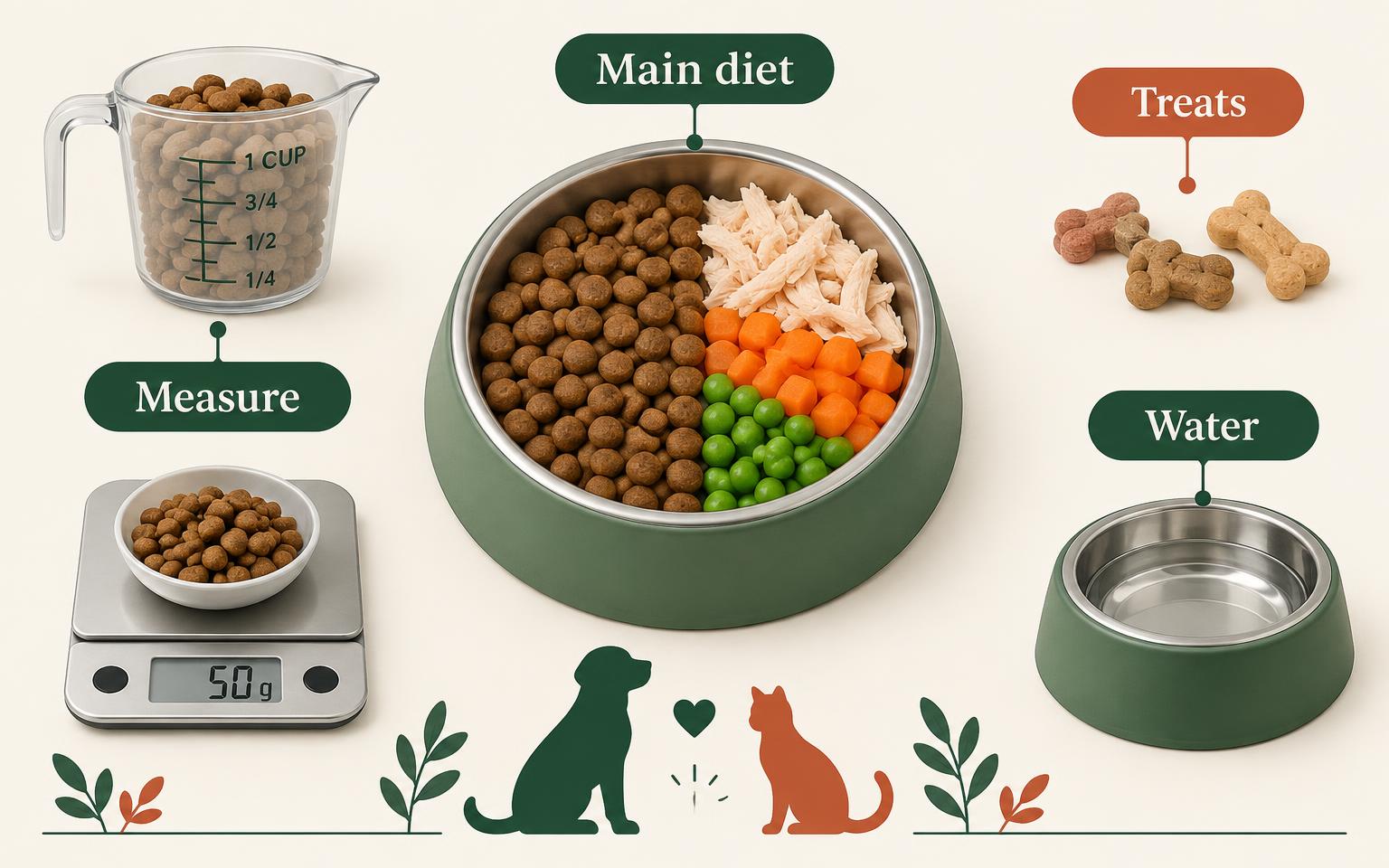
Look for the metabolisable energy figure, usually given per kilogram or per cup. Feeding guides on packaging are population averages and commonly overestimate for neutered, indoor or less active animals. Use the guide as a starting point, then adjust to keep body condition score in the ideal range and weigh food rather than measuring by volume.
When to involve your vet
Home-prepared, raw and elimination diets all carry real risks of nutritional imbalance if they are not formulated properly. Any dog or cat with kidney disease, pancreatitis, urinary crystals, diabetes or suspected food allergy should have its diet chosen with veterinary input rather than from a label comparison.
Frequently asked questions
- Is a more expensive food always better?
- No. Price reflects ingredients, marketing and packaging. A moderately priced food from a manufacturer that employs qualified nutritionists and runs feeding trials is often the better choice.
References
- Nutrient profiles for dog and cat foods — Association of American Feed Control Officials
- Nutritional guidelines for complete and complementary pet food — FEDIAF