
Protein
Cooked chicken liver
Nutritious but very rich in vitamin A — strictly small amounts.
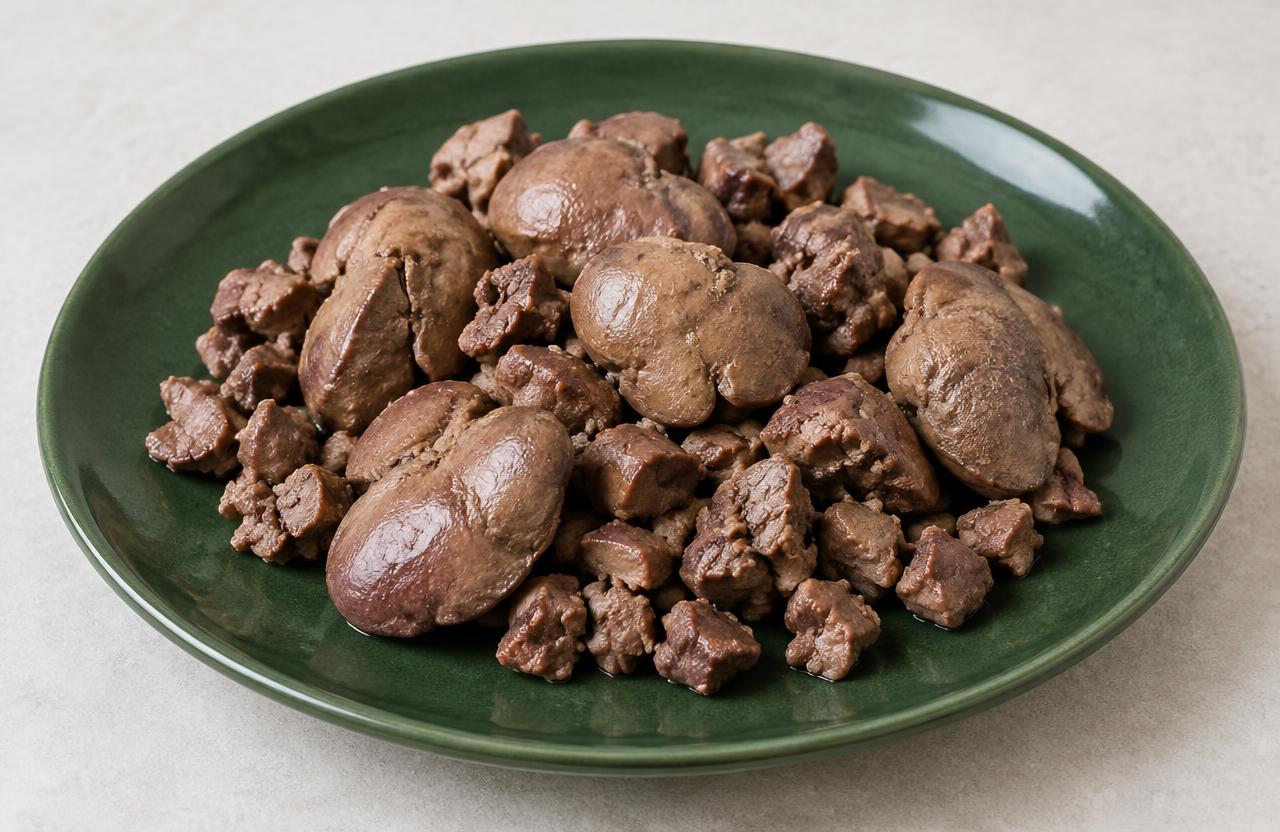
AI-generated editorial illustration; not a clinical demonstration or documentary photograph.
Who can eat it
Not suitable for
Benefits
- Supplies concentrated nutrients as an optional extra; not a complete meal.
Risks
- Vitamin A toxicity if fed often or in quantity
- Richness can cause loose stools
Preparation and serving
- Preparation
- Cooked plainly, no seasoning, onion or garlic.
- Serving guidance
- Only a small occasional extra when suitable for the individual feeding plan. Cooking does not remove vitamin A; avoid a fixed weekly schedule for every pet.
Chicken liver: cooked plain and portioned cautiously
| Decision | Practical guidance |
|---|---|
| Plain thoroughly cooked liver | Only a small extra if appropriate to the individual. |
| Large repeated portions | Can unbalance nutrient intake, including vitamin A. |
| Complete formulated food | Its liver ingredient is not permission to add unlimited extra. |
| Seasoning or raw handling | Avoid onion and garlic; apply poultry hygiene. |
| Herbivores or medical diets | Do not transfer dog/cat guidance; seek individual advice. |
This is general feeding information, not an individually formulated diet.
Chicken liver: cooked plain and portioned cautiously
Liver is nutrient-dense and can be palatable for dogs and cats, but it is not a complete balanced meal by itself. Frequent or large servings can unbalance nutrition, including excessive vitamin A over time. Ask a veterinarian before adding it to a therapeutic or growth diet.
Choose plain ingredients and treat the food as an optional addition rather than a substitute for the animal’s complete, species-appropriate everyday diet. Needs vary with species, age, body condition and health. Where the diet is restricted, the animal is growing, pregnant, or has ongoing illness, check with the treating veterinary team before making a routine change.
Preparation, portions and when to ask
Cook thoroughly without salt, oil, onion, garlic or seasoning; remove all bones and cool before serving. Use only a small occasional amount within the feeding plan. Raw liver carries food-safety risks, and cooked bones are hazardous. Stop if digestive signs develop.
Cooking does not turn liver into a balanced diet
Liver supplies concentrated nutrients, but a plate of liver is not a complete meal for a dog or cat. Heating reduces raw-food microbial risks when cooking is adequate; it does not remove vitamin A or make unlimited servings appropriate. Repeated large liver portions, particularly together with supplements, can contribute to excessive intake over time. Complete foods may already contain liver as part of a formulated recipe, which is different from adding extra organ meat freely. Share the usual food, treats and supplements with the veterinarian before making liver a regular feature.
Prepare raw liver with the same separation and hygiene used for other raw poultry: wash hands and utensils, keep it away from ready-to-eat food, cook thoroughly and cool before offering. Serve plain, without onion, garlic, gravy or seasoning, and refrigerate leftovers promptly. Do not leave a liver-filled training pouch warm for a prolonged session or feed spoiled leftovers. A tiny occasional reward may suit some healthy dogs and cats, but there is no universal piece size or weekly schedule that covers all body sizes and diets. Herbivorous pets should not inherit dog-and-cat advice.
Sources for this reference
AI-assisted educational guidance, updated 19 October 2026. Not professionally reviewed; sources do not imply endorsement of this page.
Before offering cooked chicken liver
- Check the exact animal and preparation: the listed suitability is Dogs; Cats. A food being edible does not make it a complete diet.
- Follow the preparation advice: Cooked plainly, no seasoning, onion or garlic. Do not substitute a seasoned or processed version and assume the same safety.
- Portion guidance: Only a small occasional extra when suitable for the individual feeding plan. Cooking does not remove vitamin A; avoid a fixed weekly schedule for every pet. For a pet on a prescribed diet, discuss extras with the vet first.
- If your pet develops vomiting, diarrhoea or discomfort, stop offering the extra and seek advice. Suspected poisoning or breathing difficulty needs immediate veterinary help.
Educational reference, not an individual diagnosis or a verified professional review. Read our editorial policy.
Guidance libraries and further reading
These organisations publish relevant guidance. Their links are further reading, not evidence that they have reviewed this page.
- WSAVA — global veterinary guidelines on nutrition, vaccination, pain and dental care
- PDSA — veterinary charity pet health advice
- International Cat Care — cat health, behaviour and welfare advice