
Protein
Sardines (plain, in water)
Small oily fish packed with omega-3 — one of the most nutritious occasional additions to a dog's or cat's diet.
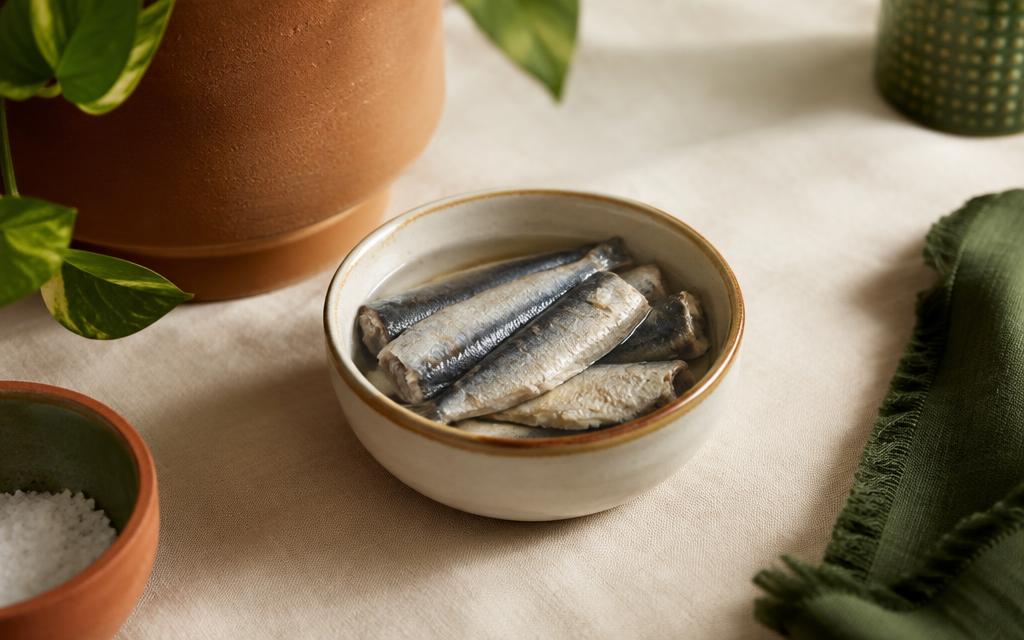
Illustrative cover using relevant category imagery; it does not depict the exact subject.
Who can eat it
DogsCats
Not suitable for
Animals on vet-prescribed low-fat diets without veterinary approval
Benefits
- Excellent source of omega-3 fatty acids
- Soft edible bones provide calcium
- High-value food for fussy eaters
Risks
- Calorie-dense — adjust meals to compensate
- Fish in oil, brine or sauce is unsuitable
- Should not replace a balanced diet
Preparation and serving
- Preparation
- Tinned in water with no added salt, drained. Fresh sardines should be cooked plain.
- Serving guidance
- Half to one sardine for a cat or small dog, one to two for a large dog, once or twice a week.
Before offering sardines (plain, in water)
- Check the exact animal and preparation: the listed suitability is Dogs; Cats. A food being edible does not make it a complete diet.
- Follow the preparation advice: Tinned in water with no added salt, drained. Fresh sardines should be cooked plain. Do not substitute a seasoned or processed version and assume the same safety.
- Portion guidance: Half to one sardine for a cat or small dog, one to two for a large dog, once or twice a week. For a pet on a prescribed diet, discuss extras with the vet first.
- If your pet develops vomiting, diarrhoea or discomfort, stop offering the extra and seek advice. Suspected poisoning or breathing difficulty needs immediate veterinary help.
Educational reference, not an individual diagnosis or a verified professional review. Read our editorial policy.
Guidance libraries and further reading
These organisations publish relevant guidance. Their links are further reading, not evidence that they have reviewed this page.
- WSAVA — global veterinary guidelines on nutrition, vaccination, pain and dental care
- PDSA — veterinary charity pet health advice
- International Cat Care — cat health, behaviour and welfare advice