
Protein
Salmon (cooked)
Oily fish rich in long-chain omega-3 fatty acids EPA and DHA, plus vitamin D and B vitamins.
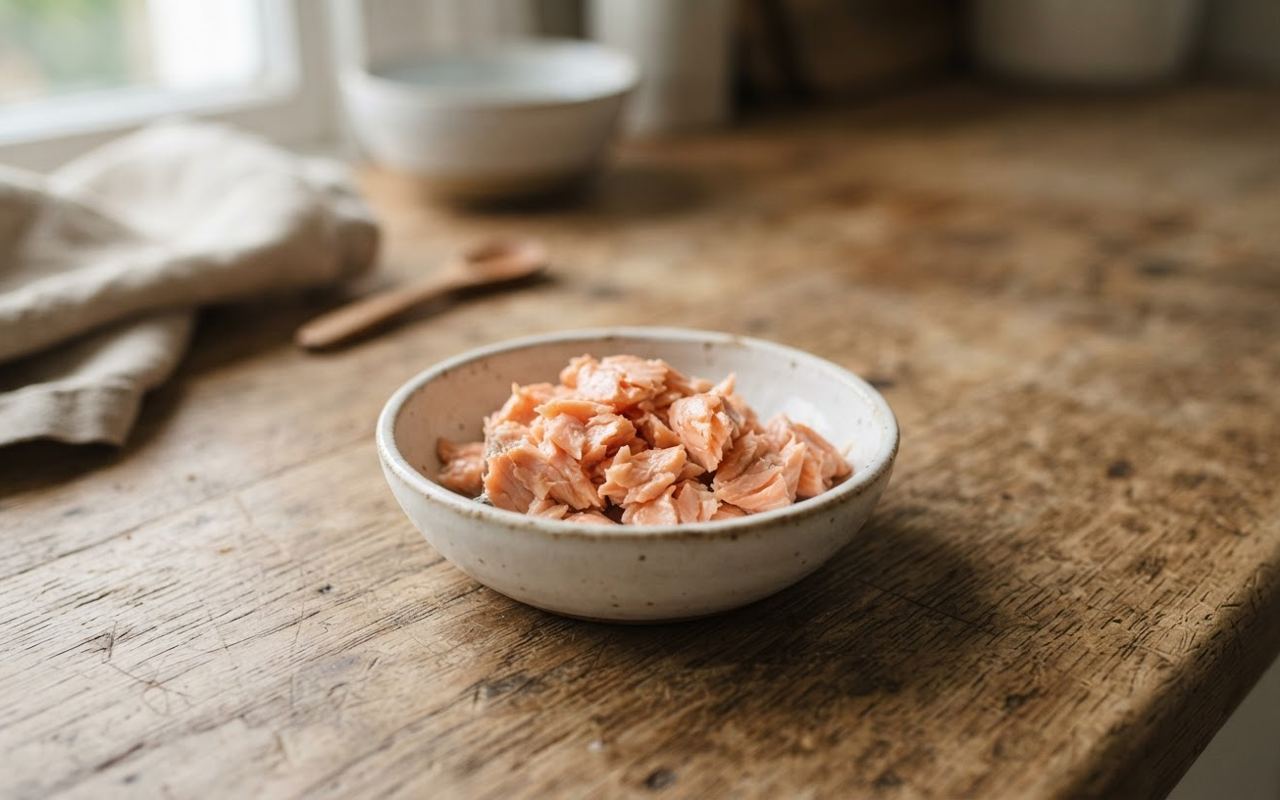
AI-generated editorial illustration of the subject; not a photograph of a specific animal, product or case.
Who can eat it
DogsCatsFerrets
Not suitable for
RabbitsGuinea pigsMost birds
Benefits
- Omega-3s support skin, coat and joint comfort
- Palatable for fussy cats
- Good protein source for food-sensitive animals
Risks
- Raw Pacific salmon can carry salmon poisoning disease, which is fatal in dogs
- High fat content can trigger pancreatitis
- Bones are a choking hazard
Preparation and serving
- Preparation
- Cook thoroughly, remove all bones, and serve without salt or sauces.
- Serving guidance
- A small portion once or twice weekly for most dogs and cats.
Before offering salmon (cooked)
- Check the exact animal and preparation: the listed suitability is Dogs; Cats; Ferrets. A food being edible does not make it a complete diet.
- Follow the preparation advice: Cook thoroughly, remove all bones, and serve without salt or sauces. Do not substitute a seasoned or processed version and assume the same safety.
- Portion guidance: A small portion once or twice weekly for most dogs and cats. For a pet on a prescribed diet, discuss extras with the vet first.
- If your pet develops vomiting, diarrhoea or discomfort, stop offering the extra and seek advice. Suspected poisoning or breathing difficulty needs immediate veterinary help.
Educational reference, not an individual diagnosis or a verified professional review. Read our editorial policy.
Guidance libraries and further reading
These organisations publish relevant guidance. Their links are further reading, not evidence that they have reviewed this page.
- WSAVA — global veterinary guidelines on nutrition, vaccination, pain and dental care
- PDSA — veterinary charity pet health advice
- International Cat Care — cat health, behaviour and welfare advice