
Seasonal care
Summer Safety for Rabbits and Guinea Pigs
Keep small pets safe from heatstroke and flystrike during warm weather.
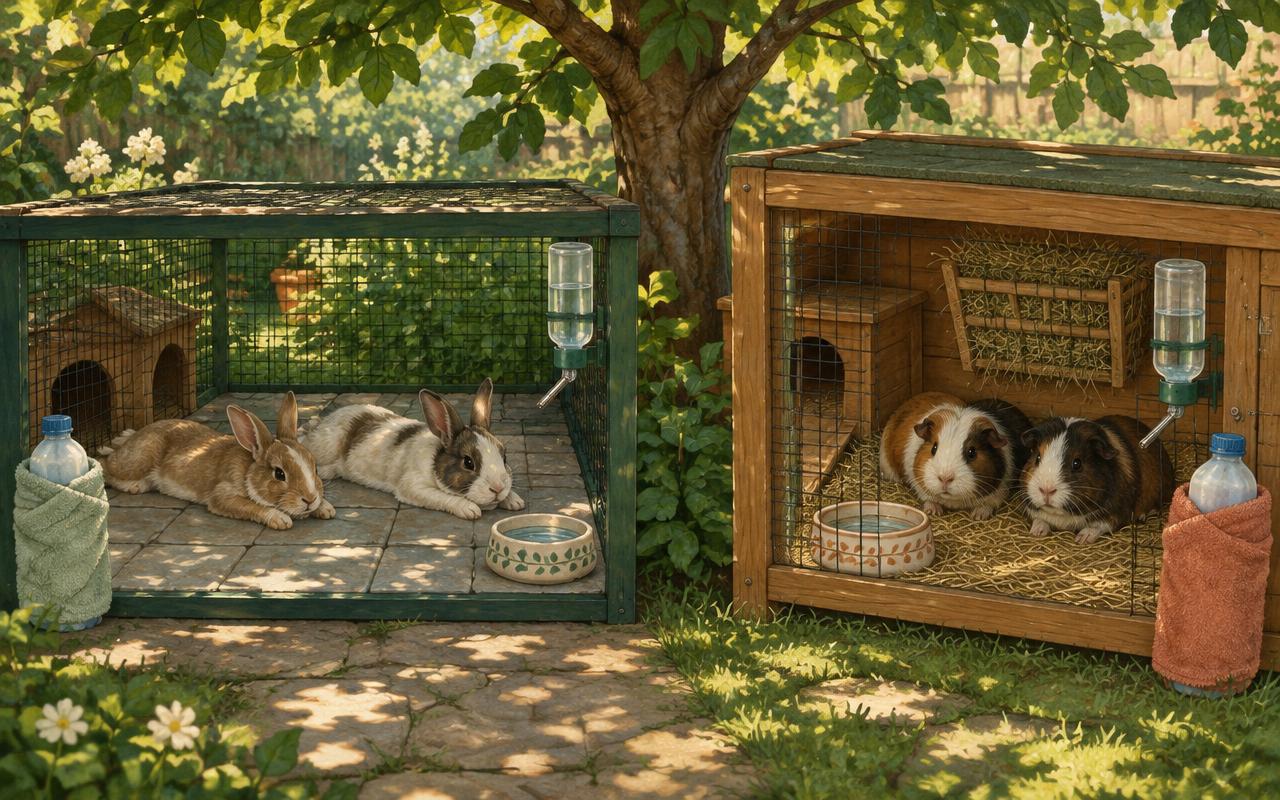
AI-generated editorial image; illustrative, not a clinical demonstration or documentary photograph.
Hot weather actions
| Situation or check | Practical next step |
|---|---|
| Hutch in sun | Move to shade before the day heats up |
| Heatwave forecast | Tiles, wrapped frozen bottles, extra water |
| Soiled rear end | Clean and check twice daily for maggots |
| Maggots seen | Emergency vet visit |
| Fast breathing, weakness | Cool gently and call a vet |
Heatstroke and flystrike can be fatal within hours; seek veterinary help early.
Check the enclosure, not just the forecast
Direct sun, poor airflow and enclosed hutches can create dangerous heat even when the garden feels comfortable. Check shaded resting areas throughout the day because shadows move. Provide ventilation and secure protection from predators without enclosing the animal under heavy covers. Plan a cooler safe space before hot weather begins.
A fan can improve air circulation but cannot make an overheated enclosure safe on its own. Keep cables inaccessible and do not direct a strong draught onto an animal with no alternative resting place. Use appropriate measurements and observe the animal rather than relying only on a forecast or a single temperature reading.
Provide choices and maintain the normal diet
Keep fresh water available in familiar containers and check that bottles work. A second water source can provide backup, but introduce unfamiliar bowls safely before relying on them. Refresh water and protect food from spoilage. Keep the normal hay-based diet; suddenly offering large amounts of fruit or watery vegetables can cause digestive problems.
Wrapped cool packs or cool surfaces can offer a choice if they cannot be chewed and do not force contact. Avoid freezing the animal's entire resting area. Bonded companions need enough space to rest comfortably together or apart without one blocking access to water or shade.
Recognise distress and act promptly
Weakness, unusual inactivity, rapid or difficult breathing, drooling or collapse can indicate serious illness. Call a veterinarian immediately and explain the heat exposure. Move the animal to a cooler ventilated place if safe while following professional advice; do not delay transport to experiment with home treatments.
Do not plunge a small pet into ice water or force water into its mouth. Cooling and handling must account for its condition. A rabbit or guinea pig eating less or producing fewer droppings also needs prompt veterinary advice, even if you believe heat is the explanation.
Check hygiene and fly risk
Inspect the rear and bedding daily and keep resting areas clean and dry. Flies, soiled fur, wounds and limited mobility can increase the risk of flystrike. An animal with eggs or maggots needs urgent veterinary care; removing visible material does not establish that all affected tissue has been treated.
Ask your vet about prevention suited to the species and local risk. Never apply a dog or cat parasite product to a rabbit or guinea pig without explicit approval. Review arrangements with the person providing holiday care so they know both routine checks and emergency contacts.
Cooling methods that help
Rabbits and guinea pigs cannot sweat or pant effectively, so they rely on shade, airflow and cool surfaces. Prepare before a heatwave rather than reacting when the animal already looks distressed.
- Move hutches out of direct sun and away from walls or sheds that radiate heat
- Offer ceramic tiles or slabs kept in the shade to lie on
- Freeze water bottles wrapped in a towel so they cannot be chewed directly
- Provide extra water bowls as well as bottles, checked twice a day
- Lightly mist ears with cool (not iced) water for rabbits if they tolerate it
- Keep indoor rooms ventilated and away from sunny windows and conservatories
Flystrike checks twice daily
Flystrike happens when flies lay eggs on soiled fur and the maggots damage skin within hours. It is an emergency. In warm weather check the rear end of every rabbit at least twice daily, and clean bedding frequently.
Overweight, older or arthritic rabbits and those with dental disease or diarrhoea are at higher risk because they cannot groom well. Ask your vet about preventive products if your rabbit is in a risk group.
What to do if you suspect heatstroke
Move the animal to a cool, shaded place, wet the fur with cool (not ice-cold) water and call a vet immediately. Signs include fast breathing, drooling, weakness, lying flat and wet nose in rabbits, and panting or reluctance to move in guinea pigs.
Frequently asked questions
- Does shade alone prevent heat illness?
- No. Shade moves during the day and hutches can trap heat. Airflow, cool surfaces and water matter too.
- Is reduced eating normal in hot weather?
- Slightly reduced appetite can happen, but a rabbit or guinea pig that stops eating or producing droppings needs a vet the same day.
- How hot is too hot?
- Many welfare organisations advise extra precautions once temperatures rise above about 25 °C; enclosures in full sun can be much hotter than the forecast.
- Can I bring my rabbits indoors in summer?
- Often yes, into a cool, rabbit-safe room. Make the transfer calm and keep bonded pairs together.
References
- Rabbit care and welfare — RSPCA
- Flystrike in rabbits — PDSA