
Farmed animal lives
The Life of Cattle: Dairy, Beef and Calf Welfare
How dairy and beef systems work, from calving and weaning to housing, pasture, transport and slaughter.
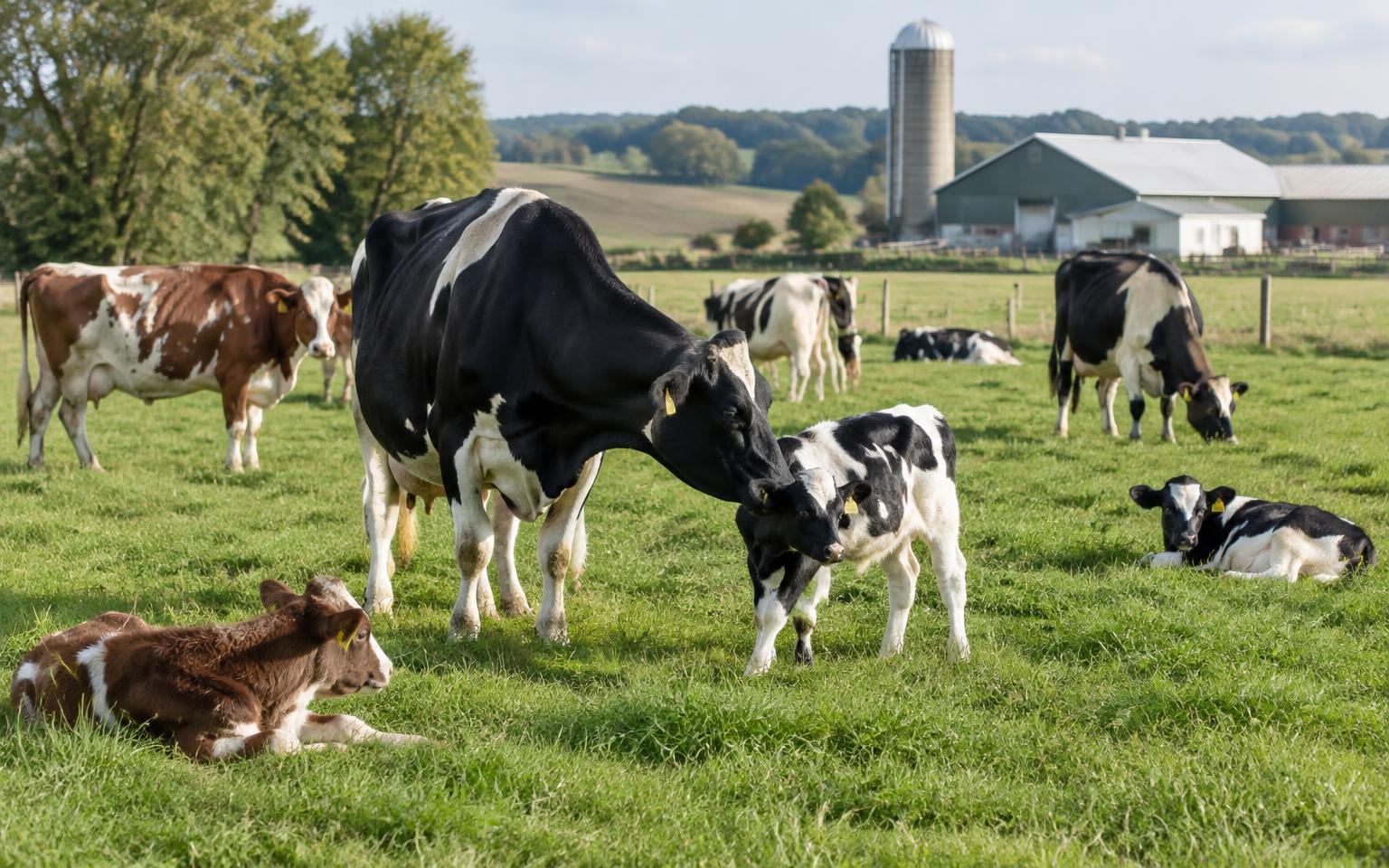
Cattle are social grazing animals
Cattle form social bonds, synchronise rest and feeding, and are motivated to graze, groom and rest comfortably. Welfare depends on health and on whether housing allows these behaviours.
Dairy systems
Milk production requires repeated calving. Calves are commonly separated from their dam early, though timing and contact systems vary. Lameness, mastitis, metabolic disease, fertility pressure and inadequate lying comfort are central welfare indicators.
Beef systems
Beef cattle may spend substantial time on pasture or be reared indoors or in feedlots. Risks include difficult births, painful procedures, weather exposure, disease, transport and mixing. A pastoral image does not describe the whole life cycle.
Ask about outcomes, not scenery
Useful measures include mobility, injuries, body condition, cleanliness, mortality, medicine use, access to comfortable lying space, human handling and how calves are managed.
Frequently asked questions
- Are pasture systems always better?
- Pasture enables grazing and movement, but weather, parasites, nutrition and access to shelter still affect welfare. Indoor systems can also vary greatly.
References
- Welfare of dairy cows — EFSA Journal (2023)
- Welfare of beef cattle — EFSA Journal (2025)