
Weight management
Helping an Overweight Cat Lose Weight Safely
Crash diets are dangerous for cats. A safe feline weight-loss plan is slow, measured and built with your vet — here is how to do it properly.

Never starve a cat
A cat that eats very little for even 24–48 hours — especially an overweight cat — can develop hepatic lipidosis, a life-threatening liver disease. Weight loss must be gradual and supervised.
Start with the vet, not the scales
Before cutting food, have your cat examined. Weight gain can follow neutering, ageing and inactivity, but also hormonal disease and pain that limits movement. Your vet will set a target weight and a daily calorie allowance — typically a reduction of no more than 10–20% at a time — and rule out medical causes.
Measure everything
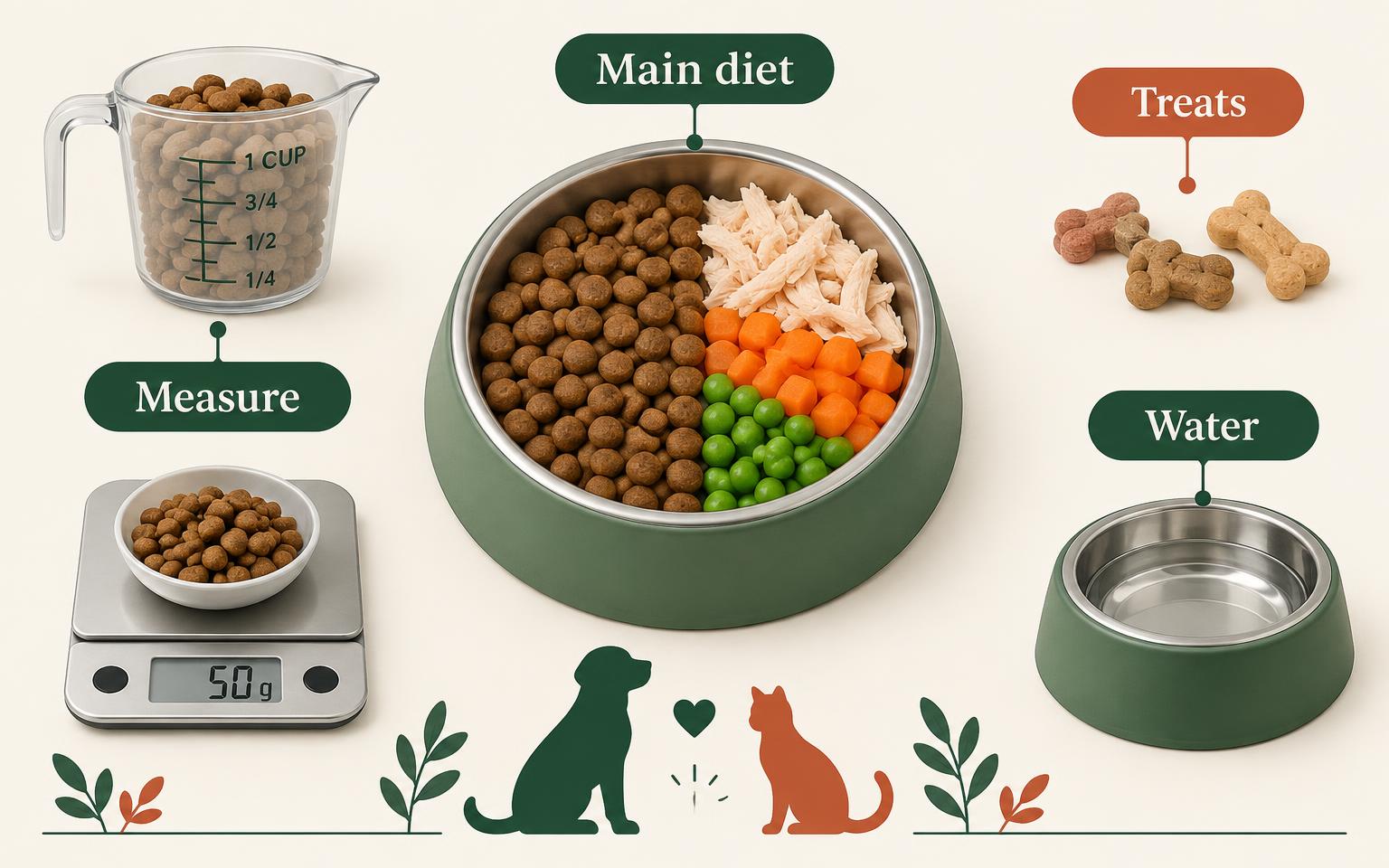
Guessing portions is where most plans fail. Weigh the daily ration on kitchen scales, including treats, and split it into several small meals. If the household has several cats, feed separately or use microchip feeders so the dieting cat cannot steal.
Make food work harder
Small changes make a reduced ration feel like more.
- Wet food is usually more filling per calorie than dry because of its water content
- Puzzle feeders and scatter feeding slow eating and add activity
- Treats count — swap them for play or a portion of the daily ration
- Ask your vet about veterinary weight-management diets, which are formulated so cats lose fat without losing nutrients
Add gentle activity
Two or three short play sessions a day with a wand toy raise activity without stressing joints. Let the cat catch the toy regularly so play stays satisfying.
Weigh in and adjust
Weigh the cat every two to four weeks. A safe rate is roughly 1–2% of body weight per month. Faster loss, refusal to eat, vomiting or lethargy means call the vet the same day.
Frequently asked questions
- How long will it take my cat to reach a healthy weight?
- Months, not weeks. A cat that needs to lose a third of its body weight may take a year. Slow loss protects the liver and is far more likely to stay off.
- My cat begs constantly — what can I do?
- Split the ration into more, smaller meals, use puzzle feeders, and give attention and play instead of food. If begging is sudden and intense, ask your vet to rule out medical causes such as hyperthyroidism.
References
- WSAVA — Global Nutrition Guidelines — https://wsava.org/global-guidelines/global-nutrition-guidelines/
- International Cat Care — Obesity in cats — https://icatcare.org/advice/obesity-in-cats/