
Veterinary care
Caring for Your Pet After Surgery
Practical recovery care after surgery: written discharge instructions, wound protection, medicine records, safe rest and signs needing veterinary help.
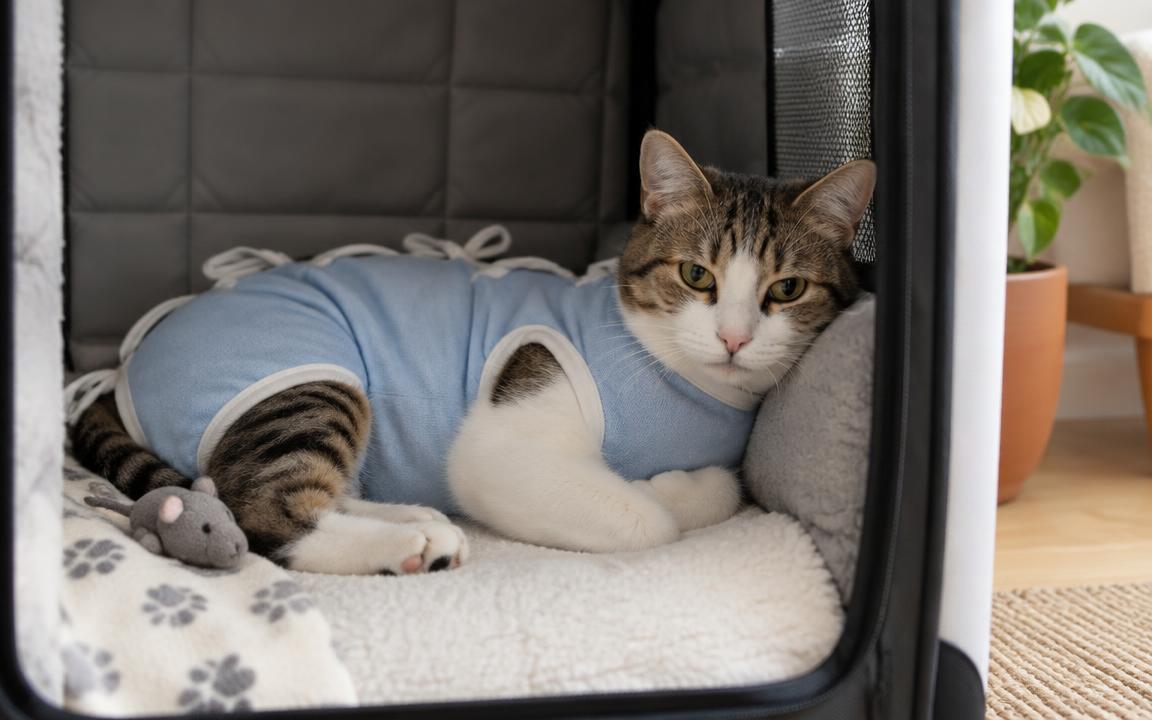
AI-generated recovery-care illustration. Garments and confinement must suit the procedure and follow the surgical team's instructions; this is not evidence of normal healing.
After surgery: organise care, spot deterioration
| Situation or check | Practical next step |
|---|---|
| Uncertain or repeated medicine dose | Call the clinic; do not double or improvise. |
| Licking or rubbing the incision | Check prescribed protection and contact the clinic if it is ineffective. |
| Rest causes panic | Request an adapted restriction and comfort plan. |
| Increasing redness, swelling or discharge | Contact the surgical team promptly rather than waiting for review. |
| Collapse, breathing difficulty or significant bleeding | Seek emergency veterinary help immediately. |
The surgical team's individual discharge instructions take priority. This table does not establish that recovery is normal.
Get an individual discharge plan
Recovery depends on the procedure, species, age and other conditions. Before leaving, confirm medicine names, timings, food instructions, activity limits and the review appointment. Request written instructions and the actual out-of-hours contact. Tell staff if you cannot give a medicine or manage the planned restriction.
Ask what behaviour is expected after anaesthesia and what would be unusual for this patient. A quiet animal is not necessarily comfortable. Do not compare recovery with a previous pet or stop treatment because the animal briefly appears brighter.
Prepare a calm accessible recovery area
Use a clean, comfortable space away from active pets and children. Provide traction and avoid stairs, jumping and slippery floors when restricted. Place water and toileting arrangements within safe reach. Keep the room comfortably ventilated and allow observation without constantly disturbing sleep.
Crate rest is appropriate only when prescribed and when the setup is suitable. Some animals need a pen or adapted room instead. Follow handling and lifting instructions for the procedure rather than assuming it is safe to carry the animal normally.
Protect the incision and give medicines safely
Inspect the wound as instructed without pulling at stitches, applying cream or cleaning aggressively. Use the recommended collar or garment to prevent licking; check fit and access to food and water. Do not remove protection simply because licking looks gentle.
Give only the prescribed medicines and never add human painkillers. If a dose is missed, vomited or accidentally repeated, call the clinic for instructions instead of doubling the next dose. Vomiting, marked sleepiness or other concerning effects also need advice.
Monitor eating, toileting and discomfort
Keep a brief record of intake, urine, stools, movement and medicine times. Follow species-specific feeding instructions: rabbits and other small herbivores have different recovery needs from dogs and cats. Do not force-feed or change a prescribed feeding plan without guidance.
Contact the clinic for worsening pain, repeated vomiting, significant appetite loss, inability to urinate or a wound becoming red, swollen, painful or discharging. Breathing difficulty, collapse, uncontrolled bleeding or an opening incision needs immediate help. Do not wait for the scheduled review if the condition deteriorates.
Return to activity only with permission
A healed-looking skin incision does not show that deeper tissues are ready for exercise. Maintain restrictions until the clinic changes the plan. Use suitable quiet enrichment that does not encourage jumping or vigorous movement. Keep follow-up appointments and ask what recovery milestones should guide gradual return to normal life.
Check the setup before the first night
Walk through the discharge instructions with the person who will actually provide overnight care. Confirm whether the animal can be left unattended, how to help it toilet, and which expected effects of anaesthesia should improve rather than persist. Ask how to reach help if it will not settle. Recovery spaces must prevent unplanned jumping without preventing comfortable repositioning, water access or observation. A recovering cat may need a low-entry tray; the procedure may impose additional restrictions. Keep other animals out rather than relying on them to be gentle.
- Confirm the first medicine time and the last dose given at the clinic.
- Test access to bowls and toileting while the prescribed protection is on.
- Save the review date and emergency contact where every caregiver can find them.
Make one shared medicine and observation record
Write down each administration as it happens, not later from memory. Include the medicine name, prescribed instructions and who gave it, so another caregiver cannot inadvertently repeat the dose. Ask the clinic what to do if the pet refuses food needed with a medicine, spits out a tablet or vomits after treatment; absorption cannot be guessed from a clock alone. Record wound changes and comfort alongside medicine times. A photograph taken without handling the wound may help the clinic compare changes, but do not wait for an online reply if bleeding or deterioration is significant.
Adapt enrichment to the actual restriction
Quiet companionship, familiar bedding and simple activities within reach can make prescribed rest more tolerable. Do not introduce difficult puzzles that provoke pawing, vigorous chewing or twisting after a procedure where those movements are restricted. Avoid tethering an unsupervised pet to enforce rest. If confinement causes panic, tell the clinic rather than abandoning restriction or leaving the animal to struggle. Pain control, a different safe space or a clinician-directed support plan may be needed. Recheck the arrangement when alertness returns: a brighter patient can suddenly attempt its usual jumps before deeper tissues have healed.
Frequently asked questions
- What if I cannot tell whether a dose was swallowed?
- Do not repeat it automatically. Tell the clinic the medicine, timing and what you observed, and follow its instructions.
- Is a recovery suit suitable for every wound?
- No. Use the protection prescribed for the wound location and procedure; check that it prevents licking and does not rub or interfere with toileting.
- Can I leave a distressed pet to cry through crate rest?
- Contact the clinic for a safer restriction and comfort plan. Panic can cause injury; neither ignoring distress nor removing restrictions without advice is appropriate.
- Does a closed skin incision mean exercise is safe?
- No. Deeper tissues may still need protection. Follow the procedure-specific activity plan and obtain permission before increasing exercise.
References
- Surgical discharge instructions for dogs — VCA Animal Hospitals
- Care of surgical incisions in cats — VCA Animal Hospitals
- First aid for pets — PDSA