
Other
Timothy Hay
High-fibre, low-protein grass hay that is the foundation of small herbivore diets.
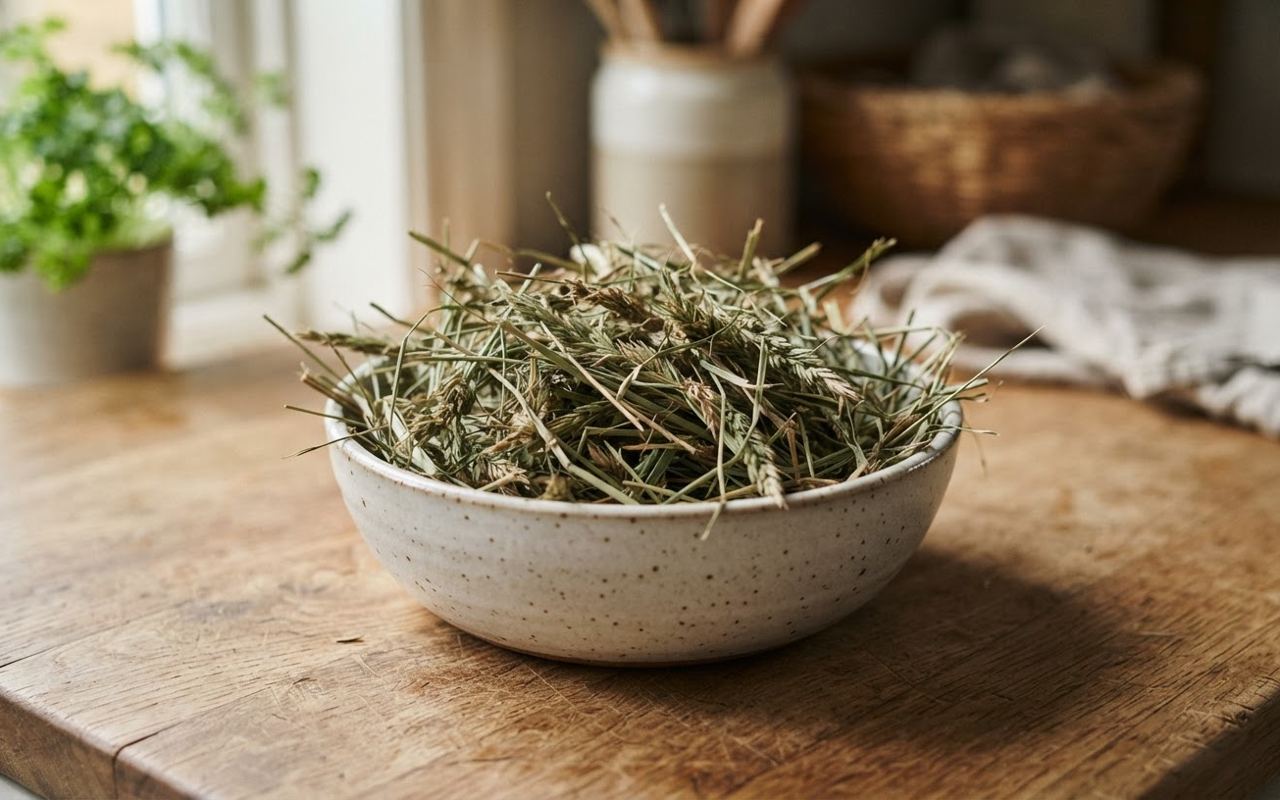
AI-generated editorial illustration of the subject; not a photograph of a specific animal, product or case.
Who can eat it
RabbitsGuinea pigsChinchillasDegusTortoises (as part of a varied diet)
Not suitable for
DogsCatsFerretsParrots as a staple
Benefits
- Wears continuously growing teeth evenly
- Maintains gut motility and prevents stasis
- Provides hours of natural foraging behaviour
Risks
- Dusty or mouldy hay causes respiratory disease
- Alfalfa is too high in calcium and protein for most adults
Preparation and serving
- Preparation
- Offer fresh, dry, sweet-smelling hay in unlimited quantity, refreshed daily.
- Serving guidance
- Should make up roughly 85% of a rabbit or guinea pig's daily intake — a pile the size of the animal's body every day.
Before offering timothy hay
- Check the product suits the exact animal and life stage (listed for: Rabbits; Guinea pigs; Chinchillas; Degus; Tortoises (as part of a varied diet)). Look for a label stating it is complete for that species, or follow the diet plan your vet has given.
- Follow the preparation advice: Offer fresh, dry, sweet-smelling hay in unlimited quantity, refreshed daily. Do not substitute a seasoned or processed version and assume the same safety.
- Portion guidance: Should make up roughly 85% of a rabbit or guinea pig's daily intake — a pile the size of the animal's body every day. Change foods gradually over about a week, and agree any change with the vet if your pet is on a prescribed diet.
- If your pet eats less, passes fewer or smaller droppings, develops diarrhoea or seems uncomfortable, stop the new food and contact a vet; a rabbit or guinea pig that stops eating needs same-day advice.
Educational reference, not an individual diagnosis or a verified professional review. Read our editorial policy.
Guidance libraries and further reading
These organisations publish relevant guidance. Their links are further reading, not evidence that they have reviewed this page.