
Other
Alfalfa Hay
Legume hay that is higher in protein, calcium and calories than grass hays such as timothy.
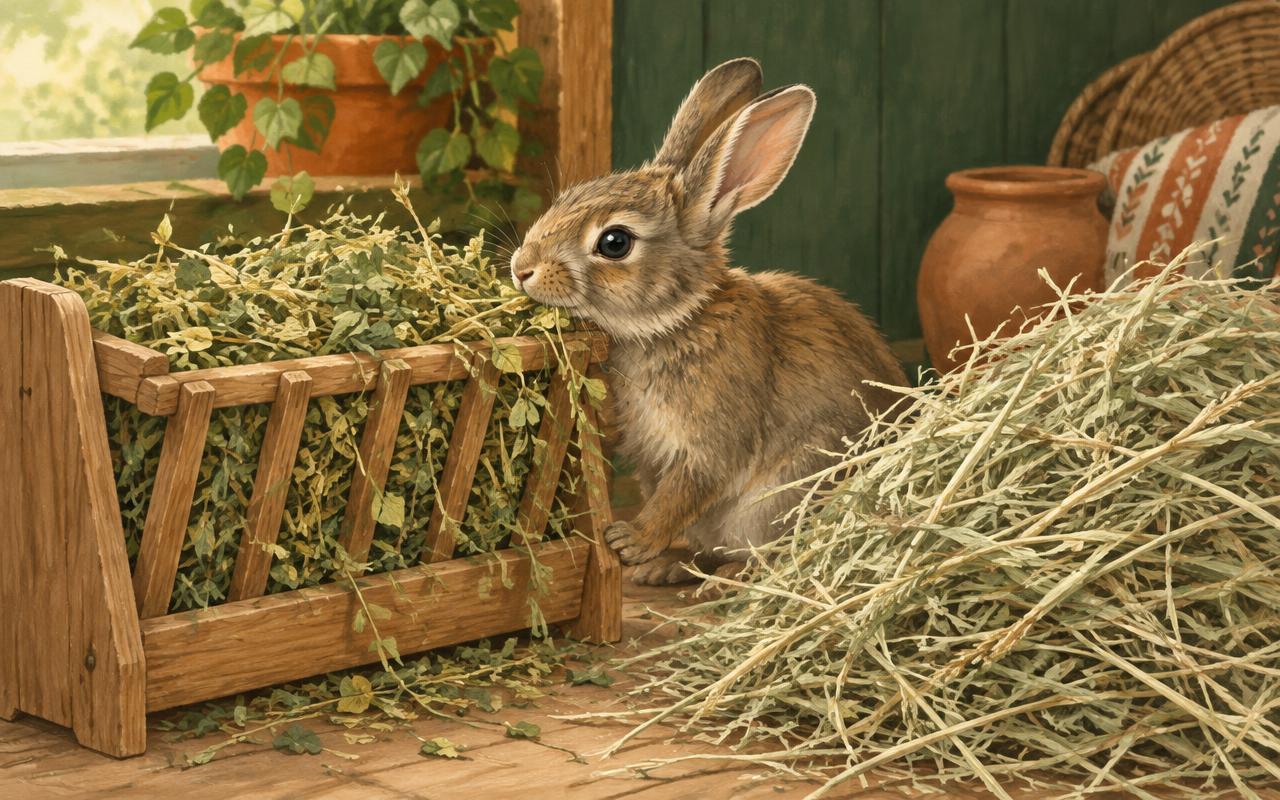
AI-generated editorial illustration of the subject; not a photograph of a specific animal, product or case.
Who can eat it
Young, pregnant or nursing rabbits and guinea pigsUnderweight small herbivores under veterinary guidance
Not suitable for
Healthy adult rabbits and guinea pigs as a stapleChinchillas as a regular food
Benefits
- Extra calcium and protein support growth and lactation
- Highly palatable, useful for encouraging a poor eater to eat
Risks
- Excess calcium in adults is linked to bladder sludge and stones
- Too calorie-dense for a sedentary adult, contributing to obesity
Preparation and serving
- Preparation
- Offer fresh and dry, ideally mixed with grass hay rather than fed alone to adults.
- Serving guidance
- As the main hay for growing or nursing animals; an occasional treat portion for adults.
Before offering alfalfa hay
- Check the product suits the exact animal and life stage (listed for: Young, pregnant or nursing rabbits and guinea pigs; Underweight small herbivores under veterinary guidance). Look for a label stating it is complete for that species, or follow the diet plan your vet has given.
- Follow the preparation advice: Offer fresh and dry, ideally mixed with grass hay rather than fed alone to adults. Do not substitute a seasoned or processed version and assume the same safety.
- Portion guidance: As the main hay for growing or nursing animals; an occasional treat portion for adults. Change foods gradually over about a week, and agree any change with the vet if your pet is on a prescribed diet.
- If your pet develops vomiting, diarrhoea, itching or discomfort after a change of food, seek veterinary advice. Breathing difficulty or collapse needs immediate help.
Educational reference, not an individual diagnosis or a verified professional review. Read our editorial policy.
Guidance libraries and further reading
These organisations publish relevant guidance. Their links are further reading, not evidence that they have reviewed this page.