
Other
Fish Flake and Pellet Food
Formulated aquatic diets available as flakes, sinking pellets, wafers and gels, matched to feeding zones.
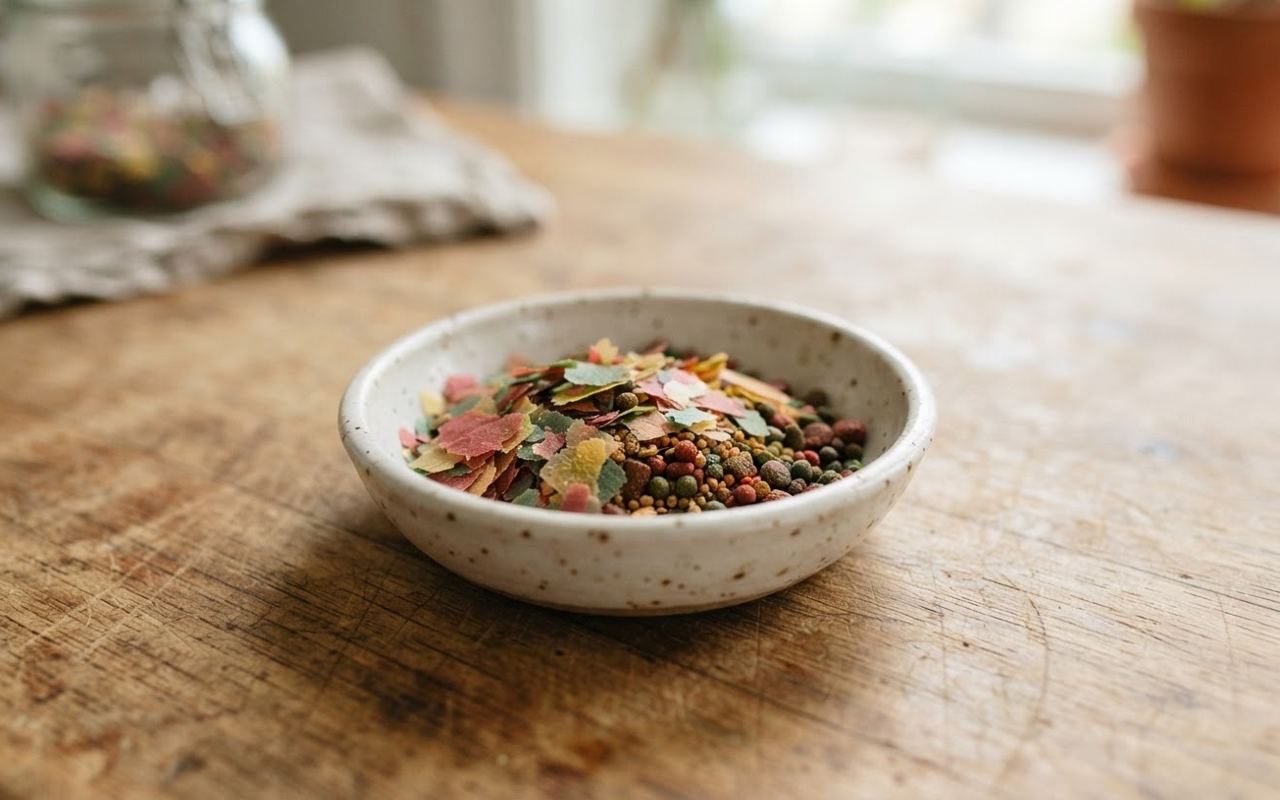
AI-generated editorial illustration of the subject; not a photograph of a specific animal, product or case.
Who can eat it
Most aquarium fish when the type matches the species
Not suitable for
Amphibians that require whole preyStrict herbivores fed only high-protein foods
Benefits
- Balanced nutrition with added vitamins
- Different densities suit surface, mid-water and bottom feeders
- Colour-enhancing and growth formulations are available
Risks
- Overfeeding is the leading cause of poor water quality
- Flakes lose vitamins within weeks of opening
- One food type rarely suits a mixed community
Preparation and serving
- Preparation
- Buy small tubs, store sealed and cool, and discard after about three months.
- Serving guidance
- Feed only what is eaten in one to two minutes, once or twice daily.
Before offering fish flake and pellet food
- Check the product suits the exact animal and life stage (listed for: Most aquarium fish when the type matches the species). Look for a label stating it is complete for that species, or follow the diet plan your vet has given.
- Follow the preparation advice: Buy small tubs, store sealed and cool, and discard after about three months. Do not substitute a seasoned or processed version and assume the same safety.
- Portion guidance: Feed only what is eaten in one to two minutes, once or twice daily. Change foods gradually over about a week, and agree any change with the vet if your pet is on a prescribed diet.
- If fish stop feeding, swim abnormally or look bloated, remove uneaten food, test the water and ask an aquatic vet or experienced fish-health adviser.
Educational reference, not an individual diagnosis or a verified professional review. Read our editorial policy.
Guidance libraries and further reading
These organisations publish relevant guidance. Their links are further reading, not evidence that they have reviewed this page.