
Other
Peanut Butter
Energy-dense paste high in fat and protein, widely used as a training and enrichment food.
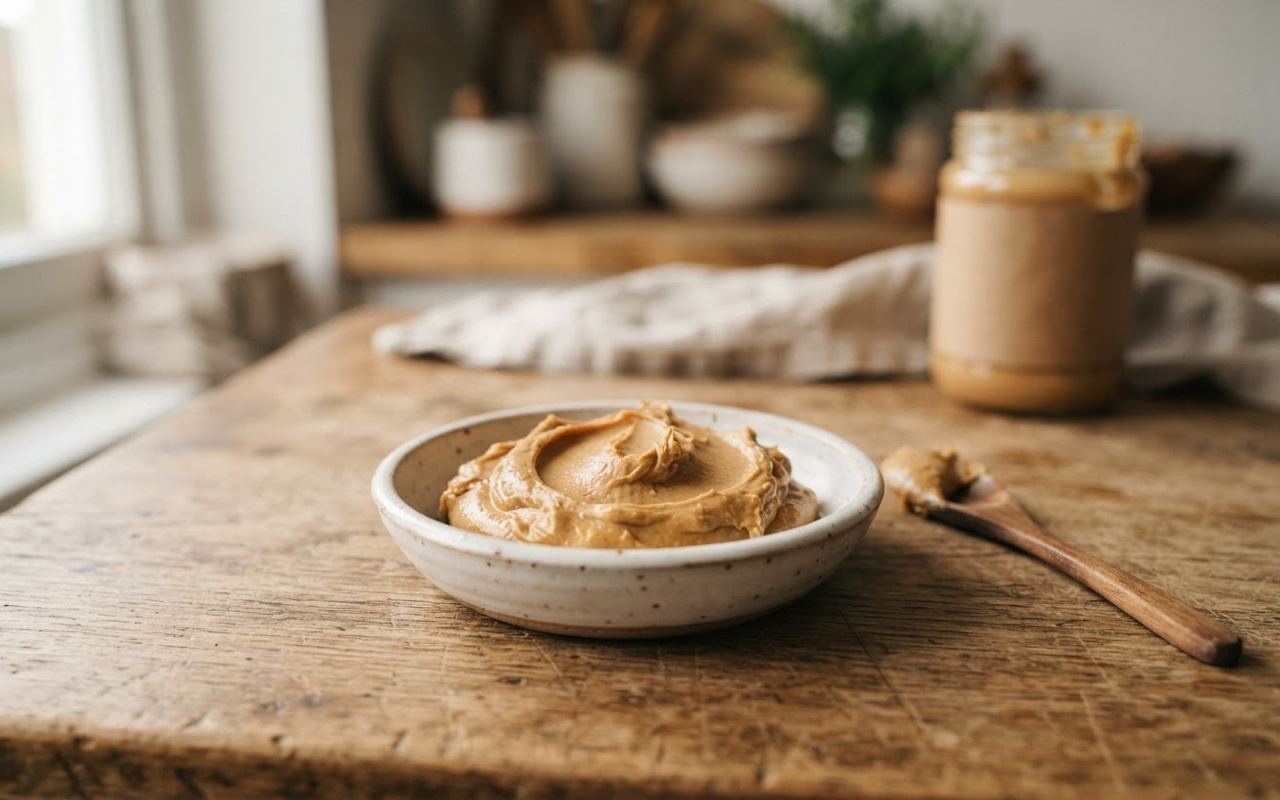
AI-generated editorial illustration of the subject; not a photograph of a specific animal, product or case.
Who can eat it
Dogs (xylitol-free only)Rats and hamsters in tiny amounts
Not suitable for
CatsRabbitsGuinea pigsBirds with liver disease
Benefits
- Excellent for stuffing enrichment toys
- High value reward for training and nail trims
- Useful for hiding medication
Risks
- Xylitol (also labelled birch sugar) is lethal to dogs even in small amounts
- High calorie content drives weight gain
- Thick spoonfuls can be a choking hazard
Preparation and serving
- Preparation
- Check the ingredient list for xylitol every single time — formulations change.
- Serving guidance
- Half a teaspoon for a small dog, up to a tablespoon for a large dog, counted within daily calories.
Before offering peanut butter
- Check the exact animal and preparation: the listed suitability is Dogs (xylitol-free only); Rats and hamsters in tiny amounts. A food being edible does not make it a complete diet.
- Follow the preparation advice: Check the ingredient list for xylitol every single time — formulations change. Do not substitute a seasoned or processed version and assume the same safety.
- Portion guidance: Half a teaspoon for a small dog, up to a tablespoon for a large dog, counted within daily calories. For a pet on a prescribed diet, discuss extras with the vet first.
- If your pet develops vomiting, diarrhoea or discomfort, stop offering the extra and seek advice. Suspected poisoning or breathing difficulty needs immediate veterinary help.
Educational reference, not an individual diagnosis or a verified professional review. Read our editorial policy.
Guidance libraries and further reading
These organisations publish relevant guidance. Their links are further reading, not evidence that they have reviewed this page.