
Other
Mealworms (live or dried)
Larval form of the darkling beetle, providing protein and fat; dried versions are calorie-dense.
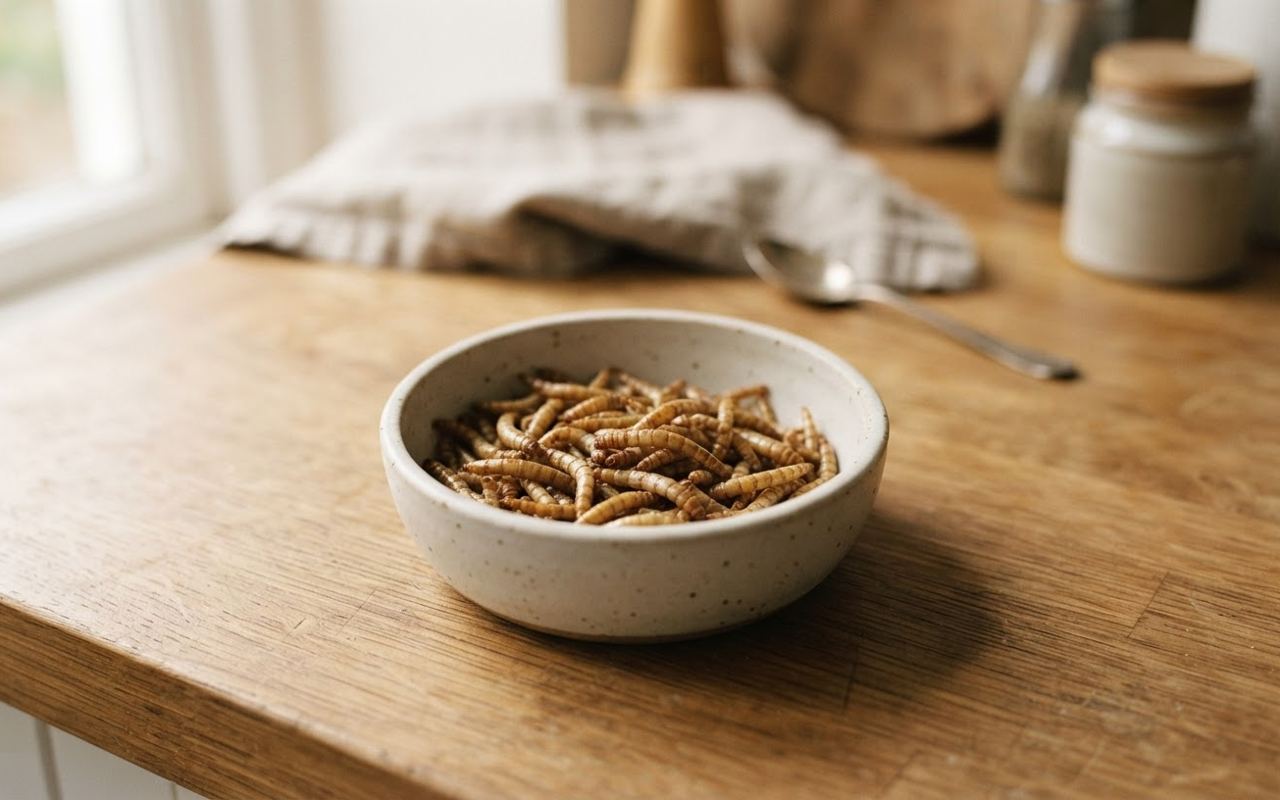
AI-generated editorial illustration of the subject; not a photograph of a specific animal, product or case.
Who can eat it
ChickensWild garden birdsReptiles (as part of a varied diet)Hedgehogs (occasional treat)Some fish
Not suitable for
DogsCatsRabbitsGuinea pigs
Benefits
- Encourages natural foraging and hunting behaviour
- Good protein source for insectivorous reptiles and birds
- Widely available and easy to store
Risks
- Dried mealworms alone lack calcium and can contribute to metabolic bone disease if not supplemented
- Overfeeding hedgehogs mealworms is linked to a painful bone condition
- Chitin can be hard to digest in excess
Preparation and serving
- Preparation
- Gut-load live mealworms with vegetables before feeding to reptiles, and dust with calcium powder.
- Serving guidance
- A few as an enrichment treat for birds and hedgehogs; a measured part of a varied diet for reptiles.
Before offering mealworms (live or dried)
- Check the exact animal and preparation: the listed suitability is Chickens; Wild garden birds; Reptiles (as part of a varied diet); Hedgehogs (occasional treat); Some fish. A food being edible does not make it a complete diet.
- Follow the preparation advice: Gut-load live mealworms with vegetables before feeding to reptiles, and dust with calcium powder. Do not substitute a seasoned or processed version and assume the same safety.
- Portion guidance: A few as an enrichment treat for birds and hedgehogs; a measured part of a varied diet for reptiles. For a pet on a prescribed diet, discuss extras with the vet first.
- If your pet develops vomiting, diarrhoea or discomfort, stop offering the extra and seek advice. Suspected poisoning or breathing difficulty needs immediate veterinary help.
Educational reference, not an individual diagnosis or a verified professional review. Read our editorial policy.
Guidance libraries and further reading
These organisations publish relevant guidance. Their links are further reading, not evidence that they have reviewed this page.