
Other
Complete Commercial Seed Mix (for parrots and finches)
Blended mix of seeds, and in better-quality formulas some pellets, grains and dried fruit, aimed at a species group.
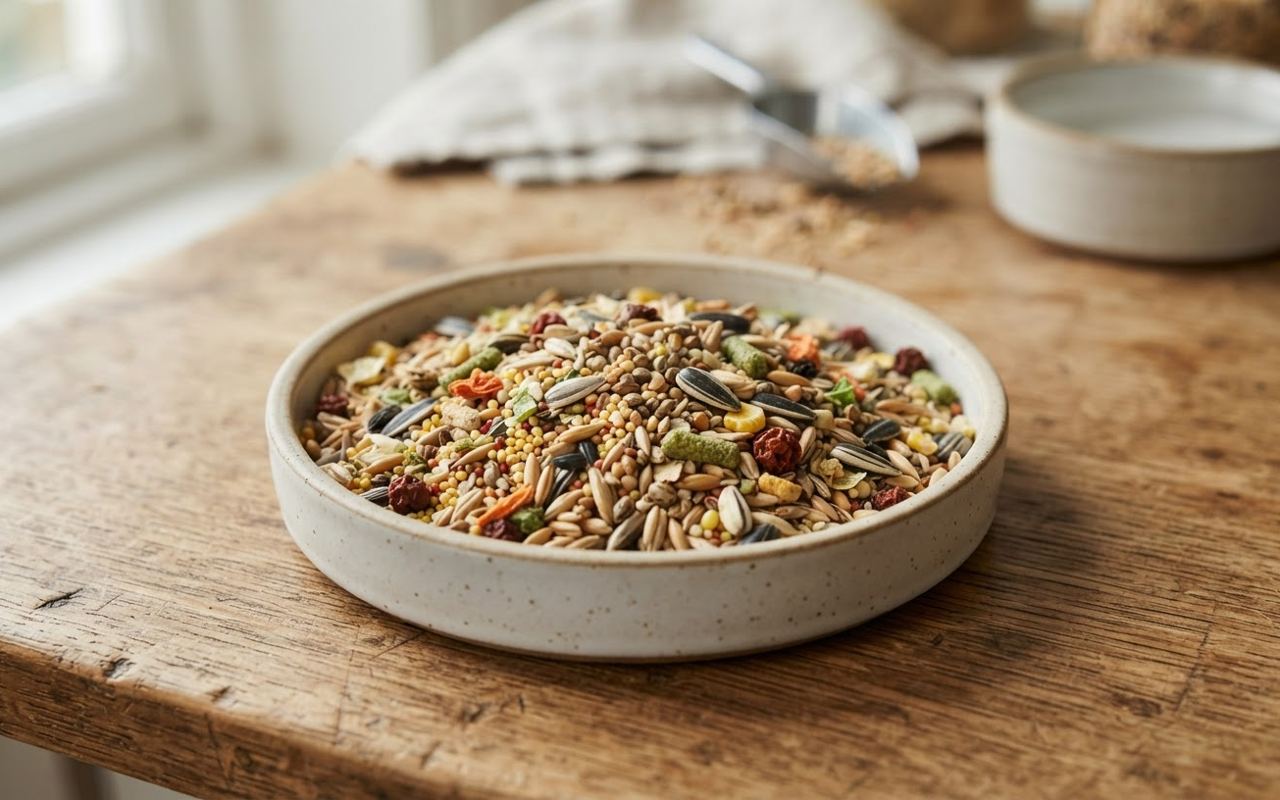
AI-generated editorial illustration of the subject; not a photograph of a specific animal, product or case.
Who can eat it
BudgerigarsCockatielsFinchesCanaries (species-appropriate mixes)
Not suitable for
MammalsReptilesFish
Benefits
- Convenient and long-lasting compared with fresh food
- Species-specific mixes account for differing seed size and nutrient needs
- Can be combined with fresh vegetables for a varied diet
Risks
- Seed-only diets are commonly linked to obesity and fatty liver disease because birds selectively eat high-fat seeds
- Low in vitamin A and calcium unless fortified or supplemented
- Stale or damp seed can grow mould
Preparation and serving
- Preparation
- Store in a sealed, cool, dry container and check regularly for staleness or insect activity.
- Serving guidance
- Best offered alongside daily fresh vegetables and, ideally, a proportion of formulated pellets rather than as the sole diet.
Before offering complete commercial seed mix (for parrots and finches)
- Check the product suits the exact animal and life stage (listed for: Budgerigars; Cockatiels; Finches; Canaries (species-appropriate mixes)). Look for a label stating it is complete for that species, or follow the diet plan your vet has given.
- Follow the preparation advice: Store in a sealed, cool, dry container and check regularly for staleness or insect activity. Do not substitute a seasoned or processed version and assume the same safety.
- Portion guidance: Best offered alongside daily fresh vegetables and, ideally, a proportion of formulated pellets rather than as the sole diet. Change foods gradually over about a week, and agree any change with the vet if your pet is on a prescribed diet.
- If your pet develops vomiting, diarrhoea, itching or discomfort after a change of food, seek veterinary advice. Breathing difficulty or collapse needs immediate help.
Educational reference, not an individual diagnosis or a verified professional review. Read our editorial policy.
Guidance libraries and further reading
These organisations publish relevant guidance. Their links are further reading, not evidence that they have reviewed this page.