
Cat breed · Semi-longhair / Shorthair (rex)
LaPerm
A curly-coated farm-cat mutation from Oregon with a sweet, clingy temperament and a coat that sheds very little.
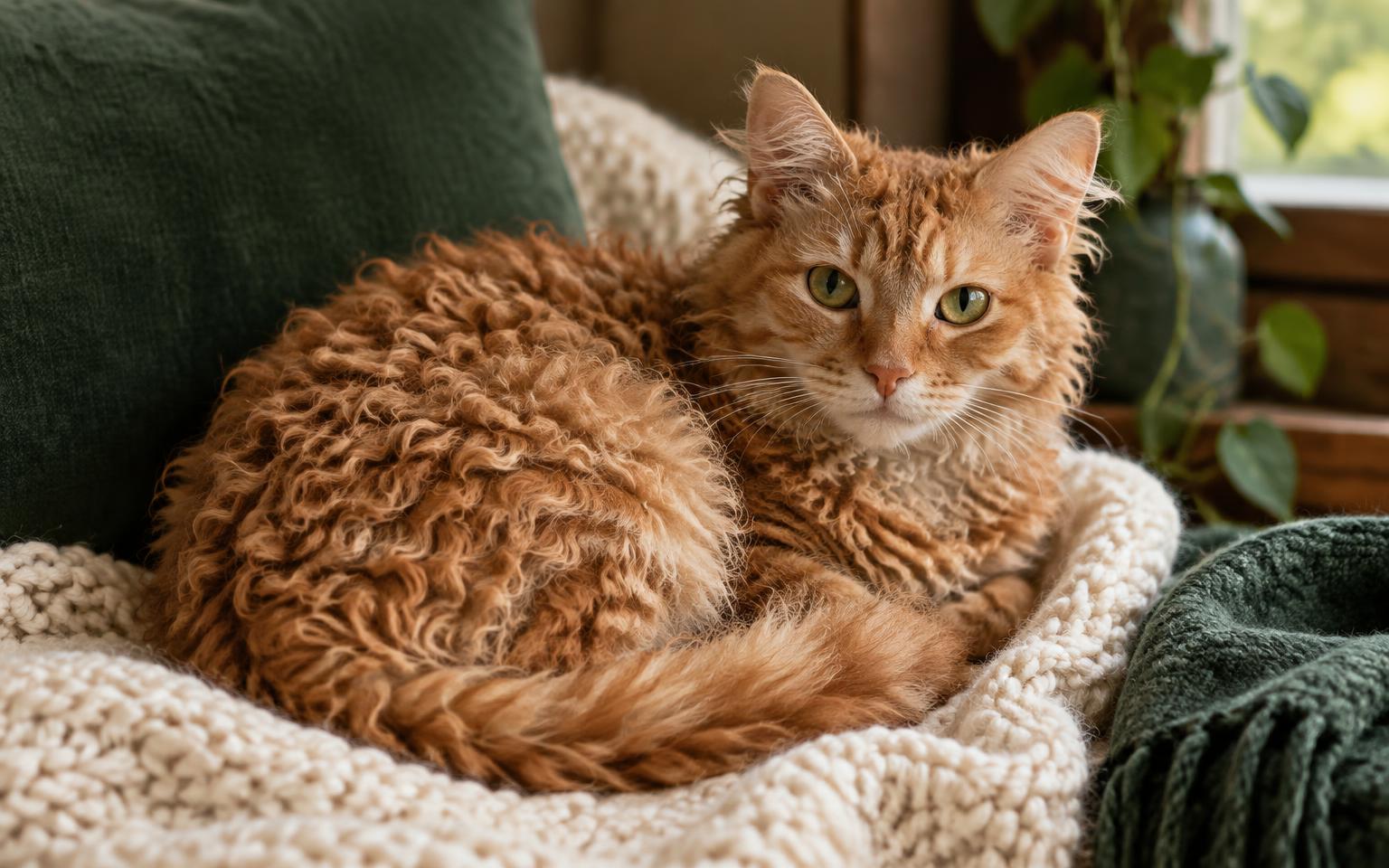
Illustrative cover using relevant category imagery; it does not depict the exact subject.
Breed characteristics
- Group
- Semi-longhair / Shorthair (rex)
- Origin
- United States (Oregon)
- Size
- Medium
- Weight
- 2.5–4.5 kg
- Height
- 23–28 cm
- Lifespan
- 12–15 years
- Coat
- Soft, springy curls from a dominant rex mutation; longhair and shorthair varieties
- Temperament
- GentleAffectionateCuriousPeople-oriented
History
Began in 1982 when a bald, curly kitten was born to an Oregon farm cat; the dominant curl gene founded the breed.
Appearance
Elegant, moderate cat with loose bottle-brush curls, prominent whiskers and expressive eyes.
Exercise and activity
Moderate; playful and fetch-inclined but not frantic.
Care and grooming
Comb gently a couple of times a week; brushing too hard frizzes the curls.
Health considerations
- Generally healthy with no major documented breed-specific conditions
Honest challenges
Before choosing a LaPerm
- Treat the breed profile as a starting point, not a guarantee of temperament. Meet the individual and discuss its history, needs and behaviour with the rescue or responsible breeder.
- Check your routine can support the activity described here: Moderate; playful and fetch-inclined but not frantic. Allow for age, weather, health and recovery rather than imposing a fixed target.
- Ask the breeder or rescue and your vet about problems reported in the animal's likely ancestry and body shape, and which screening tests are relevant. Screening reduces some uncertainty but cannot promise a healthy lifetime.
- Plan grooming, veterinary costs and care during holidays. Children and other pets still need careful introductions and supervision whatever a breed's typical rating.
Educational reference, not an individual diagnosis or a verified professional review. Read our editorial policy.
Sources on this topic
Pages on this specific subject from recognised organisations. They are cited for further reading and do not mean the organisation has reviewed this page.
- LaPerm breed profile — Cat Fanciers' Association
Guidance libraries and further reading
These organisations publish relevant guidance. Their links are further reading, not evidence that they have reviewed this page.
- RSPCA — animal care and welfare advice across species
- PDSA — veterinary charity pet health advice
- International Cat Care — cat health, behaviour and welfare advice