
Cat breed · Hairless
Sphynx
A hairless, intensely social cat that seeks body heat and company constantly; not low-maintenance despite having no coat.
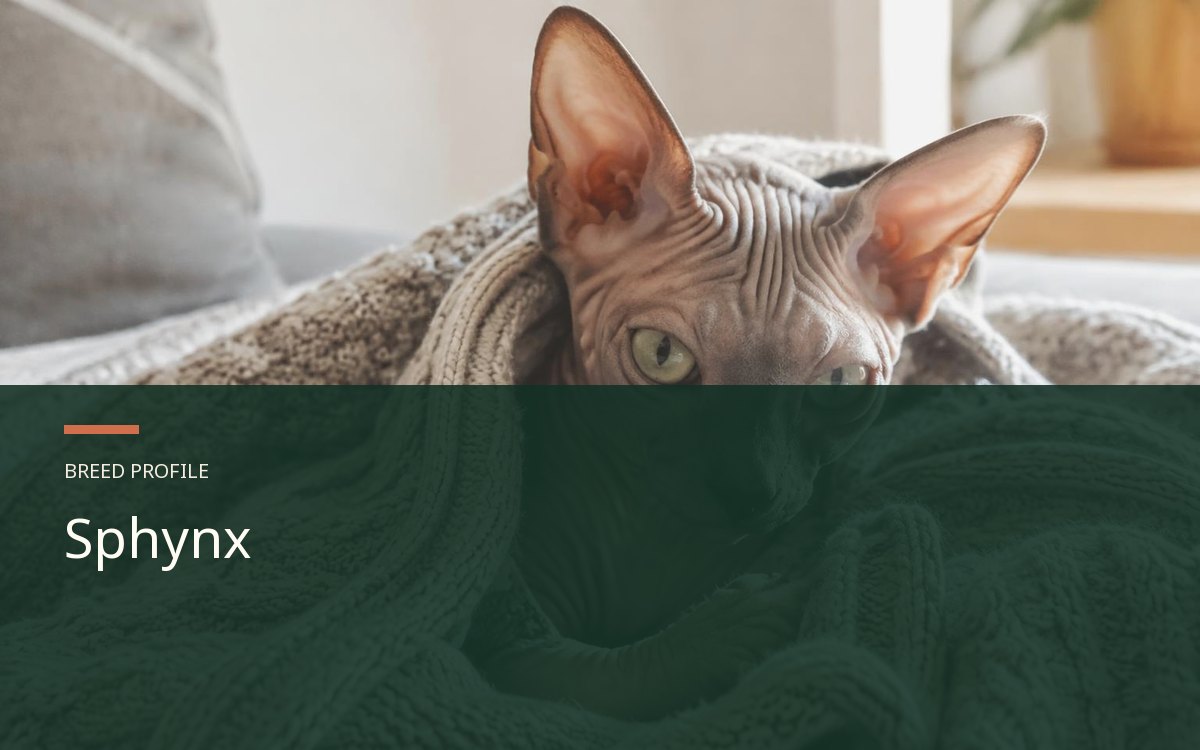
Illustrative cover using relevant category imagery; it does not depict the exact subject.
Breed characteristics
- Group
- Hairless
- Origin
- Canada
- Size
- Medium
- Weight
- 3–5 kg (6–12 lb)
- Height
- 20–25 cm
- Lifespan
- 12–15 years
- Coat
- Effectively hairless with fine down
- Temperament
- ExtrovertedClownishAttention-seekingWarm-seeking
History
Arose from natural hairless mutations in Canada in the 1960s and was developed into a breed.
Appearance
Wrinkled, warm skin, large ears and a pot-bellied outline.
Exercise and activity
Daily active play; Sphynx cats stay kitten-like for years.
Care and grooming
Weekly bathing to remove skin oils, regular ear and nail-fold cleaning, warm bedding and sun protection.
Health considerations
- Hypertrophic cardiomyopathy
- Skin conditions and oiliness
- Urticaria pigmentosa
- Cold sensitivity
- Dental disease
Honest challenges
Before choosing a Sphynx
- Treat the breed profile as a starting point, not a guarantee of temperament. Meet the individual and discuss its history, needs and behaviour with the rescue or responsible breeder.
- Check your routine can support the activity described here: Daily active play; Sphynx cats stay kitten-like for years. Allow for age, weather, health and recovery rather than imposing a fixed target.
- Ask the breeder or rescue and your vet about problems reported in this breed (such as Hypertrophic cardiomyopathy, Skin conditions and oiliness, Urticaria pigmentosa, Cold sensitivity, Dental disease), which of them have recognised screening tests, and the parents' results where relevant. Screening reduces some uncertainty but cannot promise a healthy lifetime.
- Plan grooming, veterinary costs and care during holidays. Children and other pets still need careful introductions and supervision whatever a breed's typical rating.
Educational reference, not an individual diagnosis or a verified professional review. Read our editorial policy.
Guidance libraries and further reading
These organisations publish relevant guidance. Their links are further reading, not evidence that they have reviewed this page.
- RSPCA — animal care and welfare advice across species
- PDSA — veterinary charity pet health advice
- International Cat Care — cat health, behaviour and welfare advice