
Cat breed · Natural / Shorthair
Egyptian Mau
One of the few naturally spotted cat breeds, and reputedly the fastest domestic cat, the Egyptian Mau is athletic, alert and deeply attached to its chosen people.
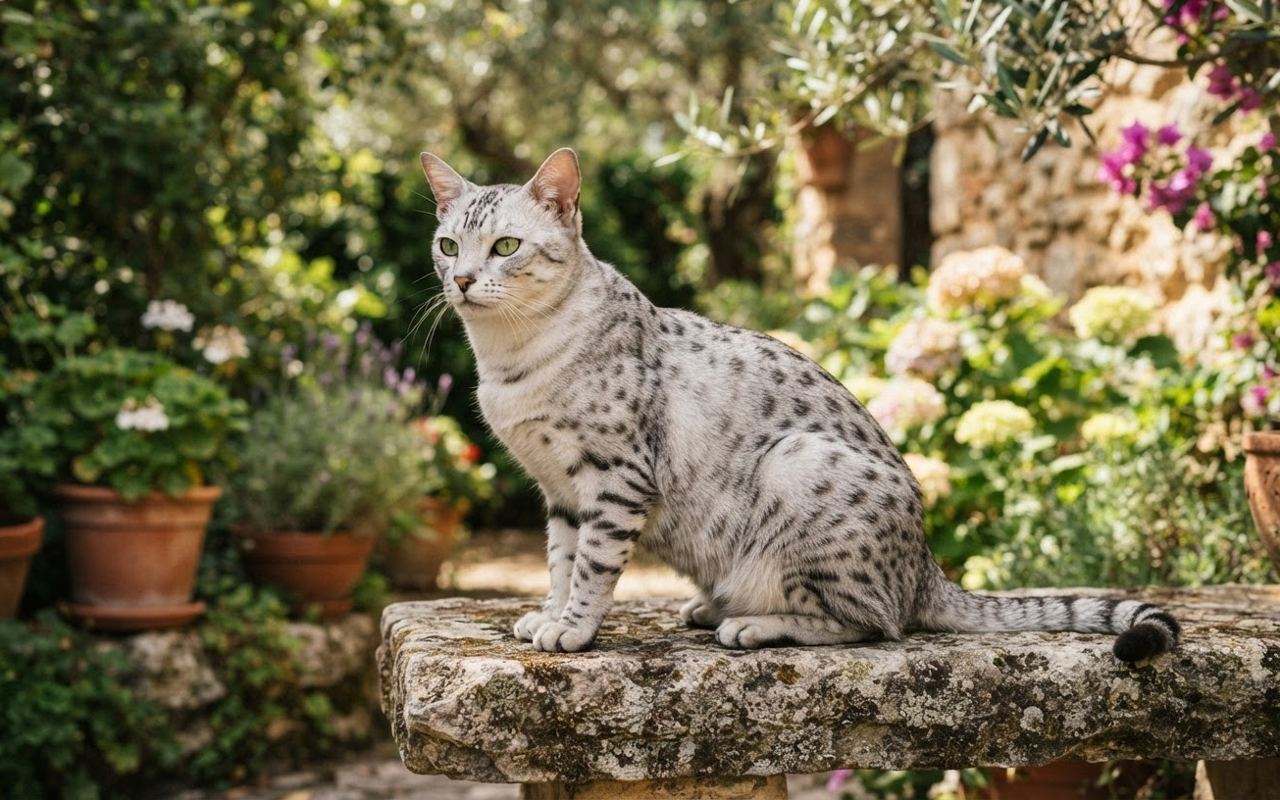
AI-generated editorial illustration of the subject; not a photograph of a specific animal, product or case.
Breed characteristics
- Group
- Natural / Shorthair
- Origin
- Egypt
- Size
- Medium
- Weight
- 2.5–5 kg (6–11 lb)
- Height
- 20–25 cm
- Lifespan
- 12–15 years
- Coat
- Short, dense, naturally spotted coat
- Temperament
- AthleticDevotedAlertFast
History
Descended from spotted street and temple cats of Egypt; brought to the West and established as a breed by a Russian exile in Italy during the 1950s.
Appearance
A medium, muscular cat with random spotting on a silver, bronze or smoke coat and a distinctive 'worried' brow expression.
Exercise and activity
High — enjoys running, jumping and chasing toys; secure vertical space and interactive play are important daily.
Care and grooming
Minimal grooming beyond weekly brushing; keep claws trimmed given the breed's enthusiasm for running and climbing.
Health considerations
- Hypertrophic cardiomyopathy
- Pyruvate kinase deficiency
- Dental disease
- Progressive retinal atrophy
- Obesity if under-exercised
Honest challenges
Before choosing a Egyptian Mau
- Treat the breed profile as a starting point, not a guarantee of temperament. Meet the individual and discuss its history, needs and behaviour with the rescue or responsible breeder.
- Check your routine can support the activity described here: High — enjoys running, jumping and chasing toys; secure vertical space and interactive play are important daily. Allow for age, weather, health and recovery rather than imposing a fixed target.
- Ask the breeder or rescue and your vet about problems reported in this breed (such as Hypertrophic cardiomyopathy, Pyruvate kinase deficiency, Dental disease, Progressive retinal atrophy, Obesity if under-exercised), which of them have recognised screening tests, and the parents' results where relevant. Screening reduces some uncertainty but cannot promise a healthy lifetime.
- Plan grooming, veterinary costs and care during holidays. Children and other pets still need careful introductions and supervision whatever a breed's typical rating.
Educational reference, not an individual diagnosis or a verified professional review. Read our editorial policy.
Guidance libraries and further reading
These organisations publish relevant guidance. Their links are further reading, not evidence that they have reviewed this page.
- RSPCA — animal care and welfare advice across species
- PDSA — veterinary charity pet health advice
- International Cat Care — cat health, behaviour and welfare advice