Ethical shopping
Animal-Welfare Food Labels: What They Do and Do Not Prove
A practical method for reading free-range, organic and assurance claims without treating one logo as the whole story.
Start with the actual standard
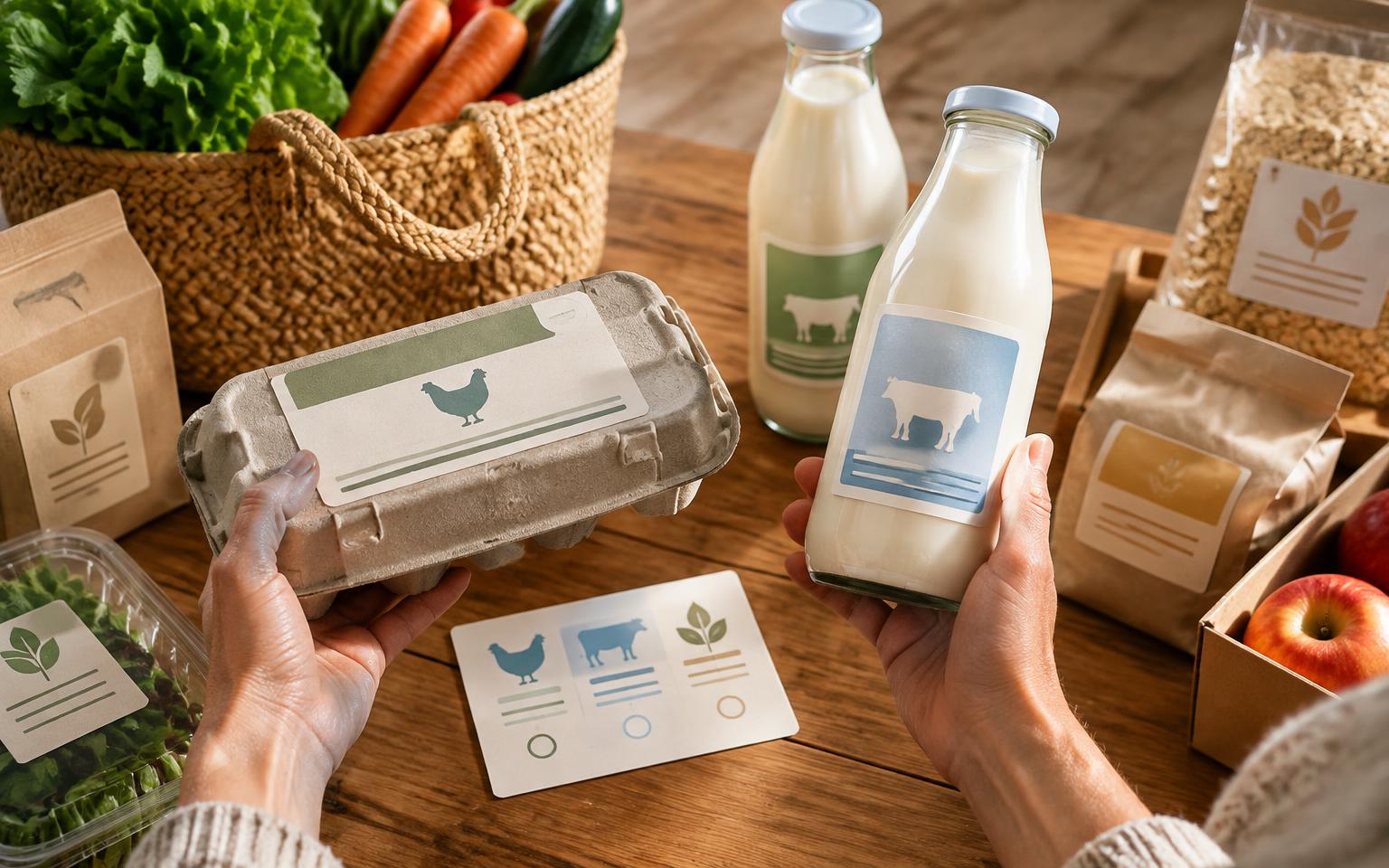
A label may describe housing, outdoor access, feed, medicine, transport, auditing or only origin. Read the published standard and who checks it; attractive wording is not evidence.
Three levels of evidence
- Method claims: how the animal was housed or fed
- Resource measures: space, bedding, enrichment and equipment
- Outcome measures: injury, lameness, feather loss, mortality and behaviour
Common terms
Free range and organic have legal definitions in some places and not others. Neither guarantees excellent welfare across an animal's entire life. 'Natural', 'farm fresh' and pastoral imagery may carry no meaningful welfare standard.
A realistic hierarchy
First reduce waste and unnecessary purchasing. When buying animal products, compare schemes on painful procedures, confinement, breed, transport, slaughter and independently audited outcomes. No label removes the underlying ethical debate.
Frequently asked questions
- Is organic automatically the highest-welfare choice?
- No. Organic standards can improve some conditions, but species-specific health and management outcomes still need scrutiny.
References
- Farm animal welfare guidance — Defra
- Terrestrial animal welfare standards — WOAH