
Senior enrichment
Senior Pet Brain Games: Gentle, Accessible Training
Adapt familiar games for older dogs and cats while recognising when sleep, memory or behaviour changes need veterinary care.
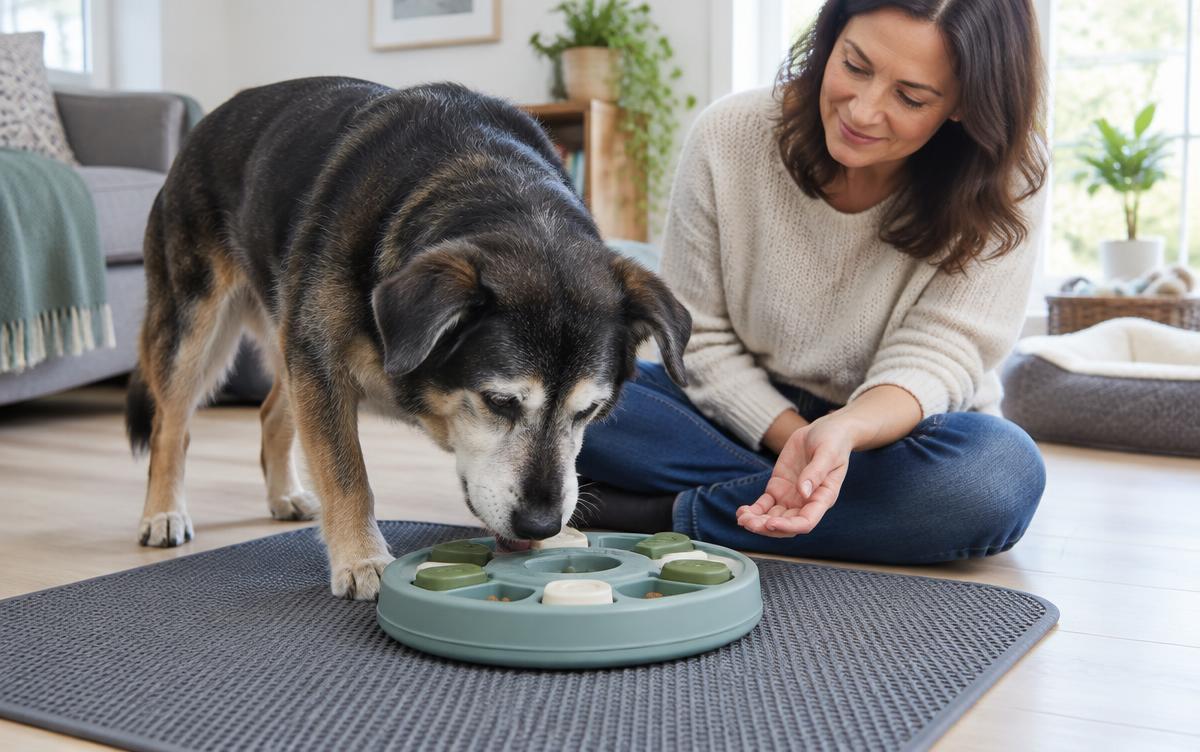
AI-generated editorial image; illustrative, not a clinical demonstration or documentary photograph.
Start with health, not a harder puzzle
Disorientation, disturbed sleep, house-soiling and changes in interaction can occur with cognitive dysfunction, but also with pain, sensory loss or other illness. Arrange a veterinary assessment rather than assuming an older pet is simply getting forgetful.
Enrichment is part of supportive care, not a cure or a diagnostic test. A veterinary plan may include treatment, environmental changes and follow-up. Report sudden or severe changes promptly, especially collapse, seizures or inability to walk.
Make familiar tasks easier to access
Use non-slip surfaces and keep food puzzles at a comfortable height. Choose wide, shallow compartments instead of heavy lids or tasks that require twisting, jumping or standing for a long time. A cat with joint pain may need a floor-level game even if it used to enjoy climbing.
Keep the layout predictable. Moving beds, bowls and furniture frequently can make life harder for a pet with sensory or cognitive changes. Provide safe routes to water, resting areas and toileting spaces, with veterinary advice about night-time visibility when needed.
Try three low-pressure games
Hide a few pieces of the normal food ration in an easy towel fold while you supervise, or place them in open shallow cups. Encourage a familiar hand target at a comfortable distance. Offer a short sniffing walk at the dog's pace or gentle wand play within the cat's reach.
Give help early and allow the pet to stop. Avoid tiny detachable parts, fabric ingestion and puzzles that cause frustration. Adapt rewards to the prescribed diet and count them as part of daily food intake.
- Easy find-it with visible food
- A familiar hand target without stretching
- Gentle scent exploration or short play
- A comfortable mat-settle routine
- Voluntary entry to an accessible carrier
Reward engagement rather than speed
Use a clear marker the animal can perceive. A dog with hearing loss may respond better to a previously taught visual cue; a pet with reduced sight may need a familiar sound and closer placement. Avoid startling touch, and do not punish slower responses.
Sessions can be very short. Stop when attention fades, the animal turns away or movement becomes uncomfortable. A minute of successful engagement may be more appropriate than a long session that ends in exhaustion.
Monitor comfort and daily function
Keep notes on sleep, appetite, toileting, mobility and interest in contact. Bring these observations to veterinary follow-ups. Judge progress by comfort and meaningful engagement, not by whether an older pet performs as it did years ago.
Protect rest and preserve pleasant familiar routines. If a game repeatedly causes agitation, simplify it or choose another activity. Every pet's abilities and preferences differ, and quality of life is more important than completing a training programme.
Frequently asked questions
- Can puzzle games cure cognitive dysfunction?
- No. Gentle enrichment can support a veterinary management plan but does not replace assessment or treatment.
- What if my older pet stops enjoying games?
- Reduce difficulty and check comfort. New withdrawal, sleep changes or reduced appetite warrant veterinary advice.
References
- Managing cognitive dysfunction and behavioural anxiety — AAHA Senior Care Guidelines