
Everyday manners
Loose-Lead Walking: The Basics
Reward-based steps to stop pulling on the lead, without harsh equipment.
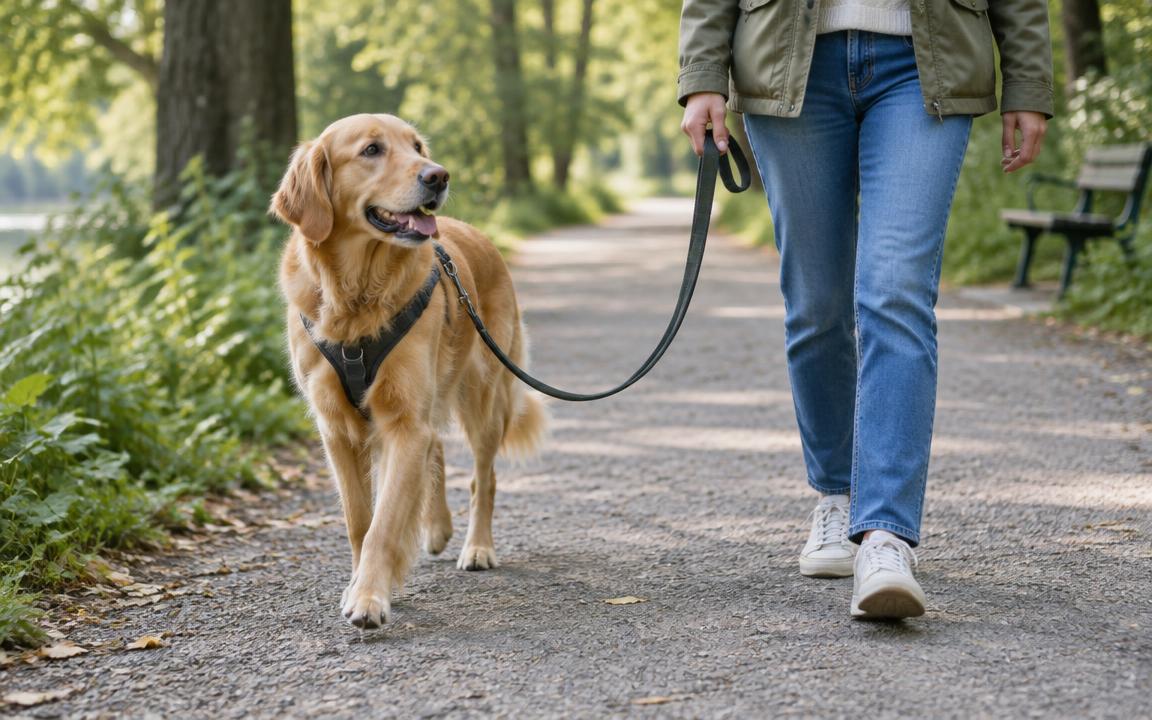
AI-generated editorial image; illustrative, not a clinical demonstration or documentary photograph.
Loose-lead practice: change one challenge at a time
| What happens | Make the next repetition easier |
|---|---|
| A few slack-lead steps | Reward early before asking for a longer sequence. |
| Pulling near distractions | Increase distance or return to a quieter location. |
| Lead becomes tight | Avoid jerking; pause or change direction gently when safe. |
| Fear or lunging | Prioritise safe distance and an individual behaviour plan. |
| New place | Reduce expectations; combine brief practice with safe sniffing and toileting. |
Pain or sudden movement changes need veterinary assessment. A slack lead does not require a rigid heel for the entire walk.
Define success as a comfortable slack lead
Loose-lead walking means the dog can move without maintaining tension. It does not require a rigid heel position for an entire walk. Sniffing and exploring are valuable, so combine short practice periods with opportunities to behave naturally in safe places.
Choose a comfortable, well-fitted harness or other suitable equipment and a lead that allows control without constant tightness. Avoid painful tools and leash jerks. If pulling has suddenly appeared or movement looks uncomfortable, ask your vet about pain rather than treating every problem as disobedience.
Start where the dog can learn
Begin in a quiet indoor area or enclosed space. Reward the dog for being beside you with the lead slack, then take one or two steps and reward again before it rushes ahead. Deliver food near the position you want rather than holding it far forward.
Use tiny food rewards from the daily allowance if appropriate, or another reward the dog values. If it will not take food outdoors, excitement, fear or competing smells may be too intense. Change the location and make the task easier rather than pulling it back repeatedly.
Practise a consistent response to tension
When it is safe, pause as the lead tightens and invite the dog back to a comfortable position without jerking. Resume when slack returns. Reward before tension builds on the next attempt. In traffic or near a hazard, prioritise moving to safety rather than rigidly stopping for training.
A dog repeatedly reaching the end of the lead is rehearsing frustration. Use shorter stretches, more frequent reinforcement and greater distance from distractions. Agree the same approach with everyone who walks the dog.
Add distractions gradually
Change one challenge at a time: duration, location or distraction level. Practise at a distance from dogs, people or wildlife where your dog can still respond. Use turns and gentle changes of direction before it becomes fixated, and reward checking in.
Barking, lunging, freezing or panic may indicate a fear or reactivity problem that needs a separate plan. Do not deliberately approach the trigger to force a lesson. A qualified reward-based trainer can help, and significant anxiety deserves veterinary input.
Track progress without exhausting the dog
Measure success by more relaxed steps and quicker recovery, not by a long walk with no mistakes. Several brief practices are often more useful than one demanding session. Finish while the dog is still engaged, and retain normal enrichment and rest.
Measure progress by context, not distance alone
Record where the dog can walk with a slack lead, what distracts it and how quickly it recovers after a difficult moment. A calm corridor, a quiet pavement and a busy park are different tasks. Progress in one place does not automatically transfer to the next. Increase one challenge at a time: practise a little farther from a distraction or add a few steps before the next reward, rather than suddenly expecting a whole unfamiliar route.
Use rewards that suit the dog and the setting. Food from the daily allowance may work for short practice, while permission to sniff a safe verge can reinforce a slack lead too. Deliver the reward close to the position you want so the dog is not repeatedly pulled forward by your hand. Do not withhold essential exercise, sniffing or toileting until the dog performs perfectly. Split a normal outing into easier practice and relaxed exploration where it is safe.
- Reward a few successful steps before asking for a longer sequence.
- Move farther from distractions when learning breaks down.
- Keep safe opportunities to sniff and toilet in the outing.
Distinguish pulling from fear and reactivity
A dog lunging at traffic or another dog may need a fear or reactivity plan, not repeated stopping drills. Increase distance, turn away safely and avoid forcing close encounters. A dog unable to eat, scan calmly or disengage may be overwhelmed. Seek a qualified reward-based behaviour professional when the problem persists or safety is uncertain. Sudden changes in gait, reluctance to move or pulling to escape handling also deserve a veterinary assessment for discomfort.
Check equipment regularly for rubbing, movement restriction and damaged attachments. A harness must fit the individual dog, and secure connections matter more than a fashionable design. In places with traffic or escape risk, prioritise physical safety over training perfection. If the lead tightens, avoid jerking it; pause or gently change direction only when the situation allows. Return to an easier environment for practice. Consistent, achievable repetitions build a useful skill, but there is no universal number of days in which every dog should learn it.
Frequently asked questions
- Does a harness teach loose-lead walking?
- No. Equipment can improve comfort and control, but learning needs reinforcement, suitable difficulty and consistent handling.
- Must my dog stay at heel throughout every walk?
- No. A slack lead with safe exploration is a useful everyday goal; formal heel is a separate skill.
- Must my dog stay in a heel position all walk?
- No. A slack lead can allow safe sniffing and exploration as well as short structured practice.
- Why does pulling return in a new place?
- New distractions make the task harder. Reduce difficulty and rebuild successful short repetitions in that setting.
References
- Position statements: humane dog training — American Veterinary Society of Animal Behavior