
Cats
Litter Training Kittens and Solving Common Problems
Most kittens use a tray instinctively — but the setup decides whether they keep using it. How to get it right from the start and fix lapses.
AI-generated editorial image; illustrative, not a clinical demonstration or documentary photograph.
Why most kittens take to the tray quickly
Digging and burying waste is an instinctive feline behaviour rather than something a kitten must be taught from first principles, which is why most kittens, once shown an accessible tray with suitable litter, start using it with very little active training required. Kittens typically learn tray use from their mother in the first weeks of life, so a kitten separated too young or raised without that example may need a bit more active guidance from their new owner.
Placing the kitten in the tray after waking from naps, after meals, and after active play, the times they are statistically most likely to need to toilet, and letting them investigate and dig, is usually sufficient without needing to physically place their paws in the litter or otherwise force the behaviour.
Tray number, placement and the 'one per cat plus one' rule
A widely cited guideline is to provide one litter tray per cat in the household plus one additional tray, placed in different locations rather than clustered together, since a single shared tray can become a point of competition or avoidance, particularly in multi-cat homes. Trays should be placed in quiet, low-traffic locations away from food and water bowls, since cats generally dislike toileting near where they eat, and away from loud appliances that might startle a kitten mid-use and create a lasting negative association with that spot.
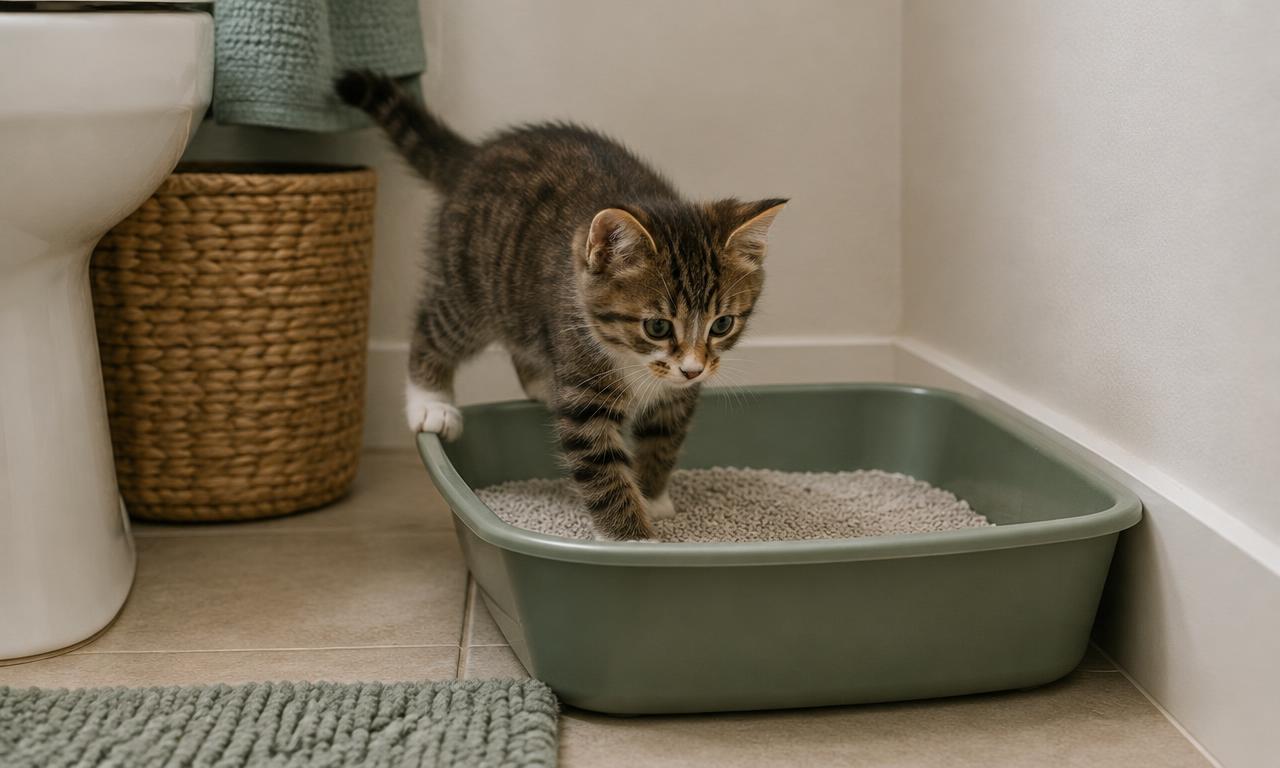
Accessibility also matters for very young kittens or those with mobility limitations; a tray with low sides is easier for a small kitten to climb into than a deep, high-sided tray designed for an adult cat.
Litter type and tray cleanliness
Most cats, including kittens, tend to prefer an unscented, soft, fine-grained litter, since strong fragrances and coarse or sharp-textured materials can be unpleasant underfoot and may discourage use. Introducing a new kitten to one consistent litter type at first, and changing litter types gradually if a change is ever needed, reduces the risk of a kitten refusing an unfamiliar texture.
Scooping solid waste daily and fully changing and cleaning the tray regularly matters more for kittens and cats than many owners initially expect, since a dirty tray is one of the most common reasons a cat that was previously using it well starts toileting elsewhere in the home.
Troubleshooting accidents without assuming bad behaviour
A kitten toileting outside the tray is very rarely being deliberately difficult; common underlying causes include a tray that is too dirty, too small, in a disliked location, shared with a cat they feel uncomfortable around, or filled with a litter texture they dislike. Punishing a kitten for an accident, including scolding or physically placing them back near the mess, does not teach correct tray use and can create fear or anxiety around the owner or the tray area that makes the problem worse.
Cleaning any accident spot thoroughly with an enzymatic cleaner designed to break down the odour compounds in urine is important, since residual scent can draw a kitten back to the same inappropriate spot repeatedly if ordinary household cleaners are used instead.
When toileting problems point to a medical issue
A kitten that is straining, visiting the tray very frequently with little result, vocalising while attempting to toilet, or has blood in the urine needs a veterinary assessment rather than being treated as a behavioural or training issue, since these signs can indicate a urinary tract problem that requires prompt attention.
A sudden onset of toileting outside the tray in a kitten that was previously reliable, especially alongside other changes like reduced appetite or lethargy, is also worth a vet check before assuming it is purely a litter preference or stress issue, since ruling out a medical cause first avoids missing something that needs treatment.
Frequently asked questions
- How many litter trays do I need for one kitten?
- The general guideline is one tray per cat plus one extra, so even a single kitten benefits from having two trays available in different locations.
- My kitten keeps having accidents near the tray but not in it. Why?
- This often relates to tray cleanliness, litter texture, tray size, or location; it is rarely wilful, and addressing the setup usually resolves it faster than correcting the kitten.
- Should I scold my kitten for toileting outside the tray?
- No, scolding does not teach correct tray use and can create anxiety that makes the problem worse; cleaning accidents thoroughly and adjusting the tray setup is more effective.
- When is a toileting problem actually a medical emergency?
- If a kitten is straining, visiting the tray frequently with little output, crying out, or passing blood-tinged urine, this needs prompt veterinary assessment rather than being treated as a training issue.
References
- Kitten care guide — International Cat Care
- Caring for a new kitten — Cats Protection
- Pet owner resources — AVMA