
Emergency care
Urinary Blockage in Male Cats: Why Straining Is an Emergency
A male cat straining in the litter tray with little or no urine may be blocked. Here is why it can be fatal within a day or two and what prevention looks like.
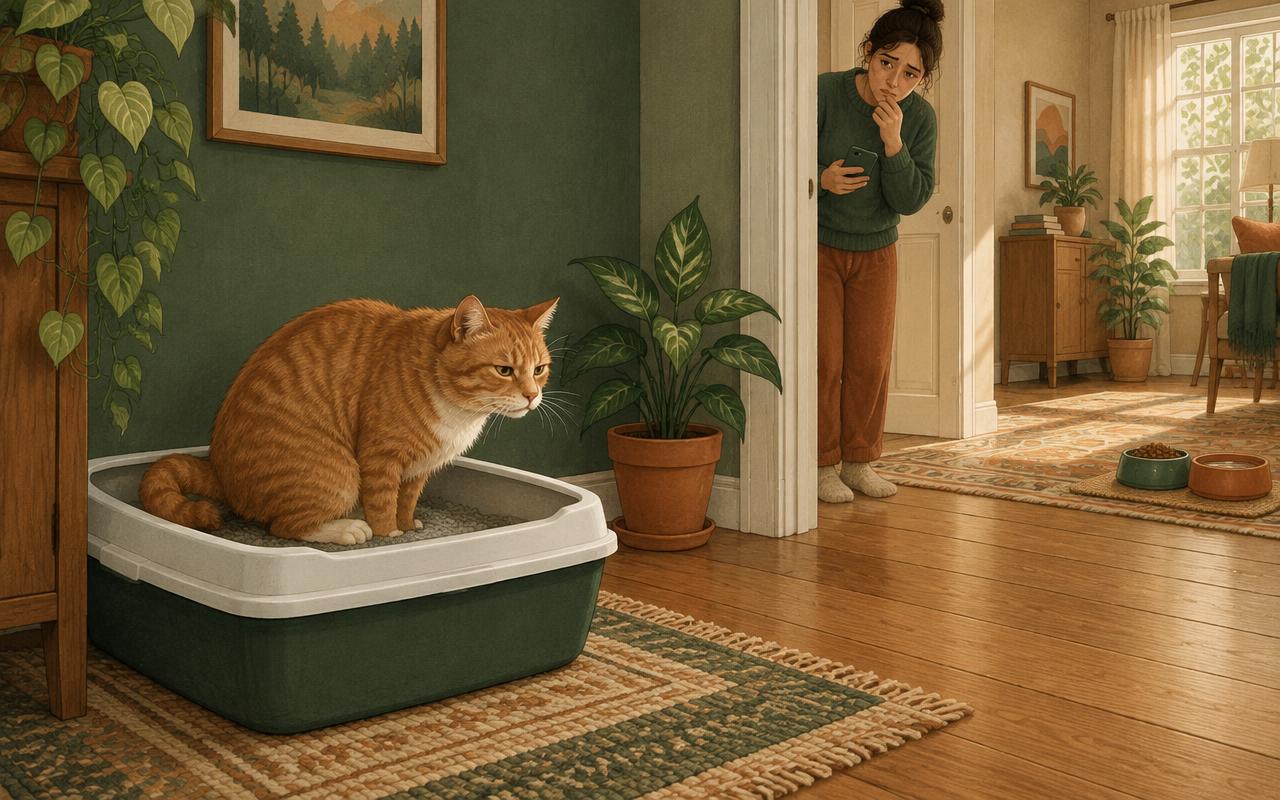
AI-generated editorial image; illustrative, not a clinical demonstration or documentary photograph.
Why male cats are specifically at risk
Male cats have a narrower, longer urethra than females, which makes them far more prone to complete urinary blockage from crystals, small stones, mucus plugs or inflammation-related debris that a female cat would often pass without issue. This anatomical difference is the main reason urinary blockage is discussed as a male-specific emergency even though both sexes can develop the broader condition of feline lower urinary tract disease.
Neutering does not meaningfully change the width of the urethra in a way that eliminates this risk, so neutered male cats remain just as vulnerable as intact ones, and this risk should not be assumed to decrease with age or past history of normal urination.
Recognising the signs before it becomes critical
Straining in the litter tray with little or no urine produced, frequent trips to the tray, crying out while attempting to urinate, excessive licking at the genital area, and visiting the tray repeatedly without clear results are the key warning signs, and are sometimes mistaken by owners for constipation because the straining looks similar. A cat vocalising in apparent pain while in the tray, or producing only a few drops of blood-tinged urine, needs assessment the same day, not after a wait-and-see period.
A cat that stops urinating entirely, becomes increasingly lethargic, vomits, or is found hiding and unresponsive has likely progressed to a point where toxins are building up in the bloodstream, which is a genuine life-threatening emergency requiring immediate veterinary attention, typically within hours.
Why this becomes fatal so quickly
A fully blocked cat cannot pass urine at all, and the resulting build-up of waste products, potassium and fluid can cause the bladder to become dangerously distended, the kidneys to be damaged, and heart rhythm to become dangerously abnormal due to high blood potassium, a sequence that can become fatal within roughly one to two days if untreated. This is one of the few genuine same-day emergencies in companion animal medicine, where delay of even some hours can change the outcome.
Because the progression can be rapid and the early signs (straining, frequent tray visits) can look deceptively mild to an owner unfamiliar with the condition, any male cat straining with little or no urine output should be treated as an emergency until a vet has ruled this out, not monitored at home overnight.
What veterinary treatment generally involves
Treatment typically requires sedation or anaesthesia to pass a urinary catheter and relieve the obstruction, intravenous fluids to correct electrolyte imbalances and support the kidneys, and monitoring, often with hospitalisation for a period afterward, since the bladder and kidneys need time to recover and potassium levels need to be brought back into a safe range before the cat is considered stable.
Cats who have blocked once are at meaningfully higher risk of blocking again, so a vet will usually discuss contributing factors such as diet, hydration, litter tray setup, stress and environmental enrichment as part of a longer-term prevention plan rather than treating a single episode in isolation.
Reducing the risk of future episodes
Increasing water intake through wet food, multiple water stations, and water fountains that encourage drinking, along with a veterinary-recommended urinary diet where appropriate, are common strategies used to reduce the concentration of minerals in urine and encourage more frequent urination that helps flush the bladder.
Reducing stress, since stress is strongly associated with feline urinary tract flare-ups, through adequate litter trays (generally one per cat plus one extra), environmental enrichment, consistent routines and minimising household conflict between cats, is considered an important part of long-term prevention alongside diet and hydration.
Keeping litter trays clean and accessible encourages normal elimination patterns, and monitoring litter box output, noting clump size and frequency, can help an owner spot a developing problem earlier than waiting for obvious straining.
Frequently asked questions
- How quickly does a blocked male cat need to see a vet?
- Immediately, the same day; this is considered a genuine emergency that can become fatal within one to two days if untreated, and should never be monitored at home overnight.
- Does neutering reduce the risk of urinary blockage?
- No, the narrower urethra that makes male cats vulnerable is unaffected by neutering, so neutered males remain just as much at risk as intact males.
- Can a female cat get blocked the same way?
- It is far less common because female cats have a wider, shorter urethra, though female cats can still develop related lower urinary tract disease and discomfort without complete blockage.
- Will my cat block again after treatment?
- Cats who have blocked once have an elevated risk of recurrence, which is why vets usually recommend ongoing diet, hydration and stress-reduction measures rather than considering one successful treatment the end of the issue.
References
- Feline lower urinary tract disease — Cornell Feline Health Center
- Cat health advice — International Cat Care
- Veterinary reference on urinary obstruction — Merck Veterinary Manual