
Digestive health
Hairballs in Cats: When to Worry
Occasional hairballs can happen, but frequent vomiting is not normal and deserves a vet check.
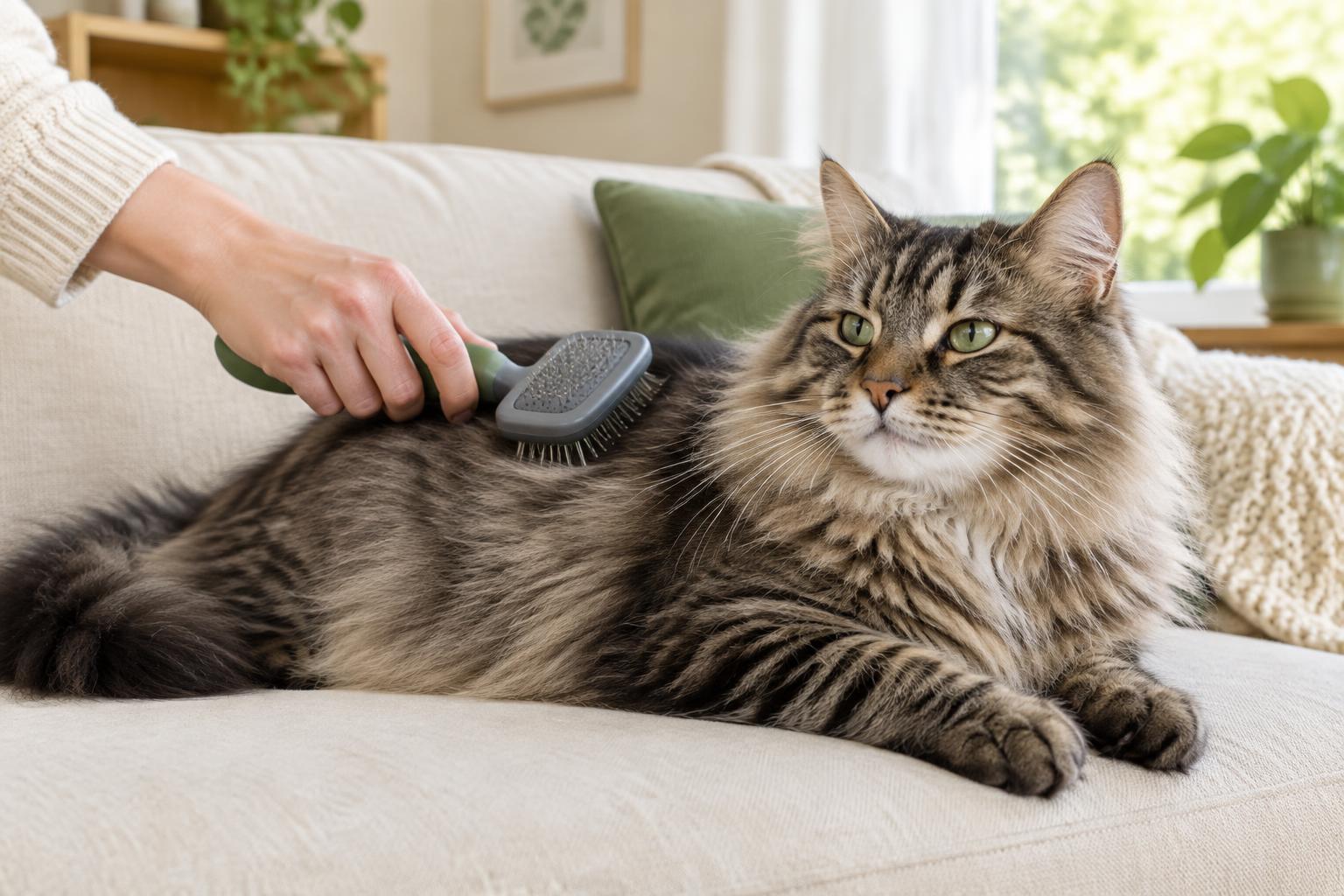
AI-generated grooming illustration. Gentle coat care may reduce swallowed hair, but repeated vomiting or coughing needs assessment rather than an assumed hairball diagnosis.
Hairball or another problem? Describe, do not diagnose
| Situation or check | Practical next step |
|---|---|
| Hair in vomit | Record the event; hair does not rule out another illness. |
| Cough-like movements, no material | Describe or safely film for the vet; do not assume a hairball. |
| More licking or thinning coat | Arrange a skin, pain and grooming assessment. |
| Visible string | Do not pull it; call the vet. |
| Breathing effort, collapse or repeated unproductive retching | Obtain urgent veterinary advice; breathing difficulty is an emergency. |
No appearance or frequency threshold in this table certifies a cat as healthy.
Is it a hairball, vomiting or coughing?
Cats swallow loose hair during grooming and most of it passes in their stools. A hairball is usually a compact, elongated clump of hair brought up with fluid. Repeated vomiting is not automatically normal because hair is present: digestive disease or excessive grooming may be contributing.
Coughing can look similar to attempts to bring up a hairball. A cat may crouch, stretch its neck and make repeated chest movements without producing hair. Record a short video if doing so does not delay care; a veterinarian can use it alongside examination to distinguish different problems.
When does your cat need urgent help?
Repeated unsuccessful retching, a painful or swollen abdomen, marked lethargy or loss of appetite warrant prompt veterinary advice. Open-mouth breathing, obvious breathing effort or collapse is an emergency. Do not wait for a supposed hairball to appear when your cat seems ill.
Tell the clinic when the signs began, whether food or water stays down, and whether stools have changed. Also report possible access to string, thread, toys or plants. Never pull visible string from a cat's mouth or bottom; an attached foreign body may cause serious internal injury.
Reduce swallowed hair without creating stress
Introduce gentle grooming when your cat is relaxed, starting with a few strokes and rewarding voluntary participation. Choose a brush suited to the coat and avoid tugging mats or forcing a painful cat to tolerate brushing. Long-haired cats may need more frequent coat care, but sudden over-grooming needs a skin and health assessment rather than simply more brushing.
Keep feeding and water access reliable. Hairball diets and supplements are not interchangeable treatments, and adding large amounts of fibre can unbalance a diet. Ask your vet whether a complete diet change is suitable, especially with kidney disease, food sensitivity or a prescribed diet.
What not to give at home
Do not give cooking oil, mineral oil, human laxatives or an improvised remedy. Syringing liquids into a struggling cat can cause aspiration. A product marketed for hairballs does not rule out obstruction or other disease. Use treatments only with veterinary guidance and seek reassessment if the pattern continues.
Keep a useful symptom record
Record dates, photographs of material produced, appetite, grooming, weight and stool changes. Note whether an episode followed a meal or occurred with activity. This helps your vet assess frequency and choose tests; it is more useful than describing every episode as a hairball. Do not repeatedly change food while waiting for an assessment.
Describe the episode without assuming its cause
A useful account separates what happened before, during and after the event. Note whether the cat brought up food, clear fluid, hair or nothing, whether it seemed to cough, and how quickly normal behaviour returned. A photograph of expelled material is often easier and less stressful than trying to examine the mouth. Record whether appetite and activity stayed normal afterwards. Do not provoke another episode for a video. An occasional hair-containing vomit does not explain a new pattern of repeated vomiting, weight loss or changes in thirst; the veterinarian still needs to assess the individual cat.
- Record the date and material produced.
- Note appetite, stool changes and possible access to string or small objects.
- Seek immediate help for breathing difficulty instead of filming.
Check why grooming has changed
Look for a change from the cat's own normal routine: persistent licking of one area, thinning hair, mats, reluctance to be brushed or difficulty reaching the back. Itching, pain, mobility problems and distress can alter grooming, so neither bald areas nor extra swallowed hair should be dismissed as a cosmetic issue. Ask the clinic about suitable parasite control and any skin assessment needed. Separate comfortable grooming from restraint: offer a few gentle strokes, pause and allow the cat to leave. Do not cut tight mats with scissors against the skin; ask for safe professional removal when needed.
Choose a feeding change with the whole patient in mind
Discuss the current complete diet, supplements and any therapeutic food before trying a hairball product. Different products contain different ingredients and may not suit the same problem. A fibre-containing diet may help selected cats, but there is no universal serving of extra fibre that safely solves repeated vomiting. Do not replace meals with treats or multiple remedies while the cause remains unknown. If the veterinarian recommends a change, agree how to introduce it and what counts as improvement. Continue recording episodes and arrange reassessment if signs persist rather than repeatedly switching foods and obscuring the pattern.
Frequently asked questions
- Is vomiting normal if hair is present?
- Not necessarily. Hair can appear alongside digestive illness or excessive grooming. Repeated vomiting or changes in appetite, weight or behaviour warrant veterinary assessment.
- Should I film a cat that is struggling to breathe?
- No. Breathing difficulty is an emergency. A video is useful only when safe and when it does not delay veterinary care.
- Can I pull a visible thread out?
- No. Do not pull string from the mouth or anus; an attached foreign body can damage the intestines. Contact a veterinarian promptly.
- Will extra fibre suit a cat already on a kidney diet?
- Do not alter a therapeutic diet or add supplements without advice. The vet should assess the vomiting and the whole feeding plan together.
References
- The danger of hairballs — Cornell Feline Health Center
- Trichobezoars in cats — VCA Animal Hospitals