
Coat care
Bathing a Dog at Home Without the Drama
How often to bathe, which products to use and a calm routine that keeps skin healthy.
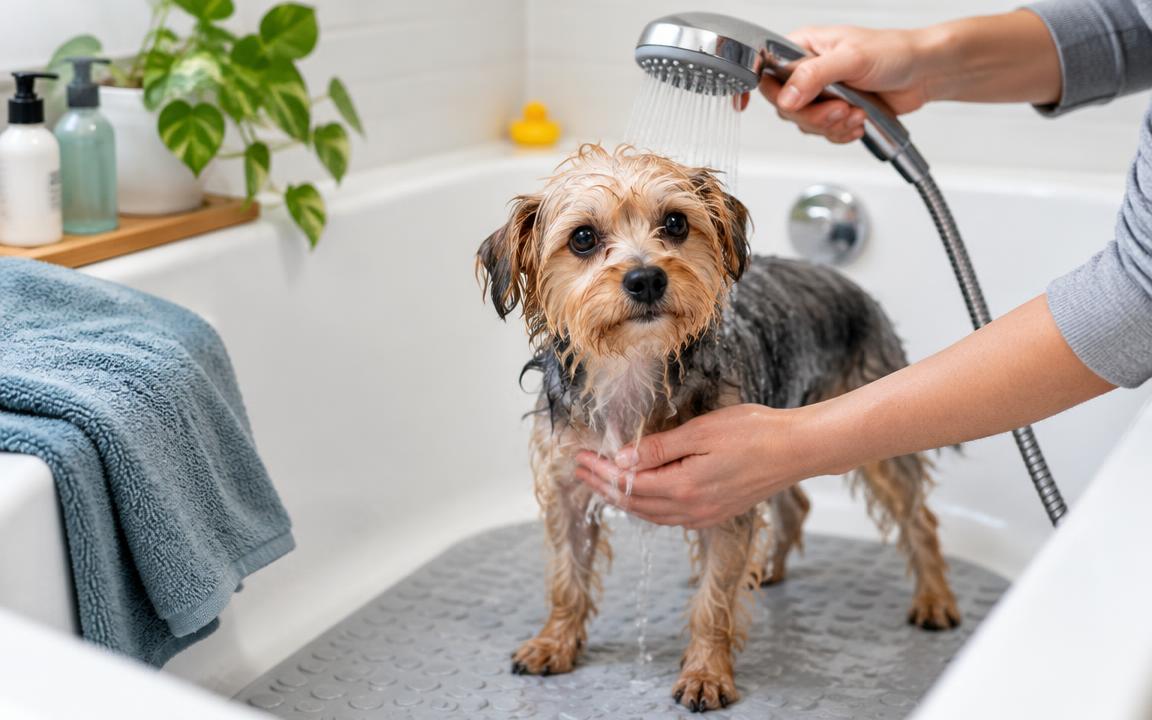
AI-generated editorial image; illustrative, not a clinical demonstration or documentary photograph.
A calm bath, step by step
| Stage | Comfort and safety check |
|---|---|
| Before bathing | Investigate persistent odour or sore skin; check whether bathing is appropriate. |
| Preparation | Non-slip footing, dog-appropriate product, towels and gentle lukewarm water. |
| Participation | Practise easy stages first; pause for fear, pain or unsafe handling. |
| Wash and rinse | Follow instructions; avoid eyes and inside ears; remove residue thoroughly. |
| Dry and review | Dry comfortably, check retained moisture and report irritation or persistent odour. |
There is no universal bath schedule. Medicated products and post-surgical patients require individual veterinary instructions.
Decide whether a bath is needed
There is no single bathing interval for every dog. Coat type, activity, skin disease and the product used matter. A dog that suddenly smells different, scratches, has sores or develops greasy skin needs an assessment rather than repeatedly stronger shampoo.
Follow your vet's schedule for medicated bathing, including contact time and rinsing instructions. Do not substitute a cosmetic shampoo for prescribed treatment. Dogs with wounds or recent surgery should not be bathed without permission.
Prepare equipment and a safe surface
Use a non-slip surface, lukewarm water, towels and a shampoo intended for dogs. Read its instructions before starting and have everything within reach. Keep the room comfortable and avoid leaving the dog unattended in a tub.
Gently assess the coat first. Dense mats can be painful, trap moisture and hide skin problems; do not cut close to the skin with household scissors. A groomer or veterinarian can help when brushing would hurt or the dog cannot tolerate handling.
Introduce water and handling gradually
Let the dog investigate the dry bath area and reward comfortable participation. Brief sessions near the bathroom can be useful before a full wash. Use gentle water pressure and avoid spraying the face or forcing a struggling dog to stay.
A helper may make handling easier, but restraint should not cause panic. A food toy can help only if the dog remains relaxed and the food suits its diet. Trembling, repeated escape attempts or snapping mean the plan needs changing.
Wash, rinse and dry carefully
Wet the coat, apply the product as directed and keep it away from the eyes and inside the ears. Avoid pouring water over the head. Rinse thoroughly because residue can irritate skin. Do not add essential oils or home-made mixtures.
Towel dry gently and check skin folds and dense areas for retained moisture. If using a dryer, use a low, comfortable setting, keep it moving and stop if the dog dislikes it. Never direct hot air at the skin or leave a dog in an enclosed heated drying setup.
Know when to ask for help
Redness, soreness, increased itching or persistent odour after bathing should be discussed with your vet. Dogs with mobility problems may need an accessible shower or professional assistance. Handling distress can improve through cooperative-care training rather than forcing repeated baths.
Build a bath routine the dog can choose to join
Practise the easy parts separately before combining them. Reward stepping onto a stable non-slip mat, standing near the dry shower and tolerating a damp cloth on a comfortable body area. Keep sessions brief enough for the dog to remain relaxed, and provide an easy way to step away. Introduce the sound of water at a distance before bringing it close; changing several sensations at once makes it harder to identify what is worrying the dog.
A dog that freezes may be frightened rather than cooperative. Watch the whole body for tension, avoidance, lip licking, trembling or repeated attempts to leave. If handling becomes unsafe, stop and discuss a plan with a groomer, veterinarian or qualified reward-based trainer. A muzzle is not a shortcut for forcing a distressed dog through an optional bath. Dogs with painful joints may need a ground-level washing area rather than lifting into a slippery high tub.
- Prepare towels, product instructions and a secure footing before water starts.
- Practise calm participation separately from the full wash.
- Stop if pain, panic or unsafe handling develops.
Review the skin and coat after drying
Look for retained moisture under a dense coat and in skin folds, using gentle handling. Avoid vigorous rubbing where skin is sore. The aim is comfortable drying, not making the animal tolerate a powerful hot dryer. Ensure it has a warm, draught-free resting area without overheating. Never leave a restrained dog unattended while equipment is running, and keep electrical appliances safely away from water.
Record which product was used and any reaction if the dog becomes itchy or red afterward. Contact your veterinarian for persistent odour, discharge, sores or discomfort rather than immediately washing again. Skin disease, ear disease and other problems can require diagnosis and a treatment schedule. A prescribed shampoo's contact time and frequency depend on the product and patient; do not copy a generic internet routine. Bathing frequency should balance the dog's actual coat needs and medical advice, not a rule based only on breed or a desire for a perfume-like smell.
Frequently asked questions
- Can I use human shampoo?
- Choose a dog-appropriate product, or a veterinary product when prescribed. Human or improvised products may irritate skin.
- Should I bathe away a persistent bad smell?
- Not repeatedly without investigating. Skin, ear or other health problems may need treatment.
- Does standing still mean my dog is comfortable?
- Not necessarily. Freezing and body tension can indicate fear; assess the whole body and allow breaks.
- Can I use the same schedule for every shampoo?
- No. Follow the product instructions and the veterinarian's individual schedule for medicated products.
References
- Bathing your dog — Washington State University Veterinary Hospital