
Coat care
Dog Grooming Basics: Brushing, Bathing and Nails
A step-by-step home grooming routine that keeps coats healthy and makes professional visits calmer.
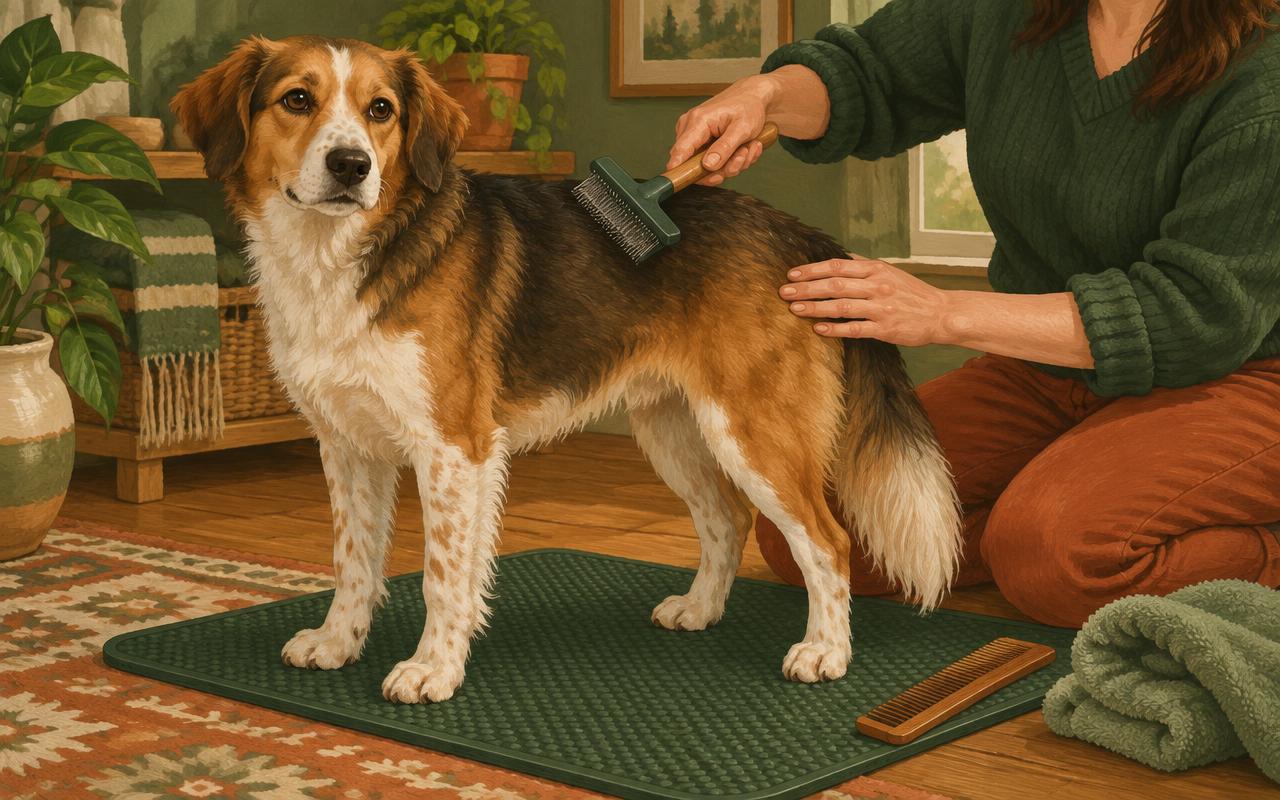
AI-generated editorial illustration of the subject; not a photograph of a specific animal, product or case.
Practical decisions at a glance
| Situation | Safer next step |
|---|---|
| Tight mats | Get professional help instead of cutting close to skin. |
| Tense handling | Reduce the task and consider pain. |
| Skin change | Seek veterinary assessment, not stronger cosmetic products. |
| Home setup | Use secure traction and prevent falls. |
Use the individual animal’s needs and responses; this is educational guidance, not a diagnosis or a guaranteed outcome.
Choose tools for coat and comfort
Coats vary widely: a short coat, dense undercoat, curls and long furnishings need different approaches. Ask a groomer or veterinarian which brush and comb suit your dog rather than buying based on breed labels alone. Check that tools have no sharp edges or damaged teeth. Work gently in small areas, following the direction of growth initially, and inspect the skin as you go. Grooming should not cause pain; mats close to skin may require professional removal rather than pulling or cutting at home.
Make handling a calm learned skill
Introduce the brush, comb, nail tool and dryer as separate experiences, paired with food or calm attention when appropriate. Let the dog sniff equipment and start with a brief touch before attempting a full session. Stop if the dog stiffens, growls, repeatedly tries to escape or seems painful. Punishment can make future handling harder and may hide warning signals. A cooperative-care routine develops through repetition at the dog’s pace, not by restraining an increasingly distressed animal.
Check ears, eyes, paws and nails thoughtfully
During grooming, look for redness, unusual smell, discharge, sores, parasites or sensitivity, but do not probe inside the ear canal. Clean ears only as advised for that dog; unnecessary products can irritate. Wipe visible dirt around eyes with a clean damp cloth, using a fresh area for each eye. Check between toes and around pads for debris or cracks. Nail length and trimming approach vary; if you are unsure where to cut, ask a professional to demonstrate rather than risking a painful injury.
Bathing and professional grooming
Bathe when the coat is dirty or the dog’s care plan calls for it, using a dog-appropriate product and preventing water from entering ears. Rinse thoroughly and dry carefully, especially in dense coats and skin folds. Human shampoo can be unsuitable. Some coats need regular clipping or careful dematting, and a qualified groomer can advise on realistic maintenance between visits. Seek veterinary advice for persistent itching, sores, hair loss, painful mats or changes in skin condition; grooming alone does not treat an underlying problem.
Work through tangles without causing pain
Check friction areas such as behind ears, under collars, in armpits, around the tail and between legs. Use fingers to assess whether a tangle is loose or tight, and work from the ends in small sections only when the dog remains comfortable. Do not pull a mat against the skin or use scissors to cut it out; skin can be caught in the knot. Tight mats, extensive tangling or a dog that cannot tolerate handling are reasons to use an experienced groomer or veterinarian. Keep sessions short and pause before fatigue or frustration takes over.
Make nail care and records manageable
Inspect paws in good light and handle each foot briefly during relaxed moments, rewarding stillness. If trimming is needed, ask a veterinary professional or groomer to show the safe angle and amount for your dog’s nails; dark nails and movement make guessing risky. Stop if a nail is cracked, bleeding or painful and seek guidance. Keep a note of tools used, areas that cause discomfort and how often maintenance is needed. That record helps a groomer tailor appointments and lets you notice a new sensitivity, lump or skin change without repeatedly probing it.
Prepare the surface and the exit
Use a stable, non-slip area with safe access and enough room to work without twisting the dog’s limbs. An elevated table creates a fall risk and needs appropriate professional equipment and handling; a comfortable floor-level setup may be safer at home. Keep tools within reach so you do not leave the animal unattended. Let the dog move away during practice and avoid a tether that tightens when it struggles. Separate curious children and pets. Equipment should make the task easier, not replace learning or conceal pain when a dog cannot tolerate contact.
Check the skin beneath the coat
Part the coat gently in manageable areas and notice changes in smell, redness, moisture, sores or tenderness. Do not scrub repeatedly to remove something that may be a skin lesion. Wet coats, skin folds and areas under equipment need careful drying according to the dog’s needs. If irritation persists, stop cosmetic work on that area and ask a vet. A groomer can help with coat maintenance, but lumps, painful ears, new hair loss and recurrent itching require a medical assessment rather than stronger shampoo or more forceful brushing.
Practise one small handling task
Break care into separate skills: noticing a brush, accepting a brief shoulder touch, allowing a paw to be held momentarily or hearing a tool at a comfortable distance. Pair an easy step with a suitable reward and stop before struggling begins. A dog that refuses food or becomes still and tense may not be coping. Reduce the task rather than treating stillness as permission. Urgent coat care for a badly matted or painful dog needs professional planning; weeks of home practice should not delay necessary relief of discomfort.
Coordinate home maintenance with professional care
Ask the groomer to demonstrate the tools, direction and small sections appropriate for this coat, and describe any recent illness, skin problem or handling difficulty. Agree what can safely be done between visits and what should be left to a professional. Do not cut close mats with scissors because folded skin can lie inside them. Keep notes on new discomfort and changes in tolerance. Follow veterinary directions for medicated bathing; product concentration and contact instructions are specific, not an invitation to use more. Review the arrangement as the dog ages or mobility changes.
- Inspect tools for damaged teeth and sharp edges.
- Stop and seek advice for pain, bleeding or persistent skin irritation.
Frequently asked questions
- Can I cut a tight mat away with scissors?
- Do not cut close to the body; skin can be trapped in the mat. Seek professional removal.
- Does a dog standing still mean it is comfortable?
- Not always. Tension, freezing and avoidance need a gentler step and a review of discomfort.
- How often should every dog be bathed?
- There is no universal interval. Coat condition, health and any prescribed plan determine what is suitable.
- Should I clean inside the ear canal?
- Do not probe it. Ask your vet about appropriate ear care for this dog.
References
- Dog advice and training — Dogs Trust
- Pet health advice — PDSA