
Fruit
Watermelon
A hydrating summer fruit that dogs can enjoy in moderation — flesh only.
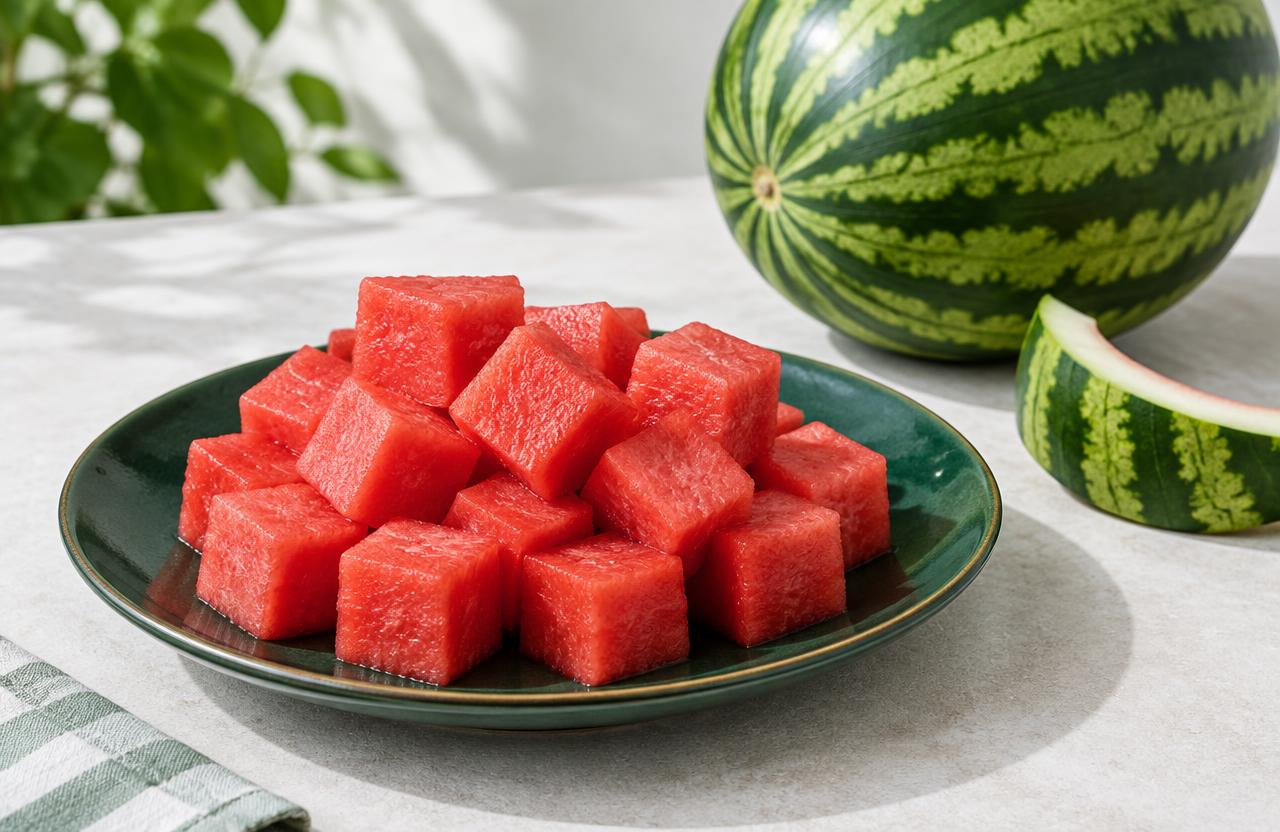
AI-generated editorial illustration; not a clinical demonstration or documentary photograph.
Who can eat it
Not suitable for
Benefits
- Over 90% water — helps hydration in hot weather
- Low calorie for a fruit
- Most dogs love it
Risks
- Rind causes intestinal blockage — never feed
- Seeds can obstruct small dogs
- Sugar content means moderation
Preparation and serving
- Preparation
- Remove rind and seeds; cut flesh into chunks. Frozen chunks make a hot-day treat.
- Serving guidance
- A few chunks for a medium dog, occasionally.
Watermelon: flesh only, with rind and seeds removed
| Decision | Practical guidance |
|---|---|
| Prepared plain flesh | Optional dog treat in the feeding plan. |
| Rind and seeds | Remove before offering and secure discarded parts. |
| Heat illness or dehydration | Fruit is not treatment; seek appropriate care. |
| Thick frozen block | Do not assume it is a safe chew. |
| Drinks and fruit mixtures | Assess actual ingredients separately. |
This is general feeding information, not an individually formulated diet.
Watermelon: flesh only, with rind and seeds removed
Plain watermelon flesh can be an occasional treat for some dogs. Its water content does not make it a treatment for dehydration, and it cannot replace access to clean drinking water or a complete diet.
Choose plain ingredients and treat the food as an optional addition rather than a substitute for the animal’s complete, species-appropriate everyday diet. Needs vary with species, age, body condition and health. Where the diet is restricted, the animal is growing, pregnant, or has ongoing illness, check with the treating veterinary team before making a routine change.
Preparation, portions and when to ask
Remove rind and seeds, then cut flesh into small pieces appropriate to the animal. Rind is tough and can be difficult to digest; seeds may be a choking or obstruction concern, particularly for small animals. Avoid sweetened or seasoned preparations and keep portions modest.
Keep a fruit treat distinct from hydration care
A hot animal needs an appropriate cooling and veterinary response, not repeated watermelon servings. Keep clean drinking water available and use species-appropriate temperature management; lethargy, collapse or breathing distress in heat requires urgent advice. Fruit can be an optional taste for an appropriate healthy dog, but it is not an oral rehydration solution and its sugar matters within the total diet. A dog on a diabetes or weight-management plan needs permission from the treating team before a new routine extra is added. The same applies to ongoing digestive disease.
Prepare the serving away from the dog so rind, seeds and discarded pieces cannot be snatched during cutting. Even seedless fruit may contain seeds; inspect the flesh and cut it into manageable pieces. Do not allow access to a whole wedge or treat a thick frozen block as a safe chew. Watermelon drinks, syrups, sweets and mixed fruit salads require a separate ingredient assessment. If rind or another substantial foreign object has been swallowed, contact the clinic with its approximate size and timing. Apparent comfort immediately afterward does not exclude an obstruction developing later.
Sources for this reference
AI-assisted educational guidance, updated 19 October 2026. Not professionally reviewed; sources do not imply endorsement of this page.
Before offering watermelon
- Check the exact animal and preparation: the listed suitability is Dogs. A food being edible does not make it a complete diet.
- Follow the preparation advice: Remove rind and seeds; cut flesh into chunks. Frozen chunks make a hot-day treat. Do not substitute a seasoned or processed version and assume the same safety.
- Portion guidance: A few chunks for a medium dog, occasionally. For a pet on a prescribed diet, discuss extras with the vet first.
- If your pet develops vomiting, diarrhoea or discomfort, stop offering the extra and seek advice. Suspected poisoning or breathing difficulty needs immediate veterinary help.
Educational reference, not an individual diagnosis or a verified professional review. Read our editorial policy.
Guidance libraries and further reading
These organisations publish relevant guidance. Their links are further reading, not evidence that they have reviewed this page.
- WSAVA — global veterinary guidelines on nutrition, vaccination, pain and dental care
- PDSA — veterinary charity pet health advice
- Dogs Trust — dog care, behaviour and welfare advice