
Fruit
Blackberries
A safe, fibre-rich berry for dogs and, in tiny amounts, small pets.
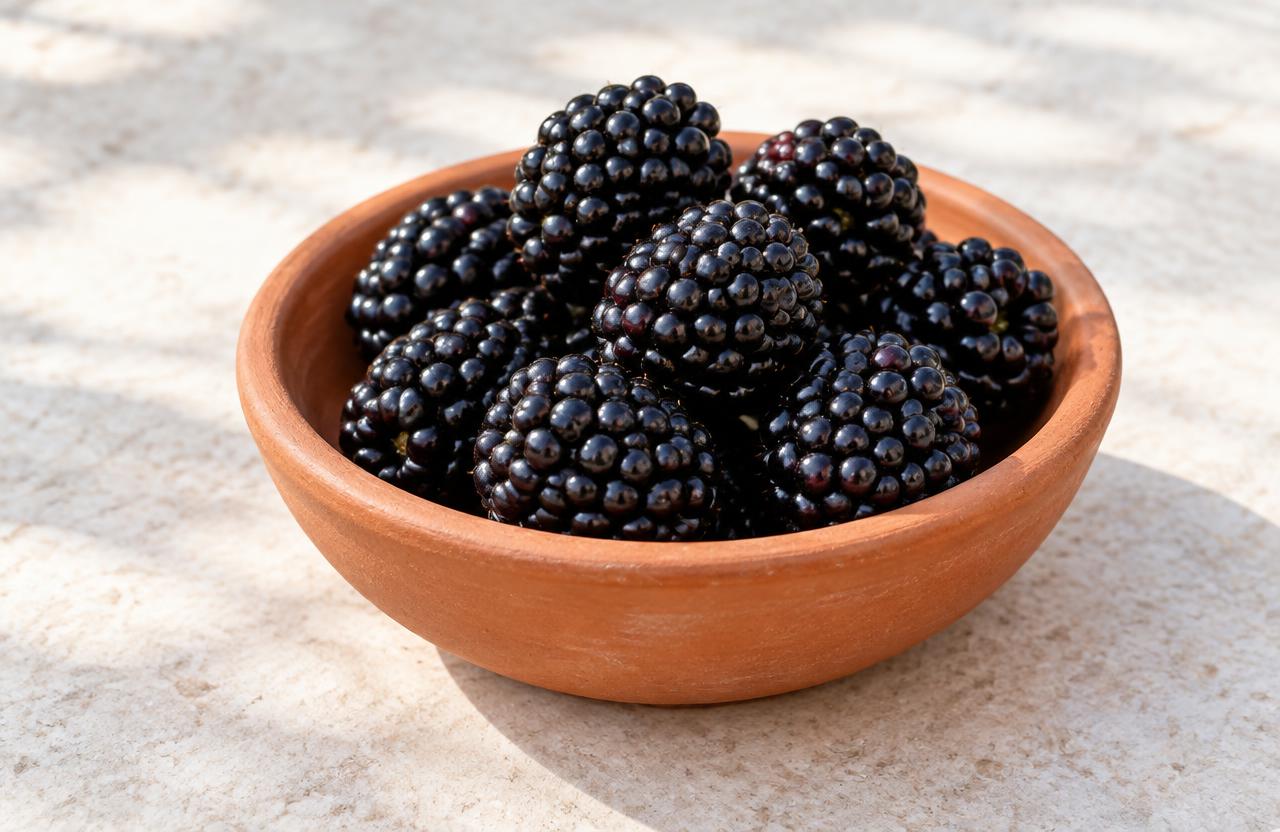
AI-generated editorial illustration; not a clinical demonstration or documentary photograph.
Who can eat it
Not suitable for
Benefits
- Fibre and vitamin C
- Lower sugar than many fruits
Risks
- Too many cause loose stools
- Wild berries near roads may carry pesticides
Preparation and serving
- Preparation
- Wash well; halve for small animals.
- Serving guidance
- A few berries for a medium dog; one berry for a rabbit, occasionally.
Blackberries: wash and offer sparingly
| Decision | Practical guidance |
|---|---|
| Fresh identified berries | Wash; offer a small optional taste. |
| Thorny or treated hedges | Prevent browsing; avoid uncertain contamination. |
| Mould or spoilage | Discard the fruit. |
| Rabbit or guinea pig | Fruit must not displace hay and normal food. |
| Jam or mixed products | Check the whole product, not just its fruit name. |
This is general feeding information, not an individually formulated diet.
Blackberries: wash and offer sparingly
A blackberry can be a small occasional taste for a suitable dog; fruit is not needed for nutritional completeness. For rabbits and guinea pigs, fruit should be particularly limited and should never displace suitable forage, hay or the established species-appropriate diet.
Choose plain ingredients and treat the food as an optional addition rather than a substitute for the animal’s complete, species-appropriate everyday diet. Needs vary with species, age, body condition and health. Where the diet is restricted, the animal is growing, pregnant, or has ongoing illness, check with the treating veterinary team before making a routine change.
Preparation, portions and when to ask
Wash fresh fruit thoroughly and remove mouldy or damaged berries. Start with a small piece and monitor appetite and droppings; excess fruit can upset digestion. Avoid sweetened, baked or mixed products where other ingredients change the assessment.
Keep fresh berries separate from garden hazards
Offer only correctly identified, clean blackberries rather than fruit collected from an uncertain hedge. Avoid berries exposed to pesticide applications, roadside pollution or mould, and do not let a dog browse through thorny stems to obtain them. Remove leaves, stalks and packaging before serving the fruit. Wash shortly before offering and keep the remainder refrigerated according to normal food-hygiene practice. A mouldy berry should be discarded, not trimmed to make a pet treat. Jam, pie filling, syrup and sweetened dried fruit are not equivalent to fresh berries.
Blackberries are optional variety, not a proven treatment for inflammation or a reason to add an antioxidant supplement. A healthy dog can receive a small taste within its normal treat allowance, but the individual feeding plan takes priority over internet berry counts. Rabbits and guinea pigs should not fill up on sweet fruit at the expense of grass hay and their established foods. Watch each animal in shared housing rather than assuming everyone ate the same amount. If the animal becomes unwell, stop extras and describe the changes to the veterinary team rather than trying a different berry.
Sources for this reference
AI-assisted educational guidance, updated 19 October 2026. Not professionally reviewed; sources do not imply endorsement of this page.
Before offering blackberries
- Check the exact animal and preparation: the listed suitability is Dogs; Rabbits (tiny amounts); Guinea pigs (tiny amounts). A food being edible does not make it a complete diet.
- Follow the preparation advice: Wash well; halve for small animals. Do not substitute a seasoned or processed version and assume the same safety.
- Portion guidance: A few berries for a medium dog; one berry for a rabbit, occasionally. For a pet on a prescribed diet, discuss extras with the vet first.
- If your pet develops vomiting, diarrhoea or discomfort, stop offering the extra and seek advice. Suspected poisoning or breathing difficulty needs immediate veterinary help.
Educational reference, not an individual diagnosis or a verified professional review. Read our editorial policy.
Guidance libraries and further reading
These organisations publish relevant guidance. Their links are further reading, not evidence that they have reviewed this page.