
Fruit
Pear
A safe, fibre-rich fruit for dogs when the core and seeds are removed.
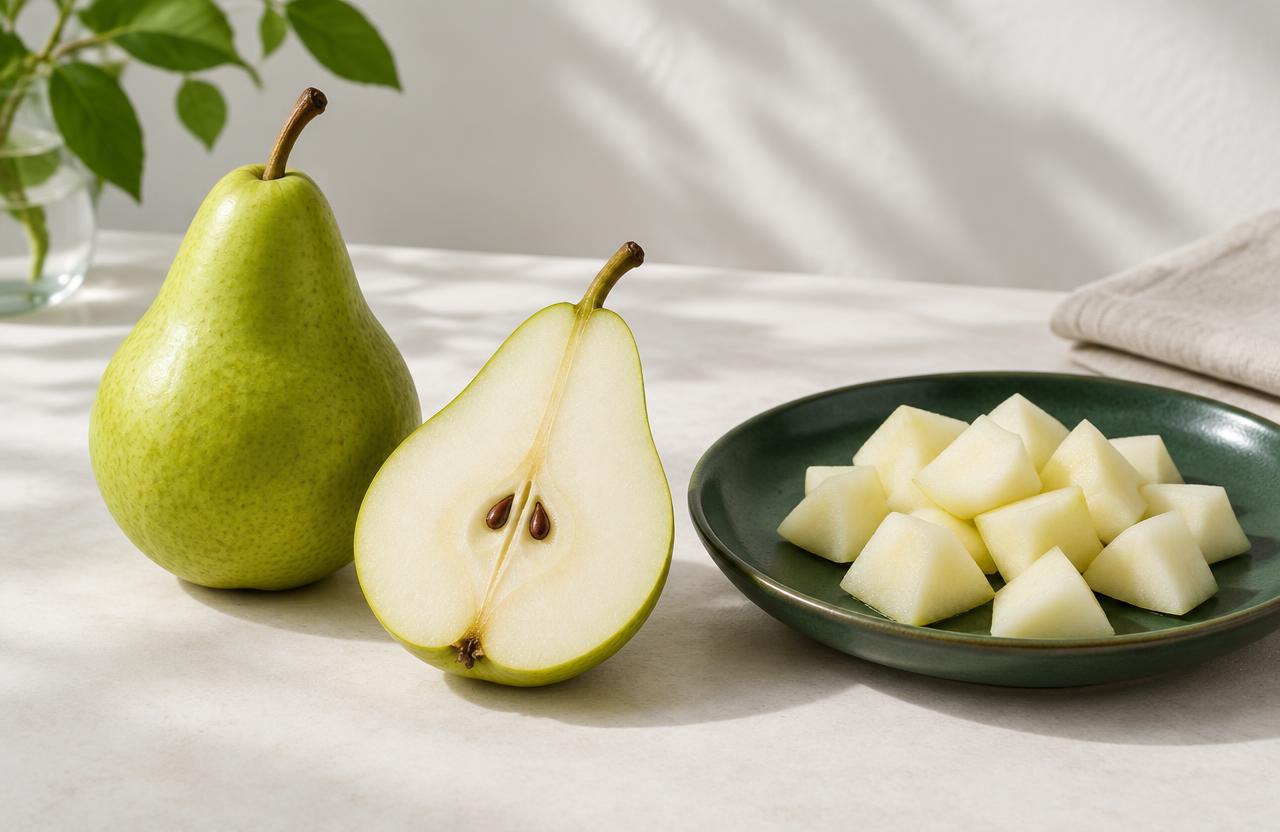
AI-generated editorial illustration; not a clinical demonstration or documentary photograph.
Who can eat it
Not suitable for
Benefits
- Fibre and vitamin C
- Sweet treat most dogs enjoy
Risks
- Seeds contain trace cyanide compounds — always core
- Tinned pears in syrup are too sugary
- Too much causes loose stools
Preparation and serving
- Preparation
- Wash, core and seed, cut into bite-sized pieces. Fresh only — no syrup or dried sweetened pear.
- Serving guidance
- A few pieces for a medium dog, occasionally.
Pear: remove core and serve plain
| Decision | Practical guidance |
|---|---|
| Fresh flesh | Wash and cut into manageable pieces. |
| Core, stem and seeds | Remove and keep waste out of reach. |
| Whole pear as a toy | Avoid uncontrolled chewing and swallowing. |
| Syrup, pastries or dried fruit | Fresh-fruit guidance does not cover the product. |
| Treats accepted but meals refused | Sweet-food appetite does not exclude illness. |
This is general feeding information, not an individually formulated diet.
Pear: remove core and serve plain
Fresh pear flesh can be an occasional treat for a suitable dog, not a nutritional requirement. Fruit portions should be modest and included in the broader feeding plan, particularly where weight or blood-sugar management matters.
Choose plain ingredients and treat the food as an optional addition rather than a substitute for the animal’s complete, species-appropriate everyday diet. Needs vary with species, age, body condition and health. Where the diet is restricted, the animal is growing, pregnant, or has ongoing illness, check with the treating veterinary team before making a routine change.
Preparation, portions and when to ask
Wash, remove the core and seeds, and cut into bite-sized pieces. Do not offer the stem or a whole pear to a small animal. Tinned pear in syrup and sweetened dried fruit are different products; avoid them as substitutes for fresh plain fruit.
Control access to cores and processed fruit
Prepare pear away from the animal and discard the stem, core and seeds securely before offering flesh. A dog reaching into the bin can swallow material very different from the small prepared taste. Cut pieces for the individual’s mouth and chewing style, and do not throw a whole pear as a toy. Remove rotten or mouldy portions and wash fresh fruit. The edible flesh is optional; pear does not need to be added to a suitable complete food, and its sweetness should be considered alongside every other treat offered that day.
Tinned pears in syrup, pear pastries, sweetened dried pears and fruit drinks should not inherit the fresh-fruit label. Additional ingredients, concentration and portion size change the assessment. If a dog eats an uncertain product, save the packaging and call the clinic about the actual exposure rather than searching only for the fruit name. Animals with diabetes, digestive illness or a food-elimination trial need individual guidance before extras. A dog that refuses normal meals but accepts pear may still be unwell: appetite for a sweet treat does not rule out pain or disease.
Sources for this reference
AI-assisted educational guidance, updated 19 October 2026. Not professionally reviewed; sources do not imply endorsement of this page.
Before offering pear
- Check the exact animal and preparation: the listed suitability is Dogs. A food being edible does not make it a complete diet.
- Follow the preparation advice: Wash, core and seed, cut into bite-sized pieces. Fresh only — no syrup or dried sweetened pear. Do not substitute a seasoned or processed version and assume the same safety.
- Portion guidance: A few pieces for a medium dog, occasionally. For a pet on a prescribed diet, discuss extras with the vet first.
- If your pet develops vomiting, diarrhoea or discomfort, stop offering the extra and seek advice. Suspected poisoning or breathing difficulty needs immediate veterinary help.
Educational reference, not an individual diagnosis or a verified professional review. Read our editorial policy.
Guidance libraries and further reading
These organisations publish relevant guidance. Their links are further reading, not evidence that they have reviewed this page.
- WSAVA — global veterinary guidelines on nutrition, vaccination, pain and dental care
- PDSA — veterinary charity pet health advice
- Dogs Trust — dog care, behaviour and welfare advice