
Fruit
Raspberries
A safe berry in small amounts; contains trace natural xylitol, so portions stay modest.
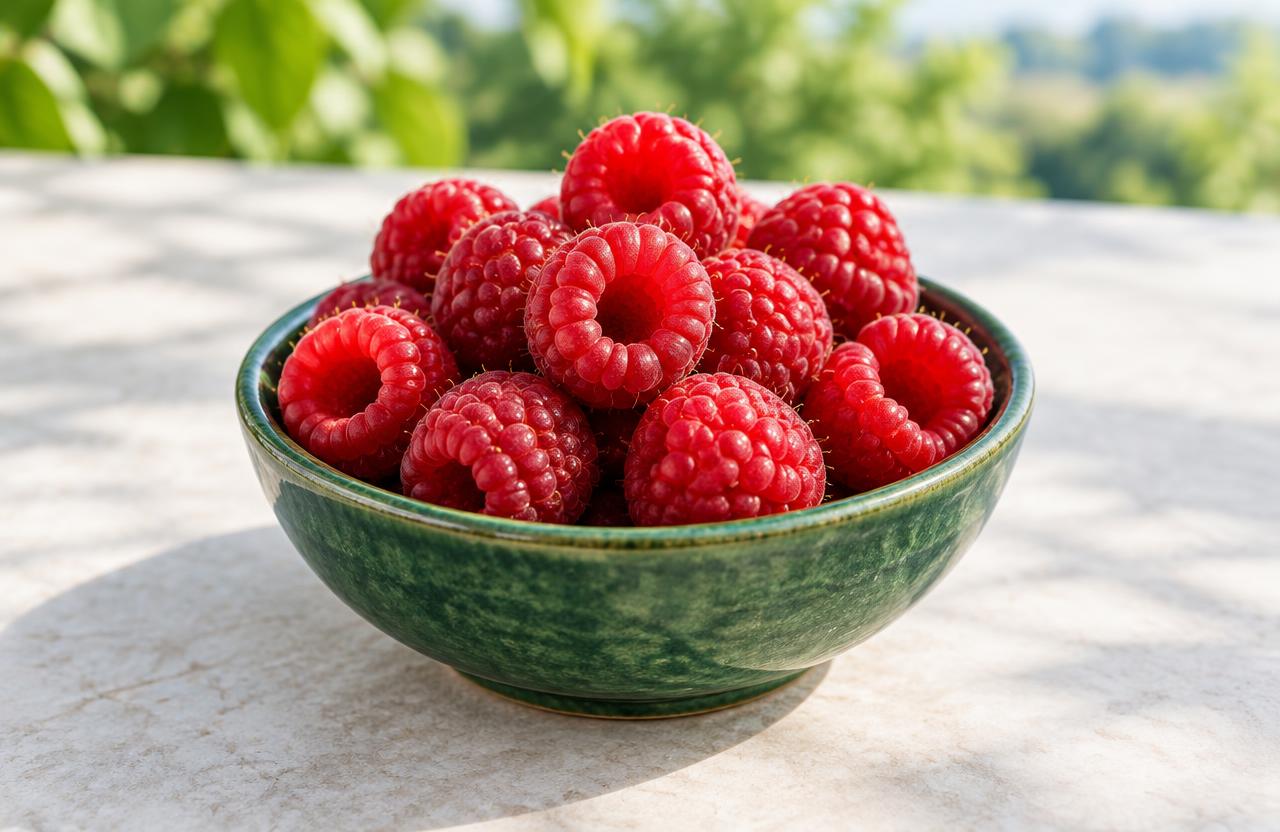
AI-generated editorial illustration; not a clinical demonstration or documentary photograph.
Who can eat it
Not suitable for
Benefits
- Fibre and antioxidants
- Low calorie
Risks
- Natural xylitol content means only small amounts
- Digestive upset if overfed
Preparation and serving
- Preparation
- Wash and serve fresh or frozen.
- Serving guidance
- A handful at most for a large dog; a few for a small dog.
Raspberries: a small treat, not a health intervention
| Decision | Practical guidance |
|---|---|
| Fresh plain berries | An optional small treat, not a health treatment. |
| Mouldy berries | Discard rather than trim. |
| Sugar-free mixed products | Check for added xylitol and other ingredients. |
| Possible xylitol in a dog | Call a veterinarian promptly; retain packaging. |
| Herbivore feeding | Limit fruit; keep hay and normal food central. |
This is general feeding information, not an individually formulated diet.
Raspberries: a small treat, not a health intervention
Raspberries may be an occasional small treat for dogs and a very limited fruit taste for some herbivores. Their nutrients do not make them a treatment or a necessary supplement, and treats should remain a modest part of the total feeding plan.
Choose plain ingredients and treat the food as an optional addition rather than a substitute for the animal’s complete, species-appropriate everyday diet. Needs vary with species, age, body condition and health. Where the diet is restricted, the animal is growing, pregnant, or has ongoing illness, check with the treating veterinary team before making a routine change.
Preparation, portions and when to ask
Wash and serve plain, fresh fruit in a portion suited to the individual. Large quantities may cause digestive upset; raspberries contain naturally occurring xylitol, so avoid generous servings and never confuse fruit with products containing added xylitol. Contact a vet if an animal becomes unwell.
Distinguish an ordinary berry from sweetener poisoning
A fresh raspberry and a food containing added xylitol are different exposures. Do not apply a safe fruit-serving assumption to sugar-free jam, sweets, baked foods or yoghurt; check the complete ingredients and call a veterinarian promptly if added xylitol may have been eaten by a dog. Keep the package available. Equally, an ordinary small fruit taste is not a reason to claim that raspberries are a poisoning treatment or to create a universal emergency berry count. Assessment depends on the actual product, quantity and animal, not the word raspberry on a label.
Wash fresh berries gently and discard mouldy or spoiled fruit. Their delicate shape makes portions easy to crush, but softness does not guarantee suitability for an animal with mouth pain or swallowing problems. Offer only as a small optional extra and keep the usual food primary. Sweet fruit should be especially limited in rabbit and guinea pig diets, where grass hay and a species-appropriate feeding plan remain central. Monitor the individual’s appetite and droppings, not only enthusiasm for fruit. Seek advice for persistent changes and do not use berries to mask a refusal of normal food.
Sources for this reference
AI-assisted educational guidance, updated 19 October 2026. Not professionally reviewed; sources do not imply endorsement of this page.
Before offering raspberries
- Check the exact animal and preparation: the listed suitability is Dogs (small amounts); Rabbits (tiny amounts); Guinea pigs (tiny amounts). A food being edible does not make it a complete diet.
- Follow the preparation advice: Wash and serve fresh or frozen. Do not substitute a seasoned or processed version and assume the same safety.
- Portion guidance: A handful at most for a large dog; a few for a small dog. For a pet on a prescribed diet, discuss extras with the vet first.
- If your pet develops vomiting, diarrhoea or discomfort, stop offering the extra and seek advice. Suspected poisoning or breathing difficulty needs immediate veterinary help.
Educational reference, not an individual diagnosis or a verified professional review. Read our editorial policy.
Guidance libraries and further reading
These organisations publish relevant guidance. Their links are further reading, not evidence that they have reviewed this page.