
Vegetable
Parsley
Safe in small amounts for rabbits, guinea pigs and dogs; a flavourful garnish, not a staple.
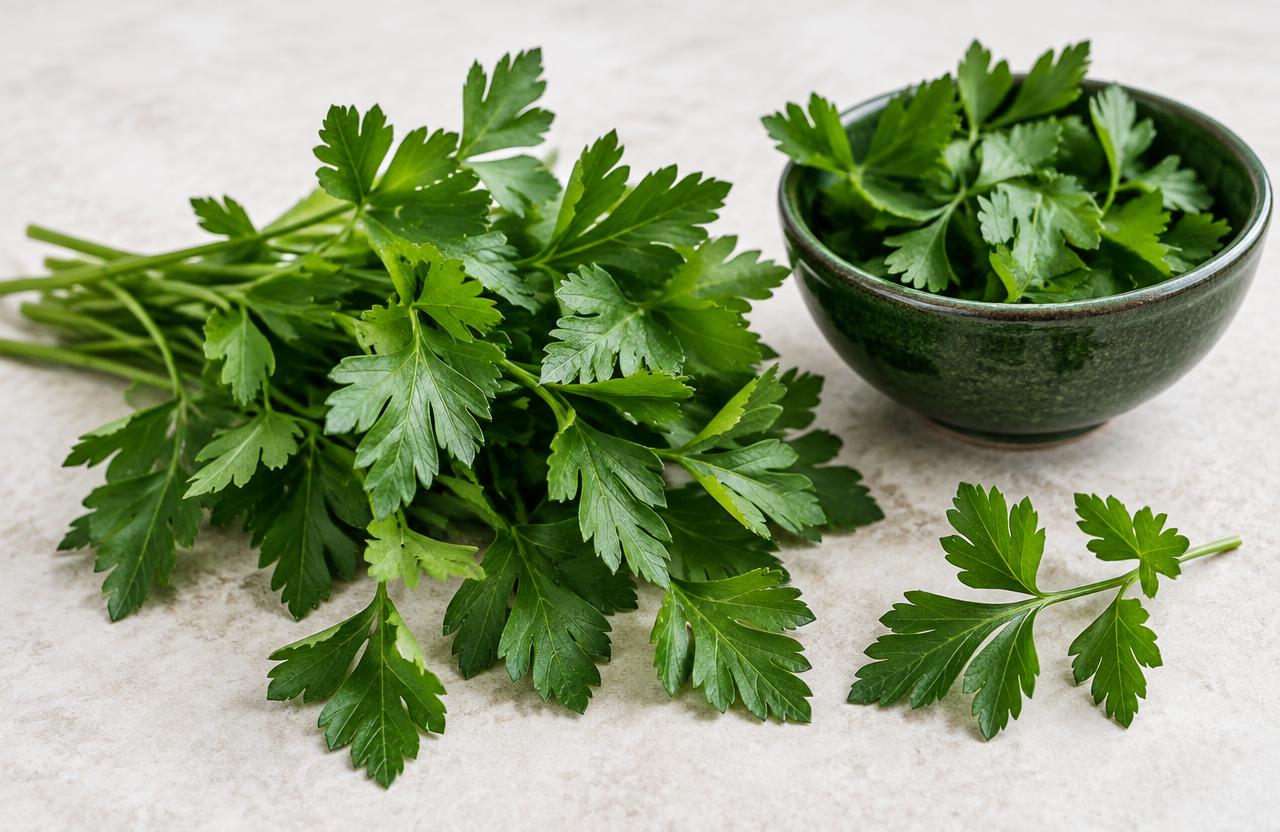
AI-generated editorial illustration; not a clinical demonstration or documentary photograph.
Who can eat it
Not suitable for
Benefits
- Aromatic herb many rabbits and guinea pigs enjoy
- Source of vitamin C
Risks
- High in calcium and oxalates — small amounts only
Preparation and serving
- Preparation
- Washed, fresh.
- Serving guidance
- A sprig or two at a time, a few times a week.
Parsley: garnish rather than a staple
| Decision | Practical guidance |
|---|---|
| Known culinary parsley | Wash and offer only within a species-appropriate plan. |
| Unidentified lookalike | Do not offer; obtain reliable identification. |
| Rabbit diet | Hay remains central; parsley is one possible green. |
| Guinea pig diet | Assess the whole vitamin C supply. |
| Extracts or urinary illness | Do not treat with herbs; ask the veterinarian. |
This is general feeding information, not an individually formulated diet.
Parsley: garnish rather than a staple
Fresh parsley can be offered in small amounts to some rabbits, guinea pigs, dogs and birds, but suitability depends on species and the full diet. It is not a substitute for hay, a balanced feed or an individually planned vitamin and mineral supply.
Choose plain ingredients and treat the food as an optional addition rather than a substitute for the animal’s complete, species-appropriate everyday diet. Needs vary with species, age, body condition and health. Where the diet is restricted, the animal is growing, pregnant, or has ongoing illness, check with the treating veterinary team before making a routine change.
Preparation, portions and when to ask
Wash leaves, offer a small quantity and introduce only one new food at a time. Parsley is relatively rich in calcium and oxalates; avoid large or frequent portions, especially when an animal has urinary or other medical concerns. Ask the veterinarian about pregnancy or a prescribed diet.
Identify the herb and the animal before offering it
Use correctly identified culinary parsley from a dependable food source, not a roadside plant that resembles it. Common names and leaf shape alone do not establish that an unfamiliar plant is edible. Wash sprigs and remove spoiled material, ties and packaging. Keep concentrated parsley oils, extracts and supplements separate from fresh-leaf guidance: their composition and dose are different. A herb described as natural is not automatically safe. Do not use parsley to treat bad breath, urinary problems or digestive disease; those changes may require an examination.
For a rabbit, parsley belongs within an established varied greens plan alongside continuous access to suitable grass hay. For a guinea pig, the whole diet still needs a dependable vitamin C supply. A parrot’s suitable foods depend on its species; a general birds label is not a feeding prescription. If urinary stones or sludge have been diagnosed, ask the treating team to assess the entire diet rather than banning or increasing one leaf independently. Keep a record of foods offered and normal appetite and droppings so new changes can be described accurately.
Sources for this reference
AI-assisted educational guidance, updated 19 October 2026. Not professionally reviewed; sources do not imply endorsement of this page.
Before offering parsley
- Check the exact animal and preparation: the listed suitability is Rabbits; Guinea pigs; Dogs; Birds. A food being edible does not make it a complete diet.
- Follow the preparation advice: Washed, fresh. Do not substitute a seasoned or processed version and assume the same safety.
- Portion guidance: A sprig or two at a time, a few times a week. For a pet on a prescribed diet, discuss extras with the vet first.
- If your pet develops vomiting, diarrhoea or discomfort, stop offering the extra and seek advice. Suspected poisoning or breathing difficulty needs immediate veterinary help.
Educational reference, not an individual diagnosis or a verified professional review. Read our editorial policy.
Guidance libraries and further reading
These organisations publish relevant guidance. Their links are further reading, not evidence that they have reviewed this page.