
Vegetable
Pumpkin (plain, cooked)
Soluble and insoluble fibre with beta-carotene, potassium and high water content.
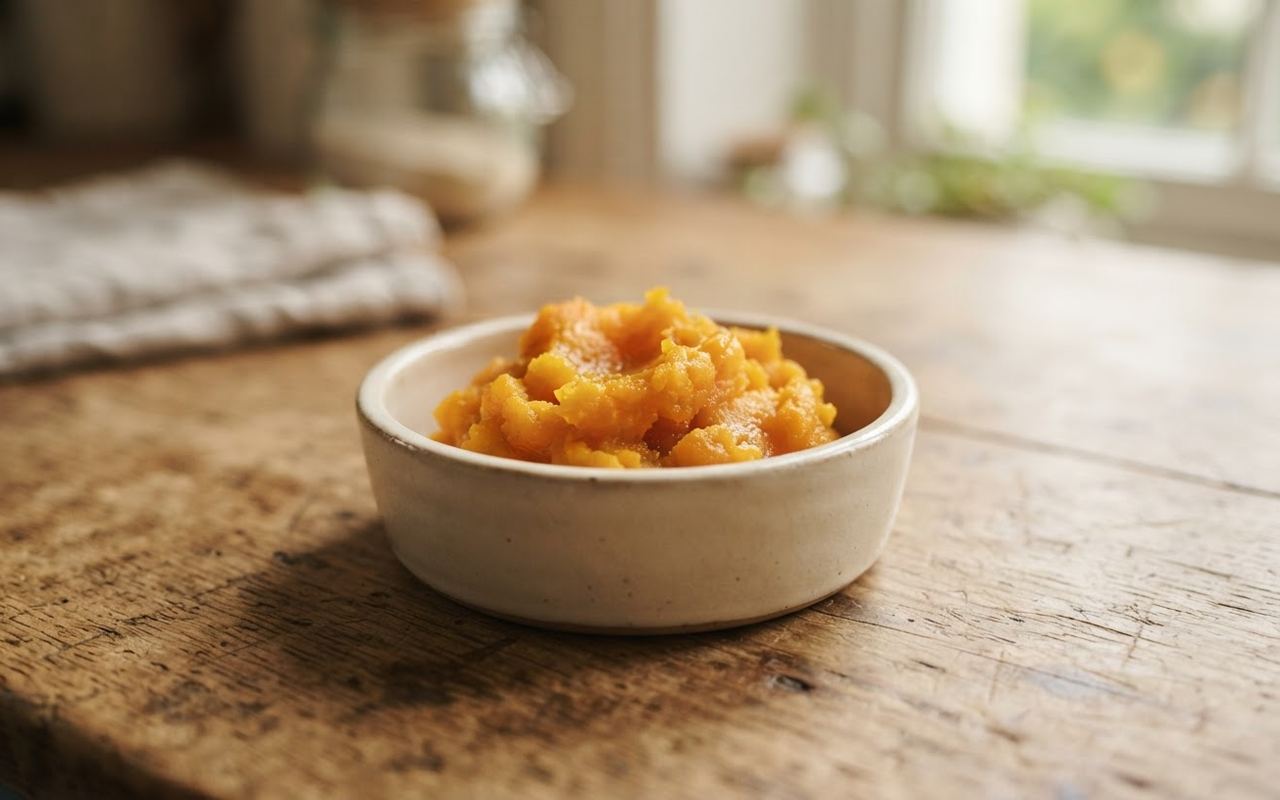
AI-generated editorial illustration of the subject; not a photograph of a specific animal, product or case.
Who can eat it
DogsCatsParrots (plain, small amounts)
Not suitable for
Obligate insectivoresRabbits, guinea pigs and tortoises: offer only an occasional small piece of raw flesh, not cooked or tinned pumpkin
Benefits
- Helps firm loose stools and ease mild constipation
- Low calorie bulk for weight management
- Well tolerated by sensitive stomachs
Risks
- Pumpkin pie filling contains sugar and spices, including nutmeg, and is unsafe
- Too much fibre can cause gas or reduce nutrient absorption
Preparation and serving
- Preparation
- Plain cooked or tinned pure pumpkin with no additives.
- Serving guidance
- One to four tablespoons daily for dogs depending on size; a teaspoon for cats.
Before offering pumpkin (plain, cooked)
- Check the exact animal and preparation: the listed suitability is Dogs; Cats; Parrots (plain, small amounts). A food being edible does not make it a complete diet.
- Follow the preparation advice: Plain cooked or tinned pure pumpkin with no additives. Do not substitute a seasoned or processed version and assume the same safety.
- Portion guidance: One to four tablespoons daily for dogs depending on size; a teaspoon for cats. For a pet on a prescribed diet, discuss extras with the vet first.
- If your pet develops vomiting, diarrhoea or discomfort, stop offering the extra and seek advice. Suspected poisoning or breathing difficulty needs immediate veterinary help.
Educational reference, not an individual diagnosis or a verified professional review. Read our editorial policy.
Guidance libraries and further reading
These organisations publish relevant guidance. Their links are further reading, not evidence that they have reviewed this page.
- WSAVA — global veterinary guidelines on nutrition, vaccination, pain and dental care
- PDSA — veterinary charity pet health advice
- International Cat Care — cat health, behaviour and welfare advice