
Fruit
Mango
Plain ripe mango flesh can be an occasional extra for a healthy dog. The stone and skin are not part of the serving, and mango is not a complete diet.
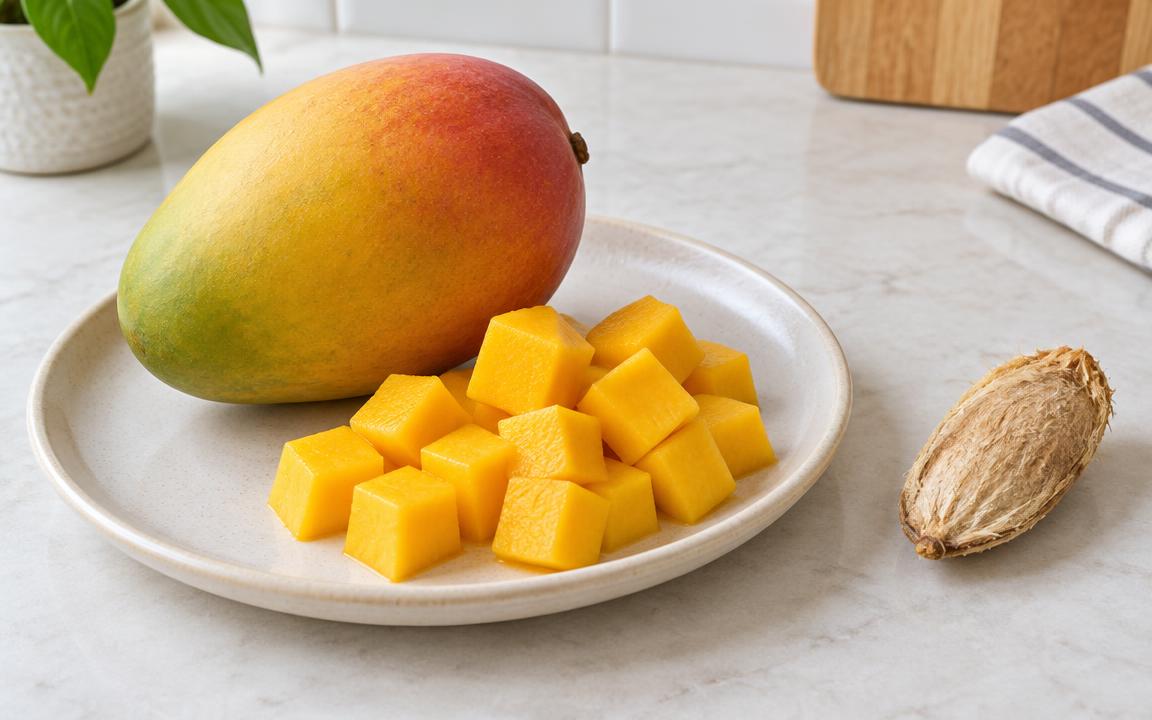
AI-generated editorial illustration; not a clinical demonstration or documentary photograph.
Who can eat it
Not suitable for
Benefits
- Offers flavour and texture variety as an optional extra; dogs do not need mango for a balanced diet.
Risks
- The stone can cause choking or an intestinal obstruction.
- Large servings can upset digestion and add unwanted calories.
- Mango products may contain added sugar, seasonings or unsuitable ingredients.
Preparation and serving
- Preparation
- Wash, peel and remove the entire stone. Offer only plain ripe flesh cut into pieces appropriate to the dog's size and chewing ability.
- Serving guidance
- Start with a small taste, not a handful. Keep all extras within the individual feeding plan and ask your vet before offering it to a dog with a medical condition.
Mango: separate the preparation from the risk
| Form | Decision |
|---|---|
| Plain ripe flesh | Optional small extra for an appropriate healthy adult dog. |
| Stone | Remove entirely; choking and blockage risk. |
| Peel | Do not include in the serving. |
| Processed mango products | Do not assume fresh-fruit guidance applies. |
| Medical or restricted diet | Ask the treating veterinary team before extras. |
No universal cube count suits every dog. Suspected obstruction needs veterinary advice, not home remedies.
Mango is an extra, not a nutritional requirement
A healthy adult dog can sometimes enjoy plain ripe mango flesh, but the fruit does not need to be added to an already suitable complete diet. Its vitamins do not make it a treatment for illness or a reason to replace the usual food. Consider the whole day's intake, including training rewards and other treats, rather than counting mango separately from everything else.
A dog with diabetes, weight concerns, digestive disease, a food trial or another prescribed feeding plan needs individual advice before extras are introduced. Soft fruit is not automatically suitable for a dog with dental problems or swallowing difficulty. If eating has become painful or appetite has changed, arrange an assessment rather than looking for softer treats alone.
Prepare the actual fruit, not a mango-flavoured product
Wash the fruit, remove the peel and separate the entire stone before letting the dog near the serving. Cut flesh into small pieces suited to the individual's mouth and chewing ability, and start with a taste. A whole slice, a dropped stone or fruit taken from a bin presents a different risk from prepared flesh. Keep preparation areas clear and discard peel and stones in a securely closed bin. Supervise the first offering and put the discarded parts securely out of reach.
Dried mango, chutney, desserts, drinks and sweetened packaged products should not inherit the fresh fruit's suitability label. Read ingredients, but do not use the list to improvise a safety verdict when a dog has eaten something uncertain. Stop offering mango if loose stools or discomfort appears. Suspected stone swallowing, choking, repeated vomiting or severe abdominal pain needs prompt veterinary contact, even when the dog initially seems normal.
Preparing mango safely
Remove the skin and the large stone before offering mango; the stone is a choking and intestinal blockage risk. Offer small pieces of ripe flesh only, as an occasional treat within the daily allowance. The sugar content makes it unsuitable as a regular food, and diabetic or overweight pets should be discussed with a veterinarian first. Stop and seek advice if vomiting or diarrhoea follows.
Sources for this reference
AI-assisted educational guidance, updated 15 October 2026. Not professionally reviewed; sources do not imply endorsement of this page.
Before offering mango
- Check the exact animal and preparation: the listed suitability is Healthy adult dogs, occasionally. A food being edible does not make it a complete diet.
- Follow the preparation advice: Wash, peel and remove the entire stone. Offer only plain ripe flesh cut into pieces appropriate to the dog's size and chewing ability. Do not substitute a seasoned or processed version and assume the same safety.
- Portion guidance: Start with a small taste, not a handful. Keep all extras within the individual feeding plan and ask your vet before offering it to a dog with a medical condition. For a pet on a prescribed diet, discuss extras with the vet first.
- If your pet develops vomiting, diarrhoea or discomfort, stop offering the extra and seek advice. Suspected poisoning or breathing difficulty needs immediate veterinary help.
Educational reference, not an individual diagnosis or a verified professional review. Read our editorial policy.
Guidance libraries and further reading
These organisations publish relevant guidance. Their links are further reading, not evidence that they have reviewed this page.
- WSAVA — global veterinary guidelines on nutrition, vaccination, pain and dental care
- PDSA — veterinary charity pet health advice
- Dogs Trust — dog care, behaviour and welfare advice