
Vegetable
Kale
Safe in moderation; best rotated with other greens rather than fed daily.
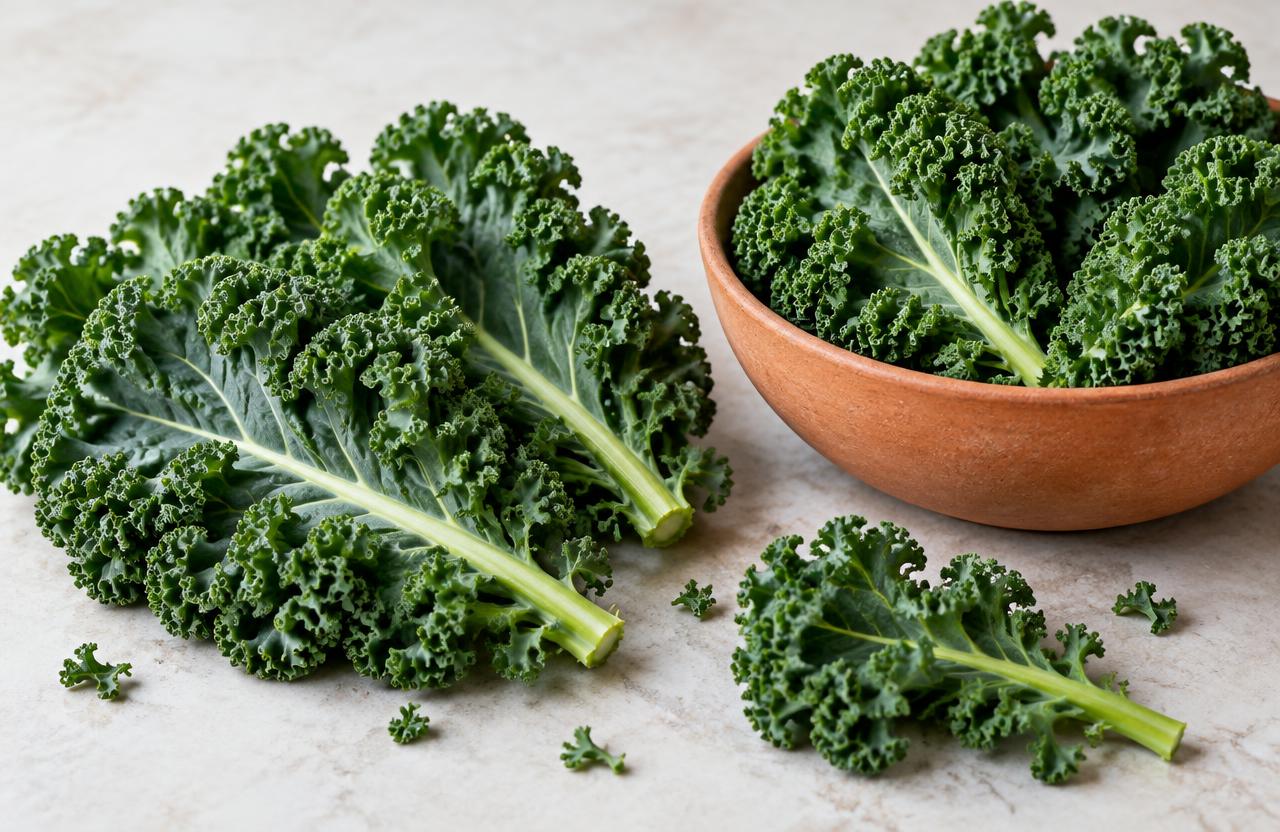
AI-generated editorial illustration; not a clinical demonstration or documentary photograph.
Who can eat it
Not suitable for
Benefits
- Nutrient-dense leafy green
- Useful calcium source for herbivorous reptiles
Risks
- Contains oxalates and goitrogens — rotate, don't feed daily
- Large amounts may irritate the gut
Preparation and serving
- Preparation
- Washed, chopped; raw or lightly steamed.
- Serving guidance
- A small handful of chopped leaves as part of a varied greens mix, two or three times a week.
Kale: rotate rather than rely on one green
| Decision | Practical guidance |
|---|---|
| Species and life stage | Choose greens for the individual, not a superfood claim. |
| Rabbit or guinea pig | Hay and the complete feeding plan remain central. |
| Tortoise or bird | Use species-specific advice, not a general greens rule. |
| Salted or oily kale chips | Not equivalent to plain fresh leaves. |
| Reduced eating or abnormal droppings | Seek advice; do not fast small herbivores. |
This is general feeding information, not an individually formulated diet.
Kale: rotate rather than rely on one green
Kale may be included in small amounts in some species-appropriate varied diets, but it is not a universal staple and does not replace a complete food or appropriate hay. Suitability varies by species and medical history.
Choose plain ingredients and treat the food as an optional addition rather than a substitute for the animal’s complete, species-appropriate everyday diet. Needs vary with species, age, body condition and health. Where the diet is restricted, the animal is growing, pregnant, or has ongoing illness, check with the treating veterinary team before making a routine change.
Preparation, portions and when to ask
Wash, chop and introduce gradually. Large or repeated portions may not suit every animal; discuss regular feeding with a veterinarian for pets with urinary, thyroid, kidney or other conditions. Avoid seasoned, oily or mixed prepared kale dishes.
Choose greens for the species rather than a superfood label
A description of kale as a human superfood says little about whether it belongs in a particular animal’s diet. Rabbits need a hay-centred plan, while guinea pigs need a reliable vitamin C supply and appropriate fibre. Tortoise and bird diets vary substantially by species, so a general leafy-green category cannot establish a suitable daily amount for every animal. Do not replace a prescribed food with kale or use it to treat kidney, thyroid or urinary disease. When medical restrictions exist, discuss the complete feeding plan with a species-experienced veterinarian.
Use correctly identified fresh kale, rinse it well and remove spoiled leaves, ties and packaging. Introduce a small addition alongside familiar foods, not several new greens at once. Kale chips, salted roasted leaves and oily prepared dishes are not equivalent to plain leaves. Offer food in a way that lets each housed animal obtain its ordinary ration, and remove leftovers before they deteriorate. If appetite falls or droppings become abnormal, avoid repeatedly substituting vegetables in the hope of fixing the problem. Reduced intake in rabbits and guinea pigs deserves prompt advice rather than a period of fasting.
Sources for this reference
AI-assisted educational guidance, updated 19 October 2026. Not professionally reviewed; sources do not imply endorsement of this page.
Before offering kale
- Check the exact animal and preparation: the listed suitability is Dogs; Rabbits; Guinea pigs; Bearded dragons; Birds. A food being edible does not make it a complete diet.
- Follow the preparation advice: Washed, chopped; raw or lightly steamed. Do not substitute a seasoned or processed version and assume the same safety.
- Portion guidance: A small handful of chopped leaves as part of a varied greens mix, two or three times a week. For a pet on a prescribed diet, discuss extras with the vet first.
- If your pet develops vomiting, diarrhoea or discomfort, stop offering the extra and seek advice. Suspected poisoning or breathing difficulty needs immediate veterinary help.
Educational reference, not an individual diagnosis or a verified professional review. Read our editorial policy.
Guidance libraries and further reading
These organisations publish relevant guidance. Their links are further reading, not evidence that they have reviewed this page.